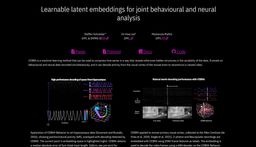
In the rapidly advancing field of computational neuroscience, understanding how the brain processes information remains one of science’s greatest challenges. Enter Cebra —a groundbreaking machine learning tool designed to decode complex time series data from both neural activity and behavioral signals.
Developed by researchers at institutions like the Max Planck Institute and academic labs in neuroscience, Cebra leverages learnable latent embeddings to uncover hidden patterns in large-scale datasets. Whether analyzing calcium imaging, electrophysiology recordings, or behavioral tracking data, Cebra bridges the gap between raw neural signals and meaningful biological insight.
What Is Cebra?
Cebra is an open-source algorithm specifically built for neural and behavioral data analysis . It uses contrastive learning , a type of deep learning, to model the relationship between brain activity and behavior over time. This allows scientists to reconstruct experiences—like visual scenes—from recorded neural data, offering a window into how the brain encodes perception and action.
Unlike traditional methods that treat neural and behavioral data separately, Cebra integrates them into a unified framework, helping researchers make more accurate predictions and discoveries.
Key Features of Cebra
- Latent Embedding Models
Compresses high-dimensional time series data into structured representations that reveal underlying dynamics without losing critical detail.
- Neural-Behavioral Integration
Designed to analyze both brain activity and corresponding behavioral outputs simultaneously—ideal for studying cognition, movement, and sensory processing.
- High-Precision Decoding Capabilities
Demonstrates remarkable accuracy in tasks such as reconstructing video from visual cortex activity, showing its power in predictive modeling.
- Cross-Species Applicability
Works across species and experimental setups, supporting research involving mice, primates, or other models used in neuroscience.
- Open-Source Accessibility
The core algorithm is freely available on GitHub, encouraging collaboration, transparency, and innovation within the scientific community.
- Supports Diverse Neural Data Types
Compatible with modern recording technologies including 2-photon imaging, Neuropixels, and multi-electrode arrays.
- Flexible for Discovery and Hypothesis Testing
Equally useful for exploratory studies and targeted experiments, making it a versatile tool for neuroscientists and data scientists.
- Community-Driven Development
Backed by active developer and research communities, ensuring ongoing improvement and adaptability for emerging research questions.
Why Use Cebra?
Using Cebra brings practical advantages to neuroscience and data science professionals:
- Accelerate Research : Extract insights faster from massive datasets that would otherwise take months to process manually.
- Improve Accuracy : Its ability to align neural activity with observed behaviors leads to more precise interpretations.
- Reconstruct Complex Signals : From reconstructing visual input to decoding motor output, Cebra opens new doors in brain-machine interface development.
- Support Open Science : As an open-source platform, Cebra promotes reproducibility and collaborative discovery.
- Bridge Modalities : Offers a rare combination of tools for integrating behavioral and neural data streams—enhancing our understanding of brain function.
Who Can Benefit from Cebra?
Cebra serves a wide range of professionals and organizations in the life sciences:
- Neuroscientists : Study how the brain encodes sensory input, decision-making, and motor output in real time.
- Behavioral Researchers : Understand the link between physical actions and underlying neural mechanisms.
- Data Scientists in Healthcare : Analyze patient monitoring data that combines behavioral metrics with neural indicators.
- Academic Institutions : Teach advanced machine learning applications in neuroscience and cognitive research.
- Creative Technologists : Explore applications in media, gaming, and interactive design where neural feedback shapes user experience.
- Medical Researchers : Investigate neurological conditions through better interpretation of dynamic brain signals.
What Makes Cebra Unique
While many tools focus on either neural data or behavioral data individually, Cebra stands out by combining both modalities into a single, powerful analytical framework .
Its use of contrastive learning to extract latent structures from time series data is unlike most conventional approaches. Unlike black-box AI systems, Cebra offers interpretable models that help scientists understand not just what the brain does—but how and why .
Additionally, Cebra’s ability to reconstruct external stimuli from internal brain activity —such as recreating a movie based on a mouse’s cortical response—demonstrates its potential to redefine how we study perception and cognition.
Things to Keep in Mind Before Using Cebra
Before adopting Cebra, here are a few considerations:
- Specialized Knowledge Required : Best suited for those with a background in neuroscience, machine learning, or signal processing.
- Learning Curve for New Users : While well-documented, first-time users may need time to explore setup options and fine-tune models.
- Computational Demands : Running large-scale analyses requires access to adequate computing resources, especially for high-resolution neural data.
Pricing Overview
One of Cebra’s strongest points is that the core algorithm is freely available on GitHub , allowing full access to its capabilities without cost. This makes it particularly valuable for academic researchers, students, and small labs with limited budgets.
For custom implementations, enterprise-level support, or tailored applications in commercial or clinical settings, interested parties can contact the Cebra team directly for consultation and integration assistance.
For the most accurate and current details—including educational licenses, research grants, or industry partnerships—visit the official Cebra website or explore the project on GitHub .
Final Thoughts
Cebra is more than just another data analysis tool—it represents a major leap forward in how we interpret the brain’s complexity. By combining machine learning with neuroscience , Cebra enables researchers to uncover the hidden logic behind neural activity and behavior.
Whether you’re mapping brain circuits, decoding sensory inputs, or exploring how cognition unfolds over time, Cebra delivers the tools needed to push the boundaries of modern neuroscience.
If you’re serious about understanding how brains work—and want a powerful, open-source ally to help you get there—Cebra is definitely worth exploring.