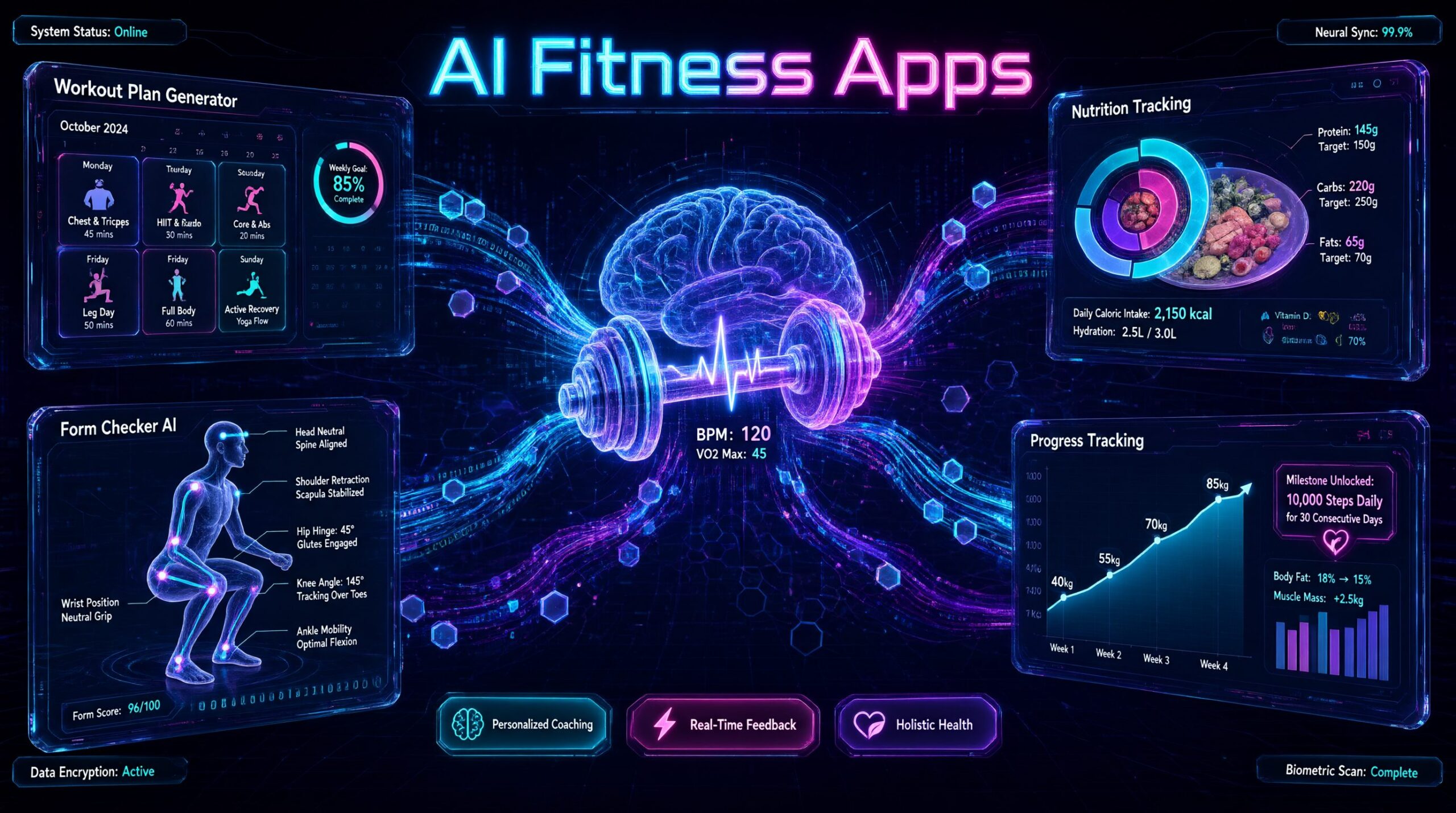
Mastering the deployment of AI fitness apps is the absolute best way to ensure your health and wellness journey is guided by unprecedented personalization, real-time feedback, and data-driven results. In an era where generic, one-size-fits-all workout programs are proven to yield high dropout rates, relying on static PDF routines and manual calorie logging is no longer a viable strategy for sustainable physical transformation. Today, forward-thinking athletes, busy professionals, and fitness enthusiasts are leveraging advanced AI fitness apps to automate program design, analyze exercise form, and adapt nutrition plans dynamically. However, navigating the rapidly expanding landscape of health technology requires strategic foresight. If you are looking to understand exactly how to evaluate these platforms and select the right AI fitness apps to future-proof your wellness routine, you are in the right place.
This comprehensive guide demystifies the technological horizon of modern digital health. We will explore the core capabilities of an AI personal trainer app, detail how an AI workout plan generator transforms daily routines, and provide a strategic blueprint for integrating smart fitness coaching software. By the end of this article, you will have a clear, actionable framework for evaluating the best AI fitness apps, understanding the nuances of an AI exercise form checker, and choosing the perfect technology stack that delivers maximum results and long-term adherence.
1. The Wellness Revolution: Why AI Fitness Apps Matter in 2026
Historically, the fitness industry was characterized by rigid, pre-programmed workout splits, subjective coaching, and tedious manual tracking. As the demand for personalized, efficient, and scientifically backed health interventions has grown exponentially, this traditional model has become economically unsustainable and prone to user burnout. The emergence of sophisticated Machine Learning (ML), Computer Vision, and predictive analytics has introduced a paradigm shift.
Understanding how to leverage AI fitness apps is critical because the gap between individuals who use data-driven health tools and those who rely on guesswork is widening rapidly. Users who fail to modernize their approach risk plateauing, sustaining preventable injuries, or losing motivation. The shift from static tracking to cognitive, context-aware AI fitness apps represents a monumental upgrade in capability. Modern systems do not just log your reps; they comprehend your recovery metrics, adapt your workout intensity in real-time, and proactively suggest modifications based on your daily energy levels. According to a 2026 American College of Sports Medicine (ACSM) Technology Survey, individuals who successfully integrate advanced AI fitness apps into their core routines report a 55% higher adherence rate and a 40% faster achievement of their primary fitness goals.
2. Core Capabilities: What to Look for in AI Fitness Apps
To make informed technology investments, you must first understand the primary drivers behind modern AI fitness apps. These solutions typically leverage a combination of deep learning, natural language processing (NLP), and computer vision to transform raw biometric data into structured, highly actionable health insights.
Dynamic Program Adaptation: Unlike legacy apps that force you through a fixed 12-week program regardless of how you feel, modern AI fitness apps utilize dynamic adaptation. If you log poor sleep or high stress, the AI workout plan generator will automatically scale back the volume or swap heavy compound lifts for active recovery mobility work, ensuring you train smarter, not just harder.
Computer Vision for Form Correction: Advanced AI fitness apps go beyond simple rep counting. By utilizing your smartphone’s camera, an AI exercise form checker can analyze your biomechanics in real-time, providing instant audio or visual feedback on your squat depth, spinal alignment, or bar path, drastically reducing the risk of injury.
3. Top Contenders: Evaluating the Best AI Fitness Apps for Every Goal
When searching for the best AI fitness apps, several platforms consistently rise to the top due to their balance of accuracy, user experience, and deep exercise science integration.
Fitbod is widely regarded as a pioneer in algorithmic program design. Its AI gym routine planner analyzes your past workouts, available equipment, and muscle recovery data to generate a highly optimized, unique workout for every single session, making it a comprehensive solution for both beginners and advanced lifters.
Freeletics excels in bodyweight and hybrid training. As a premier AI personal trainer app, it features a digital “Coach” that not only builds customized workout plans but also adapts them weekly based on your feedback, creating a highly personalized smart fitness coaching software experience.
MacroFactor: While many apps focus solely on exercise, MacroFactor is a standout in the nutrition space. Its AI nutrition tracking app utilizes a proprietary algorithm to determine your true, real-time metabolic rate and dynamically adjusts your daily calorie and macro targets to ensure continuous, sustainable progress without plateaus.
4. Streamlining Your Routine: AI Workout Plan Generators and AI Gym Routine Planners
The true value of AI fitness apps extends beyond high-level strategy; it is a game-changer for daily operational efficiency in the gym, directly combating decision fatigue.
Frictionless Workout Creation: Gone are the days of wandering the gym floor wondering what to do next. An advanced AI workout plan generator allows a user to input a few basic details (e.g., “45 minutes, dumbbells only, focus on hypertrophy”). The tool instantly generates a structured, timed routine with precise rest periods and progressive overload targets, ready for immediate execution.
Intelligent Equipment Substitution: Modern AI gym routine planners are highly adaptable. If your preferred machine is occupied or you are traveling and lack access to a full gym, the AI can instantly suggest biomechanically equivalent substitutions, ensuring your fitness progress tracking AI remains uninterrupted regardless of your environment.
5. Holistic Health: AI Nutrition Tracking Apps and AI Calorie Tracking Tools
While operational efficiency in the gym is critical, the scope of AI fitness apps extends deeply into dietary management, making holistic health more accessible and responsive.
Automated Dietary Logging: Manual calorie entry is the number one reason users abandon diet tracking. Modern AI calorie tracking tools leverage advanced image recognition, allowing you to simply snap a photo of your meal. The AI instantly identifies the food items, estimates portion sizes, and logs the macronutrients, reducing logging time from minutes to seconds.
Predictive Progress Modeling: Next-generation fitness progress tracking AI goes beyond simple weight charts. It analyzes trends in your weight, measurements, and workout performance to predict future outcomes. If the AI detects that your rate of progress is slowing, it can proactively suggest a minor caloric adjustment or a “diet break” to optimize long-term results.
6. Strategic Implementation: Best Practices for Using AI Fitness Apps
Ultimately, adopting AI fitness apps is not a simple plug-and-play operation; it requires a strategic, phased approach to ensure high adherence rates and measurable results, all while maintaining a healthy relationship with technology.
Seamless Wearable Integration To drive maximum effectiveness, new AI fitness apps must integrate seamlessly with the hardware you already use. Look for solutions that offer robust, native API connections to major wearables (e.g., Apple Watch, Garmin, Whoop) to ensure the AI has access to accurate heart rate, sleep, and recovery data.
Data Privacy and Security: When handling sensitive health and biometric data, security is non-negotiable. Prioritize vendors that offer enterprise-grade security certifications (e.g., HIPAA compliance for clinical-grade apps, SOC 2) and ensure the vendor’s terms explicitly state that your personal health data will not be sold to third parties or used to train public models without explicit consent.
Maintain the Human Element. While AI fitness apps are incredibly powerful, avoid becoming overly reliant on the algorithm. Use the AI’s output as a strategic blueprint, but always listen to your body’s subjective feedback (e.g., joint pain, extreme fatigue). The AI augments your intuition; it does not replace it.
7. Comprehensive Query Coverage
What are the primary benefits of AI fitness apps? The primary benefits of AI fitness apps include a drastic reduction in program design time, highly accurate and data-backed form correction, dynamic workout adaptation based on daily recovery, and automated nutrition logging, all leading to faster, safer results.
How does an AI workout plan generator differ from a standard PDF program? A standard PDF program is static and cannot adapt to your life. An AI workout plan generator dynamically adjusts your sets, reps, and exercises based on your actual performance, available equipment, and feedback, ensuring continuous progressive overload.
What should I look for in an AI exercise form checker? When evaluating an AI exercise form checker, look for apps that offer real-time, multi-angle biomechanical analysis, clear and actionable audio/visual feedback, and a library of exercises that matches your specific training style (e.g., powerlifting, bodybuilding, calisthenics).
Can AI personal trainer apps replace human coaches? For general fitness, hypertrophy, and basic strength goals, AI personal trainer apps are highly effective and can replace the need for a human coach. However, for elite athletic performance, complex injury rehabilitation, or highly specialized sports, human expertise and hands-on assessment remain essential. The AI augments the coach; it does not replace them.
How do I ensure data privacy when using AI calorie tracking tools? To ensure data security, select AI fitness apps that offer end-to-end encryption, strict role-based access controls (if sharing with a coach), and transparent privacy policies that guarantee your dietary and biometric data will not be used for third-party advertising or model training.
Conclusion
Mastering AI fitness apps is no longer just a trend for tech-savvy biohackers; it is a strategic imperative for anyone serious about achieving sustainable, long-term health and performance goals. By moving beyond generic routines and understanding the nuances of AI workout plan generators, smart fitness coaching software, and fitness progress tracking AI, you can ensure your wellness journey is optimized with unprecedented precision and adaptability.
Whether you are searching for an AI exercise form checker to perfect your deadlift or aiming to automate your entire dietary management pipeline with advanced AI nutrition tracking apps, the key to success lies in choosing the right platform, establishing strong data privacy habits, and fostering a balanced, intuitive relationship with your training.
As artificial intelligence continues to evolve, the predictive and adaptive capabilities of these systems will only deepen, making sophisticated, elite-level coaching accessible and indispensable for individuals of all fitness levels. Embrace the power of intelligent AI fitness apps today, and position your health journey at the absolute forefront of the digital wellness revolution.