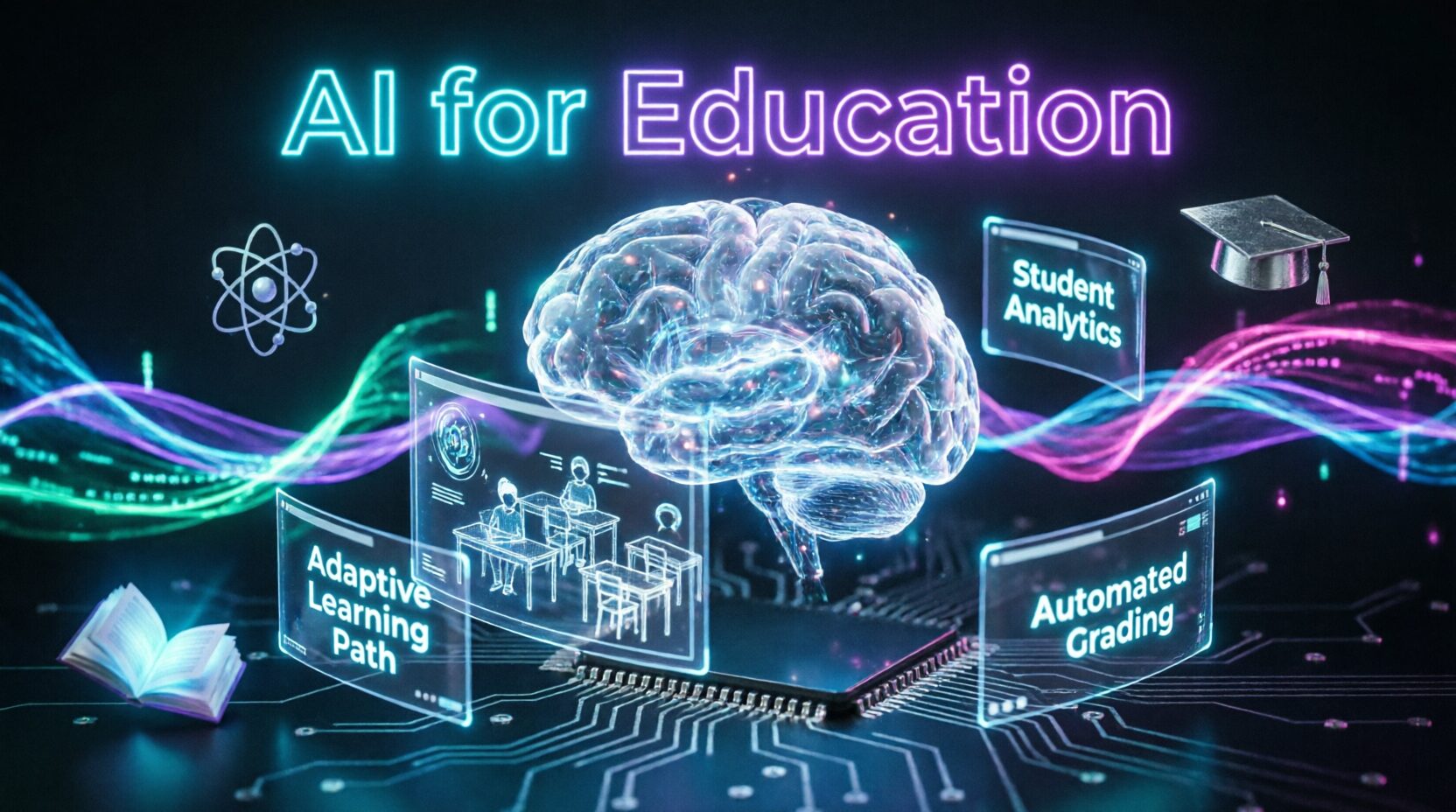
AI for education has fundamentally transformed how modern institutions deliver instruction, shifting the paradigm from rigid, one-size-fits-all curriculums to dynamic, highly personalized, and data-driven learning experiences. In an era where student needs are increasingly diverse and the demand for scalable, high-quality education is at an all-time high, relying on traditional, manual teaching methods is no longer sufficient. Today, forward-thinking schools and universities are leveraging advanced machine learning, natural language processing, and predictive analytics to empower educators and elevate student outcomes. If you are an educational administrator, instructional designer, or EdTech leader looking to understand how to deploy AI for education effectively, you are in the right place.
This comprehensive guide demystifies the landscape of intelligent learning technologies. We will explore the mechanics of AI personalized learning platforms, detail the capabilities of AI intelligent tutoring systems, and provide a strategic roadmap for navigating AI education implementation challenges. By the end of this article, you will have a clear, actionable blueprint for achieving significant AI teacher workload reduction, ensuring strict AI education data privacy, and calculating your AI education ROI for institutions to drive sustainable academic excellence.
1. The Paradigm Shift: From Standardized to AI Personalized Learning Platforms
Historically, education has been constrained by the “factory model,” where students of the same age are taught the same material at the same pace, regardless of their individual aptitudes or learning styles. AI for education represents a quantum leap forward, enabling true differentiation at scale.
AI Personalized Learning Platforms Modern AI personalized learning platforms analyze a student’s historical performance, learning pace, and preferred content formats to create a unique, dynamic learning path. If a student struggles with a specific concept, the system automatically provides additional resources, alternative explanations, or practice problems. Conversely, if a student masters a topic quickly, the AI accelerates their progression, keeping them engaged and challenged.
AI Curriculum Personalization Beyond individual pacing, AI curriculum personalization allows educators to tailor the actual content and context of the lessons. By integrating a student’s interests and real-world applications into the curriculum, AI makes learning more relevant and engaging, which is proven to increase long-term knowledge retention.
2. Empowering Educators: AI Teacher Workload Reduction and Automated Grading
One of the most immediate and impactful applications of AI in the classroom is its ability to alleviate the administrative burden on teachers, allowing them to focus on what they do best: mentoring and inspiring students.
AI Teacher Workload Reduction Educators spend up to 50% of their time on non-teaching tasks like lesson planning, grading, and administrative paperwork. AI teacher workload reduction tools automate these routine tasks. AI can generate lesson plans aligned with state standards, create customized worksheets, and draft parent communications, giving teachers back hours of their week.
AI Automated Grading Tools Grading is a massive time sink. While AI has long been able to grade multiple-choice questions, modern AI automated grading tools can now evaluate complex, open-ended responses, essays, and even coding assignments. Using natural language processing, these tools assess grammar, structure, argumentation, and rubric alignment, providing instant, detailed feedback to students and freeing teachers to focus on high-level instructional strategies.
AI Virtual Learning Assistants To support both students and teachers outside of classroom hours, AI virtual learning assistants act as 24/7 digital tutors. These chatbots can answer frequently asked questions about course logistics, provide hints on homework problems, and guide students through complex instructions, ensuring that learning never stops when the bell rings.
3. Enhancing Student Outcomes: Intelligent Tutoring and Adaptive Assessments
At the core of the AI for education revolution is the ability to provide continuous, individualized support and accurate measurement of student mastery.
AI Intelligent Tutoring Systems AI intelligent tutoring systems simulate the experience of a one-on-one human tutor. They engage students in interactive dialogues, ask probing questions, and provide immediate, corrective feedback. These systems adapt in real-time to the student’s emotional state and cognitive load, ensuring that the instruction is always at the optimal level of difficulty.
AI Adaptive Assessment Tools Traditional standardized tests are a snapshot in time and often fail to capture a student’s true understanding. AI adaptive assessment tools change the game by adjusting the difficulty of questions in real-time based on the student’s previous answers. If a student answers correctly, the next question is harder; if they answer incorrectly, it becomes easier. This provides a highly precise measurement of the student’s exact proficiency level without causing unnecessary test anxiety.
AI Competency-Based Education AI is the engine that makes AI competency-based education viable. Instead of advancing students based on “seat time” (how long they’ve been in a class), AI tracks the specific skills and competencies a student has mastered. This ensures that students only move forward when they have truly grasped the foundational concepts, leading to much stronger academic outcomes.
4. Administrative Excellence: Automation, Analytics, and Early Warning Systems
Beyond the classroom, AI for education is transforming how institutions are managed, making them more efficient and proactive.
AI Education Administrative Automation From enrollment and scheduling to resource allocation and compliance reporting, AI education administrative automation streamlines complex institutional workflows. This reduces operational costs, minimizes human error, and allows administrative staff to focus on strategic initiatives and student support services.
AI Student Engagement Analytics Understanding how students interact with digital learning materials is crucial. AI student engagement analytics track metrics such as time spent on tasks, video viewing patterns, and forum participation. This data helps educators identify which instructional materials are most effective and which students might be disengaging.
AI Early Warning Systems Education Perhaps the most life-changing administrative application is the use of AI early warning systems education. By analyzing a wide range of data points including attendance, grades, behavioral incidents, and even cafeteria purchases—AI models can predict which students are at high risk of dropping out or failing. This allows counselors and teachers to intervene proactively with targeted support, significantly improving graduation rates.
5. Inclusive Education: Accessibility, Special Education, and Language Learning
AI for education is a powerful equalizer, breaking down barriers for students with diverse needs and backgrounds.
AI Special Education Support Tools For students with learning disabilities, AI special education support tools provide customized interventions. These tools can offer text-to-speech, speech-to-text, and specialized cognitive exercises tailored to conditions like dyslexia, ADHD, or autism, ensuring that every student has the tools they need to succeed.
AI Education Accessibility Tools Beyond specific disabilities, general AI education accessibility tools make learning materials usable for everyone. AI can automatically generate closed captions for video lectures, create audio descriptions for visual content, and translate materials into multiple languages in real-time, creating a truly inclusive digital classroom.
AI Language Learning Personalization Language acquisition is highly individual. AI language learning personalization adapts to the learner’s native language, accent, and specific areas of struggle. By using speech recognition to provide instant pronunciation feedback and natural language generation to create contextual conversation practice, AI accelerates fluency far beyond traditional textbook methods.
6. Navigating Challenges: Data Privacy, Implementation, and ROI
Deploying AI in an educational setting requires careful navigation of ethical, technical, and financial hurdles.
AI Education Data Privacy Students’ data is highly sensitive. Ensuring robust AI education data privacy is non-negotiable. Institutions must ensure that their AI vendors comply with strict regulations like FERPA, COPPA, and GDPR. This includes data encryption, strict access controls, and guarantees that student data is never used to train public, third-party AI models without explicit consent.
AI Education Implementation Challenges Successful adoption is rarely just a technology problem; it is a change management challenge. Common AI education implementation challenges include inadequate teacher training, resistance to change, and legacy IT infrastructure that cannot support modern AI tools. Overcoming these requires comprehensive professional development, strong leadership buy-in, and a phased rollout strategy.
AI Education ROI for Institutions To secure funding, administrators must calculate the AI education ROI for institutions. This involves measuring hard metrics like reduced administrative costs, improved student retention rates, and higher graduation rates, alongside soft metrics like increased teacher satisfaction and enhanced institutional reputation.
7. The Future of AI in K-12 and Higher Education
As we look ahead, the future of AI in K-12 and higher education points toward deeply immersive and autonomous learning environments.
AI Education Content Generation The next frontier is AI education content generation, where teachers can simply describe a learning objective, and the AI will instantly generate a complete, multimedia lesson plan, including interactive simulations, 3D models, and customized reading passages.
Immersive and Autonomous Learning We are moving toward a world where AI agents will not just assist but actively manage the learning journey. These agents will continuously monitor a student’s progress, automatically adjust their curriculum, and seamlessly connect them with human mentors when complex emotional or social support is needed. This evolution will ultimately free human educators to focus entirely on the empathetic, creative, and relational aspects of teaching that machines cannot replicate.
8. Comprehensive Query Coverage
What is the main benefit of AI for education? The primary benefit of AI for education is the ability to provide personalized, adaptive learning at scale. It ensures that every student receives instruction tailored to their unique pace and learning style, while simultaneously freeing up teachers to focus on mentorship and complex instruction.
How do AI adaptive assessment tools work? AI adaptive assessment tools use machine learning to adjust the difficulty of test questions in real-time based on the student’s previous answers. This provides a highly accurate, precise measurement of the student’s proficiency level without the frustration of questions that are too hard or the boredom of questions that are too easy.
Can AI replace teachers? No. AI is designed to augment, not replace, human educators. By handling routine tasks like grading and lesson planning through AI teacher workload reduction tools, AI frees up teachers to focus on the human elements of education: empathy, motivation, critical thinking, and social-emotional support.
How does AI ensure student data privacy? Ensuring AI education data privacy requires partnering with vendors who strictly adhere to regulations like FERPA and COPPA. This includes end-to-end data encryption, role-based access controls, and contractual guarantees that student data will not be used for commercial purposes or to train external AI models.
Conclusion
AI for education is no longer a futuristic concept; it is the foundational infrastructure required for any institution to deliver high-quality, equitable, and scalable learning in 2026. By moving beyond the limitations of the traditional factory model and embracing AI personalized learning platforms, AI intelligent tutoring systems, and intelligent administrative automation, educational institutions can unlock unprecedented levels of student achievement and operational efficiency.
Whether you are focused on achieving significant AI teacher workload reduction, ensuring strict AI education data privacy, or leveraging AI early warning systems education to improve graduation rates, the key to success lies in a strategic, well-governed implementation. By carefully navigating AI education implementation challenges and rigorously tracking your AI education ROI for institutions, you can transform your educational environment from a standardized system into a dynamic, student-centric engine of lifelong learning.
As you embark on this transformative journey, remember that technology is merely the enabler. The true value of AI in education is realized when it is paired with a culture of continuous improvement, robust ethical guidelines, and a clear strategic vision. Embrace the future of intelligent learning, and position your institution to lead, innovate, and empower the next generation of learners.