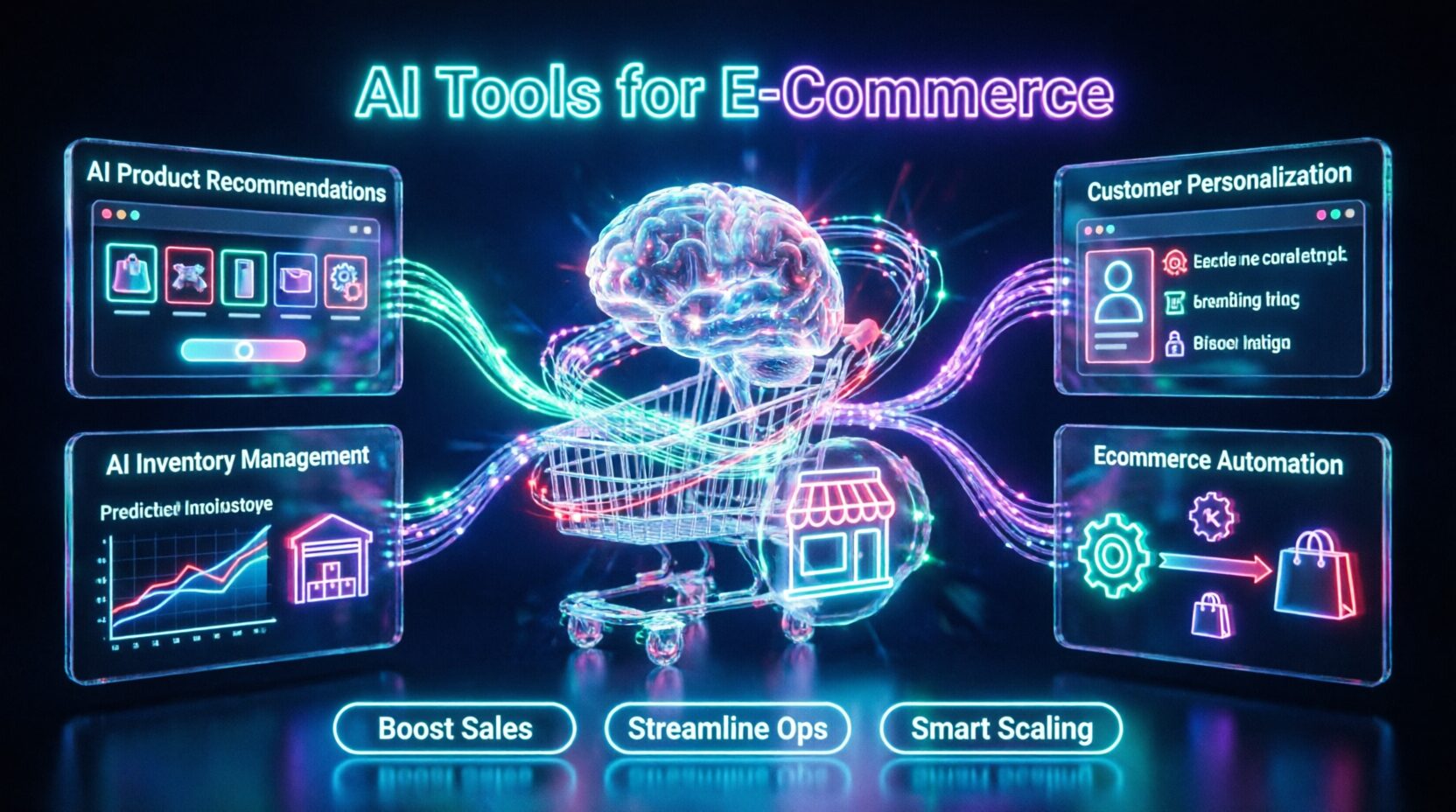
Mastering the latest AI tools for e-commerce is the absolute best way to ensure your online business scales efficiently, delivers hyper-personalized customer experiences, and maintains a lean, profitable operational model. In an era where consumer expectations for instant gratification, seamless checkout, and tailored shopping journeys are higher than ever, relying on manual inventory tracking, generic marketing blasts, and reactive customer service is no longer a viable strategy for growth. Today, forward-thinking digital retailers are leveraging advanced artificial intelligence to automate workflows, predict consumer behavior, and optimize every touchpoint of the buyer’s journey. However, navigating the crowded landscape of retail technology requires strategic foresight. If you are looking to understand exactly how to integrate these technologies and select the right solutions to future-proof your online store, you are in the right place.
This comprehensive guide demystifies the technological horizon of digital retail. We will explore the most impactful AI tools for e-commerce, detail how AI inventory management and e-commerce automation software reduce overhead, and provide a strategic blueprint for deploying AI customer personalization tools. By the end of this article, you will have a clear, actionable framework for evaluating online store AI tools, understanding the total cost of ownership, and mastering the art of implementing AI product recommendations that deliver maximum ROI.
1. The Competitive Landscape: Why AI Tools for E-Commerce Matter in 2026
Historically, e-commerce growth was heavily dependent on increasing ad spend and manual operational scaling. As customer acquisition costs (CAC) have skyrocketed, this model has become unsustainable. The emergence of sophisticated machine learning algorithms has introduced a paradigm shift, allowing retailers to optimize existing traffic and streamline backend operations simultaneously. Understanding how to leverage AI tools for e-commerce is critical because the gap between AI-native brands and legacy retailers is widening rapidly. Organizations that fail to modernize their digital storefronts risk losing market share to competitors who can deliver faster, cheaper, and more personalized experiences.
The shift from basic rule-based e-commerce plugins to cognitive, predictive AI represents a monumental upgrade in capability. Modern systems do not just react to customer actions; they anticipate them. According to a 2026 McKinsey & Company report on the future of retail technology, e-commerce businesses that successfully integrate comprehensive AI tools for e-commerce into their core operations report a 20% increase in sales conversion rates and a 30% reduction in operational costs. Therefore, aligning your digital strategy with these emerging technologies is essential for sustainable, scalable growth.
2. Breaking Down the Tech: Core Capabilities of Online Store AI Tools
To make informed technology investments, you must first understand the primary drivers behind modern online store AI tools. These solutions typically fall into two main categories: frontend customer experience enhancement and backend operational optimization.
Frontend: Dynamic Engagement and Conversion On the customer-facing side, AI utilizes natural language processing (NLP) and computer vision to create immersive shopping experiences. This includes visual search capabilities, AI-powered chatbots that handle complex queries, and dynamic pricing engines that adjust offers in real-time based on demand and user behavior.
Backend: Predictive Operations and Automation Behind the scenes, machine learning models analyze vast datasets to optimize supply chains, forecast demand, and automate repetitive administrative tasks. This ensures that the right products are in the right warehouses at the right time, drastically reducing carrying costs and preventing stockouts.
3. Driving Revenue: The Power of AI Product Recommendations
One of the most immediate and measurable impacts of AI in retail is the enhancement of the discovery process. Generic “best sellers” carousels are no longer sufficient to capture consumer attention.
Hyper-Personalized Cross-Selling and Upselling Advanced AI product recommendations analyze a user’s real-time browsing behavior, historical purchase data, and even contextual factors like current weather or local events. By understanding the nuanced relationships between products, the AI can suggest highly relevant complementary items (e.g., recommending a specific lens cleaner when a customer views a camera), significantly increasing the average order value (AOV).
Visual and Semantic Search Modern AI tools allow customers to search using natural language (“show me red summer dresses under $50”) or by uploading a photo of an item they like. The AI parses the intent and visual features to return highly accurate product matches, reducing friction and preventing cart abandonment due to poor search results.
4. Operational Efficiency: Mastering AI Inventory Management and Ecommerce Automation Software
While frontend tools drive revenue, backend tools protect margins. The true power of e-commerce automation software lies in its ability to connect disparate systems and execute complex workflows without human intervention.
Predictive AI Inventory Management Traditional inventory management relies on historical averages, which often fail to account for sudden market shifts or viral trends. AI inventory management utilizes predictive analytics to forecast demand with high precision. It factors in seasonality, marketing campaign schedules, and even macroeconomic indicators to automatically generate purchase orders, ensuring optimal stock levels and minimizing dead stock.
End-to-End Workflow Automation From automating supplier communications and syncing multi-channel listings (e.g., Shopify, Amazon, TikTok Shop) to generating AI-written product descriptions and optimizing meta tags for SEO, ecommerce automation software frees up human teams to focus on strategic growth initiatives rather than tedious data entry.
5. The Customer Experience: Leveraging AI Customer Personalization Tools
In 2026, personalization is no longer a luxury; it is a baseline expectation. AI customer personalization tools enable brands to treat every visitor as a unique individual, even at a massive scale.
Dynamic Content and UI Adaptation Advanced personalization engines can dynamically alter the layout, imagery, and messaging of a homepage based on the visitor’s profile. A returning customer interested in sustainability might see eco-friendly product highlights first, while a new visitor from a specific geographic region might see localized shipping offers and regionally popular items.
Intelligent Post-Purchase Engagement The relationship doesn’t end at checkout. AI tools automate personalized post-purchase journeys, sending tailored care instructions, timely replenishment reminders, and exclusive loyalty rewards based on the specific products purchased, thereby increasing customer lifetime value (CLV) and fostering brand advocacy.
6. Strategic Selection: Best Practices for Choosing E-Commerce AI Solutions
Ultimately, choosing the right AI tools for e-commerce is about calculating the Total Cost of Ownership (TCO) and ensuring the platform aligns with your long-term strategic goals.
Seamless Ecosystem Integration A powerful AI tool is useless if it operates in a silo. Prioritize online store AI tools that offer robust, pre-built APIs and native integrations with your existing tech stack, such as Shopify Plus, Magento, Salesforce Commerce Cloud, Klaviyo, and major ERP systems. Seamless data flow is the backbone of effective automation.
Scalability and Data Privacy As your store grows, your software must scale with you. Ensure the vendor offers enterprise-grade security and complies with global data privacy regulations (GDPR, CCPA). Furthermore, verify that the AI model’s processing capabilities can handle spikes in traffic (like Black Friday) without degrading performance or incurring punitive overage fees.
7. Comprehensive Query Coverage
What are the best AI tools for e-commerce for small businesses? For small businesses, the best AI tools for e-commerce are lightweight, plug-and-play solutions that integrate directly with platforms like Shopify or WooCommerce. Look for tools that offer automated product descriptions, basic AI product recommendations, and simple chatbots to maximize impact without requiring a dedicated technical team.
How does AI inventory management prevent stockouts? AI inventory management prevents stockouts by analyzing real-time sales velocity, lead times, and external demand signals (like seasonal trends or marketing spikes). It then automatically calculates the optimal reorder point and can even draft purchase orders for supplier approval before stock runs critically low.
What is the ROI of implementing AI customer personalization tools? The ROI of AI customer personalization tools is typically realized through increased conversion rates and higher average order values. By showing the right product to the right person at the right time, brands often see a 10-15% uplift in revenue, quickly offsetting the cost of the software.
How does e-commerce automation software improve operational efficiency? Ecommerce automation software improves efficiency by eliminating manual, repetitive tasks. It can automatically sync inventory across multiple sales channels, route customer support tickets to the right department, and trigger personalized email sequences, allowing your team to focus on strategy and creative work.
Can AI product recommendations work for niche or low-traffic stores? Yes. While collaborative filtering (recommending based on what similar users bought) requires large datasets, modern AI tools also use content-based filtering. This analyzes the attributes of the products themselves (e.g., color, material, category) to make intelligent recommendations even with limited user behavior data.
Conclusion
Mastering the latest AI tools for e-commerce is no longer just a task for the IT department; it is a strategic imperative for founders, marketing directors, and operations managers alike. By moving beyond manual processes and understanding the nuances of AI product recommendations, ecommerce automation software, and AI inventory management, you can ensure your online store operates with unprecedented speed, accuracy, and profitability.
Whether you are searching for AI customer personalization tools to increase customer lifetime value or aiming to automate your entire supply chain with online store AI tools, the key to success lies in aligning the vendor’s technological capabilities with your specific business model and growth objectives.
As artificial intelligence continues to evolve, the baseline of what is possible in digital retail will only become more advanced, making these transformative technologies accessible and indispensable for businesses of all sizes. Embrace the power of intelligent e-commerce today, and position your organization at the absolute forefront of the automated retail revolution.