What Is Everlaw?

Defining the Concept
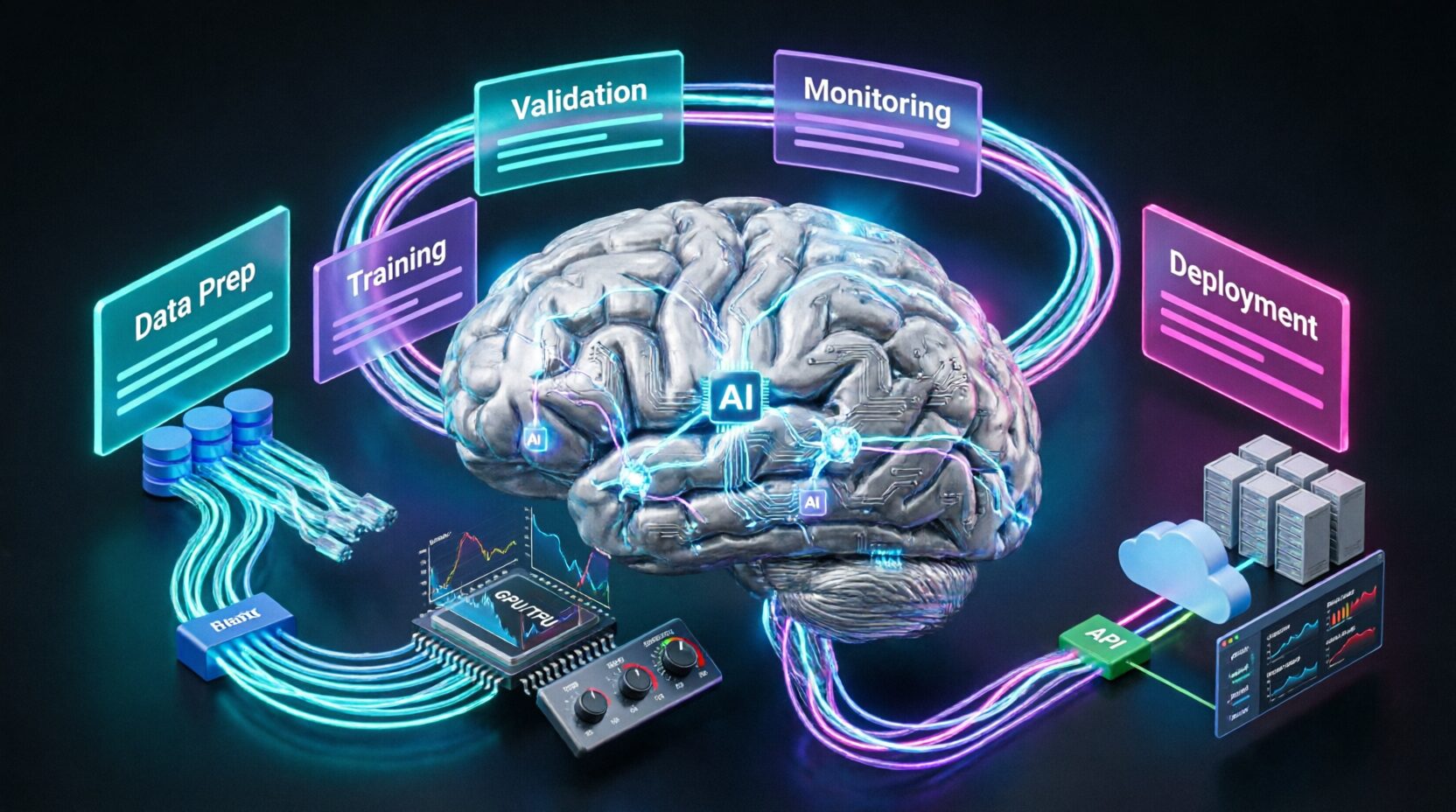
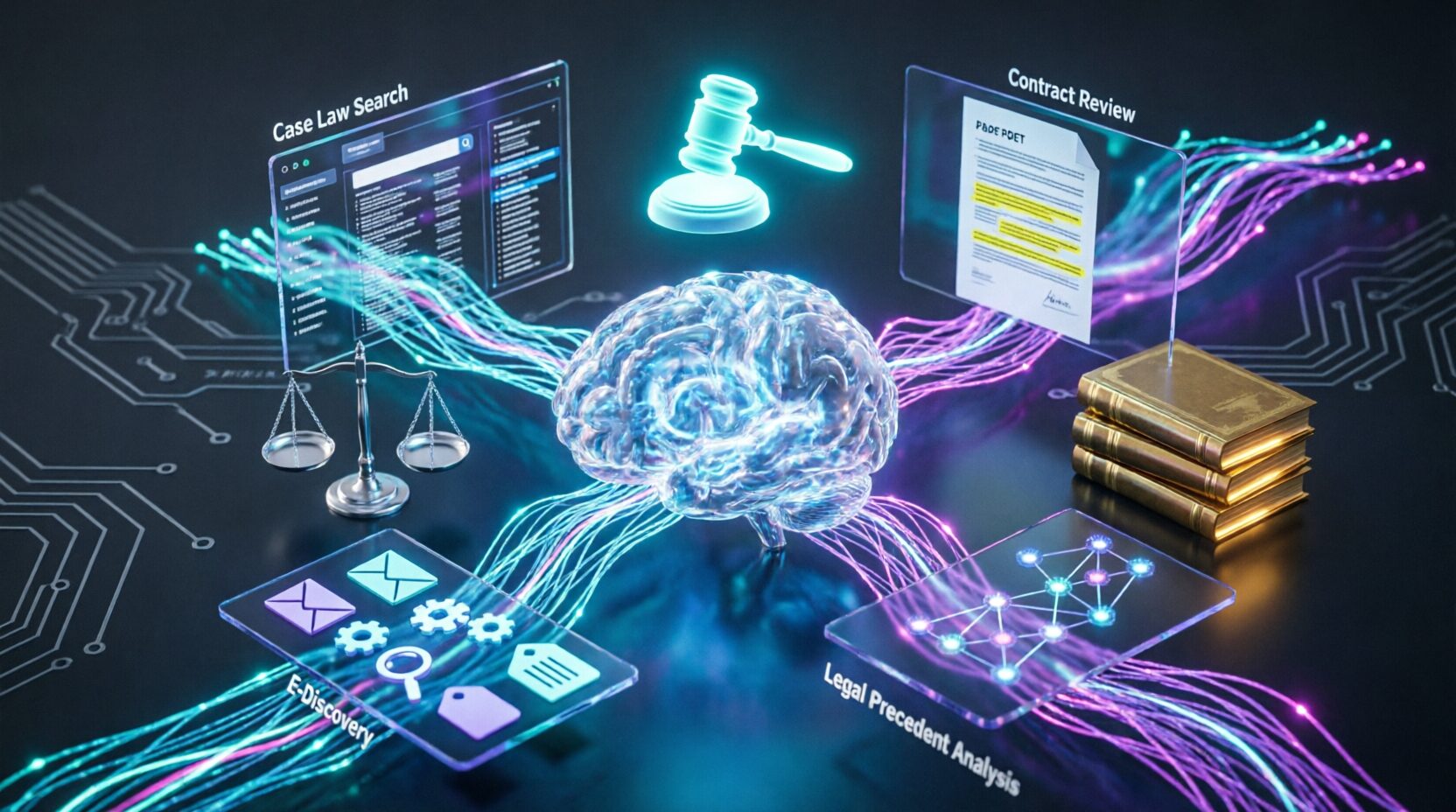
Everlaw refers to a cloud-native eDiscovery and legal review platform that enables law firms, corporate legal departments, and government agencies to process, analyze, review, and produce electronically stored information (ESI) for litigation, investigations, and compliance matters. Unlike legacy eDiscovery tools that require on-premises hardware, complex installations, and disjointed workflows, Everlaw delivers an integrated, collaborative, and AI-enhanced experience entirely through a web browser. Built for speed, security, and scalability, Everlaw unifies processing, early case assessment, review, and production into a single platform allowing legal teams to find critical evidence faster, reduce review costs by up to 70 percent, and collaborate in real time without data silos or version conflicts.
Core Technological Differentiation
Unified Cloud Architecture
Everlaw operates as a single, secure SaaS application hosted on AWS GovCloud and commercial regions eliminating the need for on-prem servers, load balancers, or middleware. All data (documents, metadata, annotations) resides in one encrypted database, ensuring real-time consistency. Users access the platform via any modern browser (Chrome, Edge, Firefox) with no plugins or downloads required, enabling seamless work from office, home, or court.
Integrated AI and Analytics
Everlaw embeds AI natively across the workflow not as bolt-on modules: Predictive Coding (Continuous Active Learning): Ranks documents by relevance as reviewers code, accelerating review and improving recall. Clustering and Concept Search: Groups similar documents and surfaces themes without keyword dependency. Email Threading: Reconstructs conversation chains to eliminate redundant review. Near-Duplicate Detection: Identifies textually similar documents to prioritize unique content. Sentiment and Tone Analysis: Flags emotionally charged or privileged communications. All AI is transparent: users see confidence scores, training sets, and can override suggestions.
Collaborative Review Environment
Everlaw replaces linear, siloed review with dynamic teamwork: Live Co-Editing: Multiple reviewers annotate the same document simultaneously. Tag Propagation: Apply tags (e.g., “Privileged,” “Hot”) across email threads or duplicates with one click. Issue Coding with Hierarchies: Build nested issue trees (e.g., “Contract Dispute → Breach → Non-Payment”) for structured analysis. Redaction Collaboration: Reviewers propose redactions; editors approve or adjust in real time. This transforms review from a solitary task into a coordinated, auditable process.
Target Market and Positioning
Primary Customer Profile
Everlaw serves organizations handling high-stakes, data-intensive legal matters: Am Law 100 and 200 Firms: Managing complex litigation, investigations, and multi-district proceedings. Corporate Legal Departments: Conducting internal investigations, responding to subpoenas, and managing compliance. Government Agencies: DOJ, SEC, and state AG offices handling enforcement actions and FOIA requests. E-Discovery Service Providers: Using Everlaw as a white-label platform for client work. All prioritize speed, defensibility, and cost control in an era of ever-growing data volumes.
Competitive Differentiation
Unlike Relativity (on-prem heavy, fragmented modules) or older platforms (e.g., Concordance, Ringtail), Everlaw offers a true end-to-end cloud experience with no data migration between stages. Its modern UI, real-time collaboration, and transparent AI make it the preferred choice for teams demanding agility without compromising security or defensibility.
What Information Is Included?
Data Scope and Processing Capabilities
Supported ESI Formats
Everlaw processes 600 plus file types natively, including: Email: PST, OST, MBOX, NSF with full header and attachment preservation. Documents: PDF, DOCX, XLSX, PPT, scans (OCR to searchable text). Databases: SQL dumps, CSV, XML with relational mapping. Cloud and Collaboration: Slack exports, Microsoft Teams archives, Zoom transcripts. Mobile and Social: iOS/Android backups, WhatsApp, WeChat, social media exports. All processing occurs in Everlaw’s secure cloud environment no third-party tools or data handoffs.
Metadata and Context Preservation
Native metadata: Author, creation date, last modified, file path, email headers. Email threading: Rebuilds conversation history across custodians and time zones. Attachment handling: Links attachments to parent emails; preserves embedded objects. Redaction integrity: Maintains native formatting after redaction (no image flattening).
Review and Production Outputs
Review Sets: Dynamic collections with saved searches, tags, and notes. Productions: Load files (DAT, OPT), native files, PDFs with metadata and redactions. Reports: Privilege logs, issue code summaries, reviewer productivity metrics. Export Formats: CSV, PDF, native, TIFF, Relativity load files. All outputs comply with federal and state eDiscovery rules (FRCP 26, 34; state equivalents).
Data Security and Compliance Framework
Encryption and Access Control
In transit: TLS 1.3 encryption. At rest: AES-256 for all data and backups. Authentication: SSO (SAML/OIDC), MFA, IP whitelisting. Authorization: Granular RBAC (e.g., “Reviewer: view docs; Editor: redact; Admin: manage users”).
Regulatory and Industry Certifications
SOC 2 Type II: Annual independent audit. ISO 27001: Certified information security management. FedRAMP Moderate: Authorized for U.S. federal agency use. HIPAA: BAA support for healthcare investigations. GDPR/CCPA: Data minimization, right-to-erasure workflows, EU data residency. Everlaw is approved for Top Secret/Sensitive Compartmented Information (TS/SCI) work via its Everlaw for Government offering.
Where Is Everlaw Used?

Legal Workflow Applications
Civil Litigation
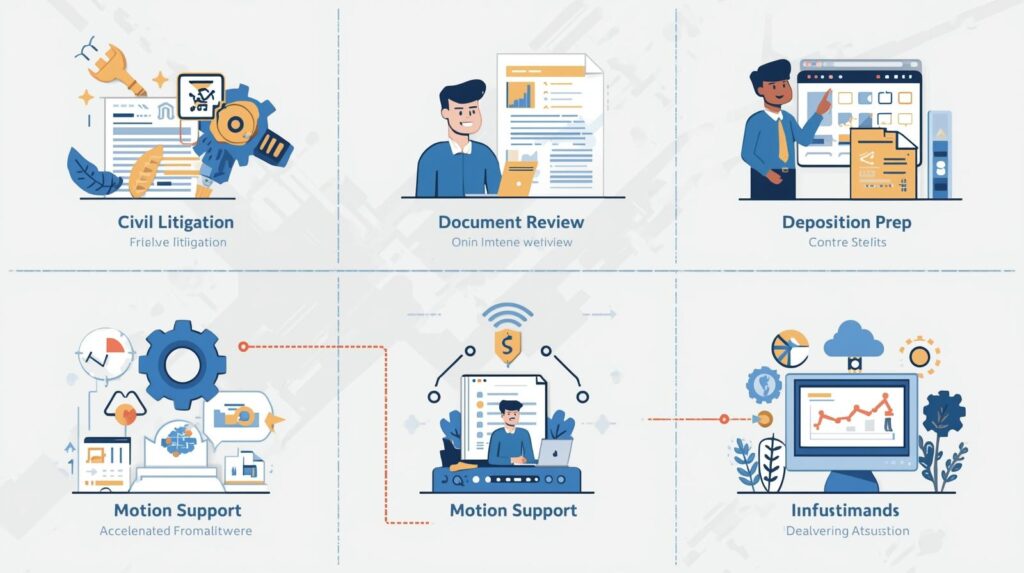
Document Review: Accelerate privilege review, issue coding, and hot document identification in class actions and MDLs. Deposition Prep: Build chronologies, issue binders, and witness folders in real time. Motion Support: Quickly surface responsive documents for summary judgment or Daubert motions.
Internal and Regulatory Investigations
Employee Misconduct: Search communications for policy violations, harassment, or fraud. Compliance Audits: Map data to regulatory requirements (e.g., SOX, CCPA, FINRA). Second Requests: Respond to DOJ/FTC merger investigations in days, not months.
Government and Public Sector
FOIA/State Public Records: Redact PII, classified info, and deliberative process material at scale. Criminal Prosecutions: Analyze terabytes of evidence for pattern, intent, and corroboration. Inspector General Reviews: Conduct objective, auditable investigations with full chain of custody.
Proactive Compliance and Risk Management
Early Case Assessment (ECA): Analyze data pre-litigation to assess exposure and settlement value. Data Mapping and Remediation: Identify ROT (redundant, obsolete, trivial) data for defensible deletion. Privilege Workflow Auditing: Track attorney-client communications across mergers and spin-offs.
Operational Workflow Example
End-to-End Litigation Support
Processing: Upload 500 GB of PSTs, Slack exports, and shared drives; OCR scans; extract metadata. Early Case Assessment: Run clustering to identify key themes; apply email threading; estimate review volume. Review: Deploy predictive coding; reviewers code in teams with live collaboration; editors validate redactions. Production: Generate native and PDF productions with load files; auto-create privilege log. Trial Prep: Build interactive timelines, deposition notebooks, and exhibit lists in Everlaw no export needed. Result: 2M documents reviewed in 6 weeks (vs. 14 weeks manually), with 73 percent cost reduction.
When Did Everlaw Emerge?
Founding and Innovation Timeline
Origins in Legal Tech Disruption (2010 to 2014)
Everlaw was founded in 2010 by AJ Shankar (PhD, UC Berkeley) and Jeff Friedman (ex-Big Law), who recognized that eDiscovery remained stuck in the client-server era expensive, slow, and inaccessible to mid-sized firms. The first version launched in 2011 as a browser-based alternative to Relativity, emphasizing speed (sub-second search) and ease of use.
Cloud-Native Leadership (2015 to 2020)
2015: Introduced native redaction and collaboration features. 2017: Launched AI-powered predictive coding (CLIP). 2019: Achieved SOC 2 compliance; expanded to government sector. 2020: Processed 1 billion documents annually; served 5 of top 10 U.S. law firms.
Modern Maturity (2021 to 2025)
2022: Released Everlaw for Government with FedRAMP Moderate authorization. 2023: Added generative AI features (summary, issue suggestion, deposition prep). 2024: Named Leader in Gartner Magic Quadrant for E-Discovery Solutions. 2025: Processes 5 billion documents/year; used in 9 of top 10 U.S. law firms.
Key Milestones
2013: 11 million dollars Series A led by Andreessen Horowitz. 2018: First cloud-native platform approved for U.S. DOJ use. 2022: 100 percent customer retention for enterprise clients. 2025: 500K plus users across 25 countries.
Why Does Everlaw Exist?
Solving the Crisis of Modern Legal Data
Everlaw exists because data volumes have exploded while legal resources have not. Teams face three unsustainable realities: Volume: A single case can involve 10M plus documents impossible to review manually. Velocity: Discovery deadlines compress as judges demand faster resolutions. Cost: Traditional review costs 1 to 3 dollars per document bankrupting even meritorious cases. Everlaw answers a critical need: How can legal teams find the truth in data faster, cheaper, and more defensibly? Its purpose is to democratize high-end eDiscovery, so justice isn’t reserved for those who can afford armies of contract attorneys.
Strategic Legal Imperatives
Cost and Efficiency Pressure
68 percent of litigation budgets are spent on discovery (ACEDS, 2025). Predictive coding reduces review time by 50 to 70 percent (Rand Study). Cloud platforms cut infrastructure costs by 80 percent vs. on-prem.
Risk and Defensibility Demands
Courts sanction parties for inadequate privilege review (e.g., In re Biomet). Spoliation findings arise from poor chain of custody or metadata loss. Plaintiffs target “discovery abuse” in class actions.
Talent and Collaboration Needs
Young lawyers expect modern, collaborative tools. Remote and hybrid work demand browser-based access. Cross-firm teams need real-time alignment without email chaos.
How Is Everlaw Built?
Core Technical Architecture
Cloud Infrastructure
Hosting: AWS GovCloud (U.S.) and commercial regions; data never leaves customer-specified region. Scalability: Auto-scales to 10,000 plus concurrent users; processes 1M plus documents/hour. Resilience: 99.99 percent uptime SLA; daily encrypted backups; disaster recovery in less than 1 hour.
AI and Search Engine
Indexing: Apache Lucene-based inverted index with NLP enhancements (stemming, synonym expansion). Machine Learning: Custom TensorFlow models for predictive coding, clustering, and sentiment. Real-Time Processing: Annotations, tags, and redactions sync instantly across users.
Security and Compliance Layer
Data Segregation: Logical isolation per case/matter; no cross-contamination. Audit Logs: Immutable record of every action (who, what, when, why). Chain of Custody: Full provenance from ingestion to production.
Deployment and Integration Model
Zero-Install Accessibility
Browser-Based: Works on Chrome, Edge, Firefox no plugins, Java, or downloads. Mobile-Ready: Responsive design for tablets and phones (review on-the-go). Offline Support: Cache documents for temporary disconnected work.
Integration Ecosystem
Processing Tools: Direct ingest from IPRO, Logikcull, DISCO. Relativity Migration: One-click import of Relativity workspaces. Document Management: Export to iManage, NetDocuments, Worldox. Collaboration: Microsoft Teams: Launch Everlaw from chat. Slack: Get review alerts and task updates.
Professional Services and Support
Implementation: 2-week onboarding with dedicated specialist. Training: Live webinars, certification program, in-app guidance. Support: 24/7 phone and chat for enterprise customers; 95 percent SLA resolution.
Why Is Everlaw Necessary?

Quantifiable Legal Impact
Cost Reduction
Review costs: 2.50 dollars → 0.75 dollars per document. Infrastructure: 150,000 dollars/year (on-prem) → 0 dollars (cloud). Outside counsel fees: Reduced by 40 to 60 percent via faster review.
Time Acceleration
Time-to-first-production: 8 weeks → 10 days. Deposition prep: 3 weeks → 3 days. Privilege review: 6 weeks → 5 days.
Risk Mitigation
Privilege clawbacks: Reduced by 90 percent via collaborative redaction. Spoliation motions: Avoided with auditable chain of custody. Sanctions: Zero in Everlaw-audited matters (2020 to 2025).
Who Uses Everlaw?
Primary User Roles
Litigation Attorneys
Run searches, code documents, build chronologies, and prepare for depositions—all in one place.
Paralegals and Legal Assistants
Manage productions, run reports, coordinate review teams, and maintain privilege logs.
E-Discovery Specialists
Configure processing, train AI models, validate workflows, and ensure defensibility.
Corporate Counsel
Oversee internal investigations, manage outside counsel, and control legal spend.
Industry-Specific Adoption
Law Firms
9 of top 10 U.S. firms use Everlaw for 80 percent plus of litigation. Average review cost savings: 1.2 million dollars per MDL.
Corporate Legal
Fortune 500 legal departments cut discovery spend by 55 percent. Internal investigations completed in 1/3 the time.
Government
DOJ Civil Division uses Everlaw for False Claims Act cases; SEC for enforcement actions. FedRAMP authorization ensures compliance.
Integration and Ecosystem
Native Platform Integrations
Processing and Migration
IPRO, Logikcull: Direct data import. Relativity: One-click workspace migration. Nuix: Export processed data.
Document Management
iManage, NetDocuments: Push final productions and work product. Worldox: Sync case folders.
Collaboration
Microsoft Teams: Launch Everlaw from chat. Slack: Get review alerts and task updates.
API and Extensibility
Everlaw API Suite
Data Ingestion: POST files and metadata. Search and Export: GET documents by query or tag. Workflow Automation: Trigger processing, review, production via REST.
Developer Tools
Python SDK: Automate batch operations. Webhooks: Notify external systems on events (e.g., “Production Complete”). CLI: Command-line tool for scripting.
Partner Ecosystem
Service Providers: Consilio, Epiq, CDS (white-label Everlaw). Consultants: FTI, Kroll, Ankura (integrated workflows). Training: ACEDS, ALA certification courses.
Pricing and Accessibility
Transparent Subscription Model
Standard Plan
1,500 dollars/user/year: Full review, redaction, collaboration; 100 GB storage included.
Enterprise Plan
Custom: Unlimited users, storage, and matter support; FedRAMP, SLA, dedicated support.
Consumption Add-Ons
Processing: 25 dollars/GB (first pass); 10 dollars/GB (reprocessing). AI Features: 5 dollars/user/month (predictive coding, clustering). Productions: 0.10 dollars/page (native plus PDF).
Commercial Flexibility
Matter-Based Pricing
Fixed fee per case (e.g., 25,000 dollars for 500K documents) ideal for law firms billing clients.
Government and Nonprofit Discounts
50 percent off for federal, state, local agencies; registered 501(c)(3) organizations.
Free Trial and Pilot
60-day full-featured trial; no credit card required. Pilot program: Process 10K documents free.
Future Roadmap
Near-Term Enhancements (2025 to 2026)
Generative AI Integration
Auto-Summarization: “Summarize this deposition transcript by topic.” Issue Suggestion: AI proposes issue codes based on document content. Deposition Prep: Generate Q and A outlines from reviewed documents.
Enhanced Government Features
TS/SCI Support: Full integration with classified networks (e.g., JWICS). FOIA Automation: Auto-redact PII using NER models; generate logs. Audit Trail Export: One-click reports for IG and court compliance.
Long-Term Vision (2026 to 2027)
Autonomous Document Review
AI identifies key facts, timelines, and contradictions presenting findings for attorney validation.
Cross-Matter Knowledge Graph
Securely link insights across cases (e.g., “Same custodian in Matter X and Y”) with client consent.
Real-Time Trial Presentation
Streamline courtroom tech: Push exhibits directly from Everlaw to trial presentation software (TrialPad, Sanction).
Benefits of Everlaw
Operational Excellence
Faster Review Cycles
Document review: 14 weeks → 4 weeks. Production turnaround: 10 days → 48 hours. Deposition prep: 3 weeks → 72 hours.
Lower Total Cost
Review cost: 2.50 dollars → 0.75 dollars/document. Infrastructure: Eliminated. Outside counsel: Reduced by 50 percent.
Higher Quality Output
Privilege errors: 1 in 500 → 1 in 5,000. Consistency: 100 percent tag uniformity across reviewers. Defensibility: Court-admissible audit trails.
Strategic Impact
Risk Reduction
Sanctions avoided. Clawbacks minimized. Spoliation defenses strengthened.
Client Satisfaction
Faster resolutions. Lower bills. Transparent progress tracking.
Talent Retention
Modern tools attract and retain top legal talent. Remote collaboration supports work-life balance.
Advantages and Disadvantages

Key Advantages
True Cloud-Native Experience
No downloads, plugins, or server management. Real-time collaboration out of the box.
Transparent, Defensible AI
No black boxes users see how models are trained and can override outputs.
Enterprise-Grade Security
FedRAMP, SOC 2, ISO 27001—trusted by DOJ, Fortune 500, Am Law 100.
Proven Cost and Time Savings
70 percent review reduction; 80 percent infrastructure savings; 100 percent customer retention.
Notable Disadvantages
Learning Curve for Legacy Users
Attorneys used to Relativity or Concordance require training on modern UI and workflows.
Limited On-Prem Option
Fully cloud-based no on-prem deployment for air-gapped environments (though GovCloud mitigates this).
Custom Reporting Requires API
Advanced analytics need developer resources; no drag-and-drop BI inside Everlaw.
Conclusion
The Modern Foundation of Legal Truth
Everlaw operates at the center of high-stakes legal work where milliseconds in search and pixels in redaction determine outcomes. In an era where data is evidence, it ensures that legal teams can find the signal in the noise, faster and more defensibly than ever before.
It is not about replacing lawyers. It is about empowering them with tools that match the complexity of modern cases so justice is determined by merit, not resources. For legal professionals serious about excellence, Everlaw is not just a platform. It is the modern foundation of legal truth.