The landscape of digital content creation has undergone a profound paradigm shift. In 2026, generative AI is no longer a novelty; it is a foundational pillar of modern visual production. Platforms such as Midjourney, DALL·E 3, Stable Diffusion, and Flux AI have redefined the boundaries of digital artistry. Yet, the technology is only as capable as the instructions it receives.
The distinction between a generic artifact and a commercially viable, high-fidelity visual asset lies entirely in the mastery of AI image generation prompts. This comprehensive guide is designed for professionals, creatives, and technical users seeking to elevate their text-to-image workflows to industry standards.
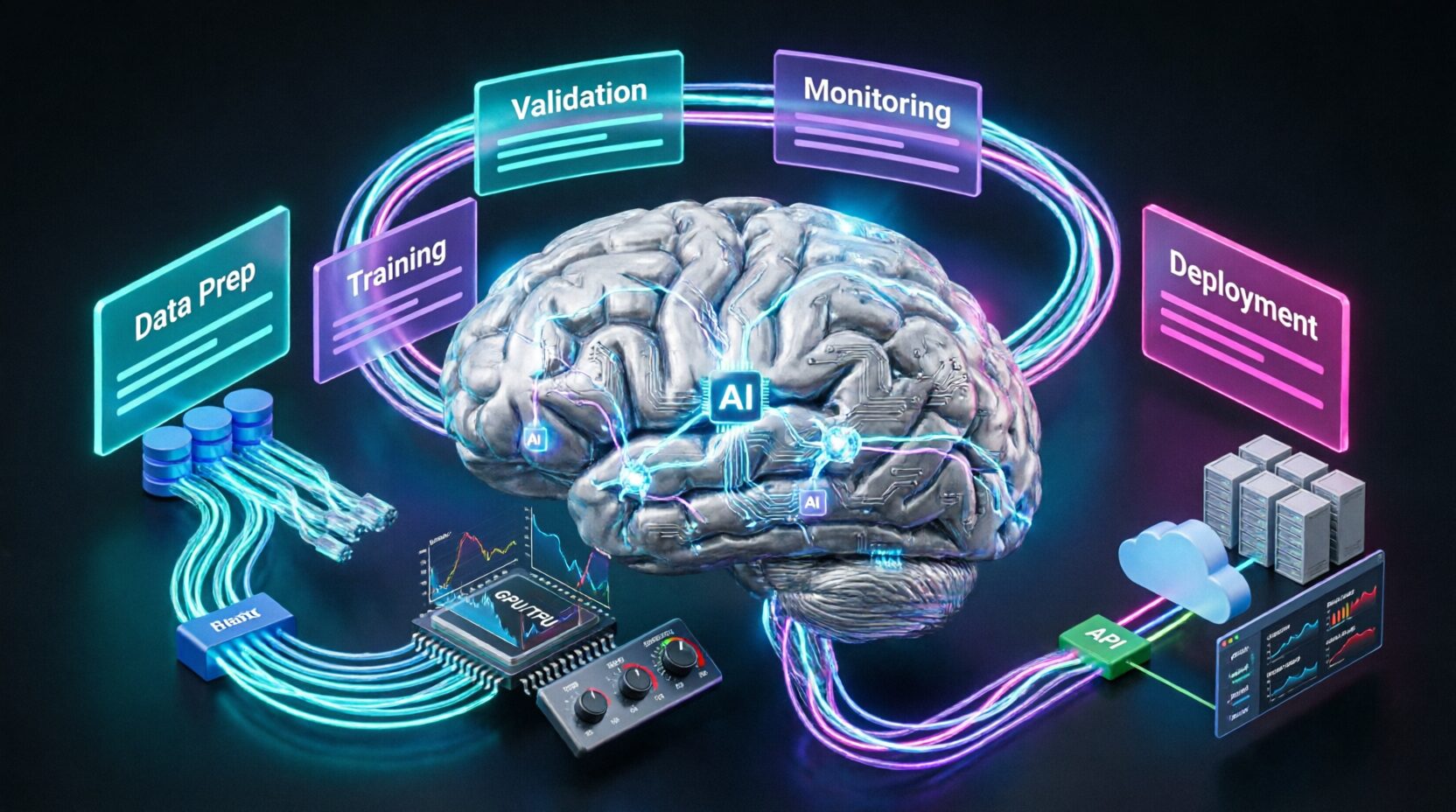
![AI image generation prompts workflow diagram showing professional text-to-image structures for commercial and editorial use]
The Architecture of High-Fidelity AI Image Generation Prompts
Professional prompt engineering requires moving beyond simple descriptive sentences. To achieve cross-platform consistency and exceptional detail, every set of AI image generation prompts must be constructed using a deliberate architectural framework. A master-level prompt integrates six critical dimensions:
1. Subject Specificity and Demographics Precision is paramount. Instead of a generic description, a professional prompt dictates exact parameters, specifying age, ethnicity, skin texture, facial symmetry, and eye color to ground the subject in reality.
2. Wardrobe and Styling Detail the materials, textures, and fit of the attire. Describe the flow of fabrics, the reflectivity of jewelry, and the precise styling of hair to ensure the AI understands the physical properties of the clothing.
3. Biomechanics and Expression Define the physical posture and emotional resonance. Specify the exact positioning of the limbs, the angle of the torso, and the micro-expressions on the face to convey the desired mood and confidence.
4. Cinematography and Optics Utilize professional photography terminology to dictate the camera’s perspective. Specify the lens focal length, aperture settings for depth of field, and the exact camera angle to control the viewer’s relationship to the subject.
5. Lighting and Environmental Design Lighting dictates the mood. Define the quality of the light, such as cinematic ambient natural lighting, the presence of atmospheric elements like dust particles in light beams, and the color temperature of the environment.
6. Rendering and Aesthetic Quality Anchor the image in a specific artistic reality. Specify the desired resolution, the level of biometric detail, and reference specific camera bodies or fine art photography styles to ensure a photorealistic finish.
Platform-Specific AI Image Generation Prompts
Each AI model possesses a unique underlying architecture, requiring tailored approaches to how instructions are delivered. Crafting effective AI image generation prompts requires understanding these platform-specific nuances.
Midjourney Prompt Engineering
Midjourney remains the premier tool for aesthetic interpretation and artistic photorealism. Its strength lies in its ability to synthesize complex stylistic cues into visually stunning compositions. Midjourney relies heavily on appending specific parameter flags at the end of your descriptive text to control the aspect ratio, model version, and artistic stylization. For official parameter references, visit the Midjourney Documentation.
Applied Example: A handsome male with tanned skin and long black hair, wearing a textured sleeveless hoodie, sitting on a minimalist stool, bright cheerful smile, high-angle shot, cinematic ambient natural lighting, dust particles in light beams, ultra-realistic fine art photography, 8k resolution.
DALL·E 3 Prompt Engineering
DALL·E 3 excels in natural language comprehension and strict adherence to complex instructions. Unlike Midjourney, which favors poetic abstraction, DALL·E 3 requires precise, conversational, and logically structured sentences. It is the industry standard for conceptual work and accurate in-image text rendering. Learn more at the official OpenAI DALL·E Guide.
Applied Example for Commercial Design: Create a professional product photograph of a sleek, modern smartwatch featuring a brushed titanium case and a black leather band. Position the watch at a 45-degree angle on a minimalist white marble surface. Utilize soft, diffused studio lighting with subtle reflections. Employ a shallow depth of field to gently blur the background while keeping the watch face and leather texture in ultra-sharp focus. Commercial advertising quality, shot on a Canon EOS R5 with a 100mm macro lens.
Stable Diffusion Prompt Engineering
Stable Diffusion offers unparalleled technical control, making it the preferred engine for developers and technical artists. It utilizes token weighting to emphasize specific concepts and relies on a dedicated negative prompt field to explicitly ban unwanted artifacts and stylistic deviations. Explore advanced models and workflows at CivitAI or the official Stability AI Repository.
Applied Example: A photorealistic portrait of a beautiful 30-year-old Caucasian woman with a curvaceous figure, long wavy ginger hair with multicolored streaks, and green eyes. She has glowing skin with visible pores and intricate tattoos on her arms, wearing an elegant evening gown. The scene features professional three-point studio lighting with a soft key light and rim lighting, captured with an 85mm lens at f/2.8 for an ultra-detailed, 8k masterpiece.
Flux AI Prompt Engineering
Flux AI has rapidly established itself as a heavyweight in 2026, specifically engineered for compositional accuracy, complex multi-subject coherence, and flawless text rendering. It bridges the gap between the artistic flair of Midjourney and the strict adherence of DALL·E 3. For technical specifications, review the Flux AI Official Documentation.
Applied Example: A bustling Parisian café scene at dusk. In the foreground, a young Japanese woman in a silk kimono sits at a wrought-iron table, holding a ceramic coffee cup. Behind her, the Eiffel Tower glows with golden lights against a twilight sky. Warm ambient lighting from café lanterns creates rich bokeh effects. Shot on 35mm film, Kodak Portra 400 aesthetic, shallow depth of field, cinematic composition.
Specialized Applications for AI Image Generation Prompts
Different commercial and creative verticals require tailored approaches to AI image generation prompts. Below are industry-standard templates adapted for specific use cases.
Cinematic Photography Prompts
Creating film-quality stills requires an understanding of color theory, lens characteristics, and directorial styles. A professional cinematic template requires defining the subject in a specific setting, executing a clear action, utilizing a distinct camera angle, applying a specific lighting style, choosing a color grading palette, and referencing a specific camera, film stock, or cinematographer.
Applied Example: A confident female CEO in a sleek black power suit standing in a modern glass-walled office at sunset, hands on hips, looking out at the city skyline. Low-angle hero shot, dramatic rim lighting with warm golden tones, teal and orange color grading. Shot on ARRI Alexa 65, cinematography inspired by Roger Deakins, ultra-cinematic, 8k resolution.
Portrait Photography Prompts
Hyper-realistic portraiture demands meticulous attention to micro-details, particularly skin texture and lighting falloff. The template must meticulously layer demographic data, physical features, hair and eye details, skin texture nuances, expression, attire, lighting setup, lens specifications, and the overarching photography style.
Applied Example: Portrait of a 24-year-old Indian female, slim physique, symmetrical facial features, large expressive blue eyes, smooth chestnut hair falling naturally. Glowing skin with visible pores, fine vellus hair, and micro-contrast. Confident, relaxed expression, wearing a traditional embroidered dress. Soft Rembrandt lighting, 85mm lens at f/1.8, neutral gray studio background. Fine art photography style, shot on Hasselblad H6D-100c, ultra-realistic, 8k.
Commercial Product Photography Prompts
Commercial product imagery requires absolute fidelity in material rendering, precise lighting, and brand-safe compositions. The structure must detail the product name, material and color specifics, positioning, surface platform, lighting setup, background, camera gear, and commercial style references.
Applied Example: Professional product photograph of a luxury perfume bottle, frosted glass with a rose gold cap, positioned at a 45-degree angle. Sitting on a black marble surface with subtle water droplets. Three-point studio lighting with soft diffusers, dark moody background with a subtle gradient. Shot on Phase One XF IQ4 with a 120mm macro lens, high-end cosmetic advertising style, ultra-sharp details, 8k resolution.
Advanced Techniques for Optimizing AI Image Generation Prompts
To truly master AI image generation prompts, professionals must leverage advanced techniques that refine the AI’s attention mechanisms and output consistency.
Token Weighting and Emphasis Many advanced platforms allow you to assign numerical weights to specific words or phrases. By increasing a concept’s weight, you can amplify its influence on the final render, while decreasing the weight of background elements ensures they remain subtle and unobtrusive.
Strategic Negative Prompting AI models struggle with negation in positive text. Instead of prompting for the absence of an item, use positive framing like bare-eyed or unobstructed face. When utilizing platforms that support a dedicated negative prompt field, explicitly list common artifacts to exclude, such as deformed anatomy, asymmetrical eyes, plastic skin texture, watermarks, and low resolution.
Seed Locking for Iteration Consistency is critical in professional workflows. By locking the seed number in the platform’s settings, you can iterate on lighting, styling, or camera angles without altering the core composition or facial structure of the subject, ensuring a cohesive series of images.
Image-to-Image and Control Integration For precise structural control, utilize reference images. Midjourney’s image weight parameters allow you to blend text prompts with visual references seamlessly. In Stable Diffusion, ControlNet’s OpenPose and Depth models ensure the AI adheres strictly to your desired skeletal structure and spatial geometry.
Comprehensive Query Coverage
What is the optimal length for AI image generation prompts? For Midjourney, a concise 50 to 150 words yields the highest signal-to-noise ratio. DALL·E 3 and Flux AI can process longer, highly descriptive natural language paragraphs ranging from 150 to 300 words. Stable Diffusion performs best with 75 to 125 heavily weighted tokens. Quality and specificity always supersede sheer length.
How do professionals resolve anatomical distortions in AI images? Anatomical errors, particularly in hands and faces, are mitigated through strict negative prompting and positive reinforcement of correct anatomy. In advanced workflows, professionals use ControlNet with OpenPose to enforce correct skeletal structures, or utilize inpainting tools to selectively regenerate flawed areas without altering the rest of the composition.
Which platform is best suited for commercial product photography? Flux AI and DALL·E 3 currently lead in material fidelity and text rendering, making them ideal for packaging and conceptual product shots. However, for absolute control over lighting and surface reflections, Stable Diffusion utilizing custom models trained on specific product lines remains the enterprise standard.
How can brand consistency be maintained across multiple AI-generated assets? Maintain a centralized prompt library documenting successful seed numbers, aspect ratios, and stylistic parameters. Utilize character reference features or train custom models on your brand’s specific visual assets to ensure uniform lighting, color palettes, and character design across all generated imagery.
Conclusion
Mastering AI image generation prompts is no longer just a creative exercise; it is a critical technical competency in the 2026 digital landscape. Whether you are leveraging Midjourney for high-end editorial art, DALL·E 3 for conceptual marketing, Stable Diffusion for granular technical control, or Flux AI for commercial precision, the principles of structured, detailed, and iterative prompting remain universal.
By adopting the architectural frameworks and advanced techniques outlined in this guide, you will transition from casual experimentation to professional execution, consistently generating cinematic, hyper-realistic, and commercially viable visual assets.
For further reading on text-based AI optimization, explore our guide on [How to Write AI Prompts] and compare the latest models in our [Best AI Chatbots 2026] breakdown. To discover vetted tools and community workflows, browse the curated [Allesora AI Directory].