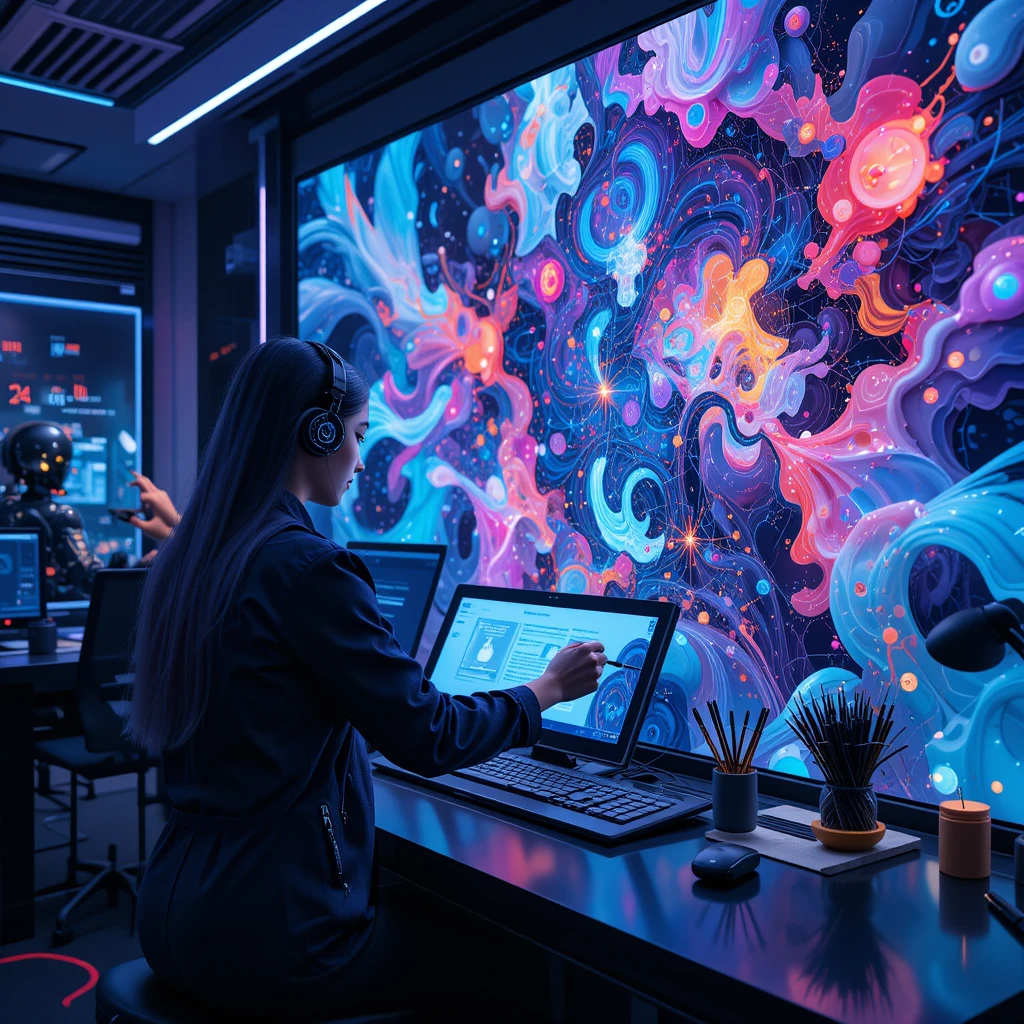
In recent years, artificial intelligence (AI) has transcended its traditional role in data processing and automation to venture into the creative realm. AI generated art is one of the most exciting advancements in the creative industry, allowing machines to produce visual artwork through sophisticated algorithms and machine learning. This blog explores how AI is transforming creativity, the benefits of AI-generated art, and the ethical considerations artists and the art world must face in this rapidly evolving landscape.
1. The Rise of AI in the Art World
AI’s presence in the art world might seem novel, but its influence has been growing for over a decade. Early explorations into AI art involved simple algorithms producing abstract patterns, but as technology advanced, AI has become increasingly adept at mimicking and even innovating on human creativity.
Today, AI-generated art spans various forms, from photorealistic imagery to abstract compositions that rival the works of human artists. As AI becomes more accessible, it’s not only changing how art is created but also expanding the definition of creativity itself.
Key Developments:
- Early AI Experiments: Early work in AI-generated art began with simple generative algorithms.
- Modern Trends: AI art tools like DALL·E and DeepArt are making AI-powered creativity accessible to both artists and hobbyists.
2. How AI Generated Art
At the core of AI generated art lies powerful technology, particularly neural networks and machine learning algorithms. AI tools analyze vast amounts of data to learn patterns, styles, and rules of visual aesthetics. Using models such as GANs (Generative Adversarial Networks), AI can produce artwork by “learning” from millions of images and creating unique pieces from the data.
For example, a GAN has two parts—a generator and a discriminator. The generator creates images, while the discriminator evaluates how realistic the generated images are compared to real artwork. Over time, this process fine-tunes the AI’s ability to create stunning visuals.
Process:
- Data Input: The AI tool receives data (images, styles, or prompts).
- Analysis: The machine learning algorithm analyzes patterns in the data.
- Output: The AI produces a new, often unique piece of art based on the input and learned data.
3. Benefits of AI-Generated Art
The rise of AI in creative fields offers numerous benefits for artists, designers, and businesses. Here are some of the major advantages of AI-generated art:
1. Increased Creativity:
AI tools can generate endless variations of artwork, pushing the boundaries of traditional creativity. It opens doors for exploring new styles and aesthetics that were previously unachievable or too time-consuming.
2. Efficiency:
One of the most significant benefits of AI generated art is time efficiency. Artists and businesses can save time by using AI tools to quickly generate visuals, allowing them to focus on other creative aspects.
3. Accessibility:
AI-powered tools provide accessibility to those who may not have formal art training. With just a few clicks, anyone can create compelling artwork using tools like DeepArt and RunwayML.
4. AI Art Tools You Need to Know About
There are several AI art tools that are revolutionizing the way people create digital art. These platforms use advanced algorithms to generate art based on user prompts, images, or styles. Below are some of the top tools used for creating AI generated art:
1. DALL·E:
Developed by OpenAI, DALL·E can generate highly detailed images from text prompts. This tool has gained popularity for its ability to produce creative and often surreal images.
2. DeepArt:
DeepArt is a popular platform that allows users to apply artistic styles to their images. It uses deep learning techniques to turn ordinary photos into artwork that resembles famous painters’ styles.
3. RunwayML:
RunwayML is an AI tool designed for creative professionals. It offers a suite of tools for generating visuals, videos, and even 3D objects, empowering creators with powerful AI capabilities.
5. The Role of Artists in AI-Generated Art
The rise of AI generated art raises an important question: what role do human artists play in this new world of automated creativity? While AI can produce remarkable pieces of art, human intuition, emotion, and personal experience are irreplaceable in the creative process.
Many artists see AI as a collaborator rather than a competitor. By combining human creativity with AI’s data-driven approach, artists can create works that would be impossible through traditional methods alone.
Key Considerations:
- Collaboration: Artists can use AI as a tool to enhance their creative vision.
- Innovation: AI helps push the boundaries of what’s possible in art.
6. Challenges and Ethical Considerations
As with any technological advancement, AI generated art raises ethical concerns, particularly around intellectual property and bias in AI algorithms.
1. Intellectual Property:
Who owns AI generated art? Since AI relies on existing data, questions arise about the originality and ownership of the final output. Some argue that the artist who uses the tool should own the rights, while others believe the tool creators should hold intellectual property rights.
2. Bias in AI:
AI generated art can reflect biases present in its training data. For example, if an AI is trained on a dataset with limited diversity, it may struggle to create artwork that represents a broader range of cultures, identities, and experiences.
3. Automation vs. Human Creativity:
The concern about automation replacing human jobs extends into the creative fields as well. While AI is a powerful tool, it cannot replicate the emotional depth or unique perspective that a human artist brings to their work.
7. The Future of AI in Art
The future of AI generated art is incredibly promising. As AI technology continues to evolve, it will likely become an even more integral part of the creative process. We can expect to see more AI-powered tools, greater collaboration between human artists and machines, and the emergence of entirely new artistic genres and styles.
AI is not just a tool for creating art—it is reshaping how we understand creativity itself. In the coming years, we may see AI-generated art gain greater recognition and value in mainstream art circles and marketplaces.
Conclusion
AI-generated art is a game-changer in the world of creativity, offering new possibilities for both amateur and professional artists. With AI tools like DALL·E and DeepArt, the boundaries of art are being pushed further than ever before. As AI continues to evolve, so too will the role of human artists in collaborating with this cutting-edge technology.
If you’re curious about the future of creativity and how AI is shaping the art world, there’s never been a better time to explore the possibilities of AI-generated art.
FAQs
Ethical concerns include intellectual property rights, bias in AI-generated art, and the impact of AI on human creativity in the art world.
What is AI-generated art?
AI-generated art refers to artwork created using artificial intelligence algorithms, which can produce visual pieces based on data and input from users.
How does AI generate art?
AI generates art by analyzing vast datasets and learning patterns from existing visuals. It uses machine learning techniques, like neural networks, to create unique images or artwork.
Can AI-generated art be considered original?
The originality of AI-generated art is often debated. While AI can produce unique pieces, it relies on existing data, raising questions about how “original” the work truly is.
What are some popular AI tools for generating art?
Some popular AI art tools include DALL·E, DeepArt, and RunwayML, all of which offer various features for creating art using AI algorithms.
What ethical concerns surround AI-generated art?