AI automation refers to the use of artificial intelligence technologies to perform tasks with minimal human intervention. These systems combine machine learning, natural language processing (NLP), and content automation to streamline workflows, enhance productivity, and reduce repetitive manual work.
In 2025, AI automation has become a cornerstone for businesses across industries — from marketing and customer service to finance and manufacturing. As companies seek faster, more accurate, and scalable solutions, AI-driven automation is reshaping how organizations operate and compete globally.
Whether it’s generating content, managing customer interactions, or optimizing supply chains, AI automation delivers powerful tools that improve efficiency and decision-making.
How Do AI Automation Tools Work?

AI automation tools are built on advanced technologies like Natural Language Processing (NLP), GPT models, and extensive training data sets. These tools simulate human-like understanding and execution to automate complex tasks efficiently.
Key Technologies Behind AI Automation:
- Natural Language Processing (NLP): Enables machines to understand and generate human language for applications such as chatbots, content creation, and voice assistants.
- GPT Models (Generative Pre-trained Transformers): Use deep learning to generate coherent text based on prompts, making them ideal for writing, summarizing, and translating content.
- Machine Learning: Allows systems to learn from historical data and improve over time without explicit programming.
- Training Data: Large datasets are used to train AI models, enabling them to recognize patterns, make predictions, and respond accurately.
These technologies work together to enable intelligent automation across various business functions, from document processing and email management to social media scheduling and SEO optimization.
Advantages & Disadvantages of AI Automation Tools
While AI automation offers many benefits, it also comes with certain limitations. Here’s a balanced look at its pros and cons:
Advantages
- Speed up task completion: Automate repetitive processes and reduce turnaround time.
- Improve accuracy and consistency: Minimize errors in data entry, content generation, and decision-making.
- Support SEO with keyword integration: Generate optimized content that aligns with search engine best practices.
- Reduce operational costs: Lower reliance on manual labor and outsourcing.
- Enable scalability: Handle increasing volumes of work without additional overhead.
- Enhance customer experience. Provide instant responses through chatbots and personalized communication.
Disadvantages
- Lack emotional depth or creativity: May miss nuances like humor, sarcasm, or empathy.
- Potential inaccuracies or generic output: Requires editing for factual correctness and originality.
- Risk of unintentional plagiarism: Always review and modify outputs before publishing.
- Over-reliance may reduce critical thinking: Excessive use can hinder personal development and creativity.
- Quality varies between tools. Some tools deliver better results than others, depending on the case.
Despite their limitations, AI automation tools remain valuable assets when used alongside human oversight and strategic planning.
Top 10 AI Automation Tools
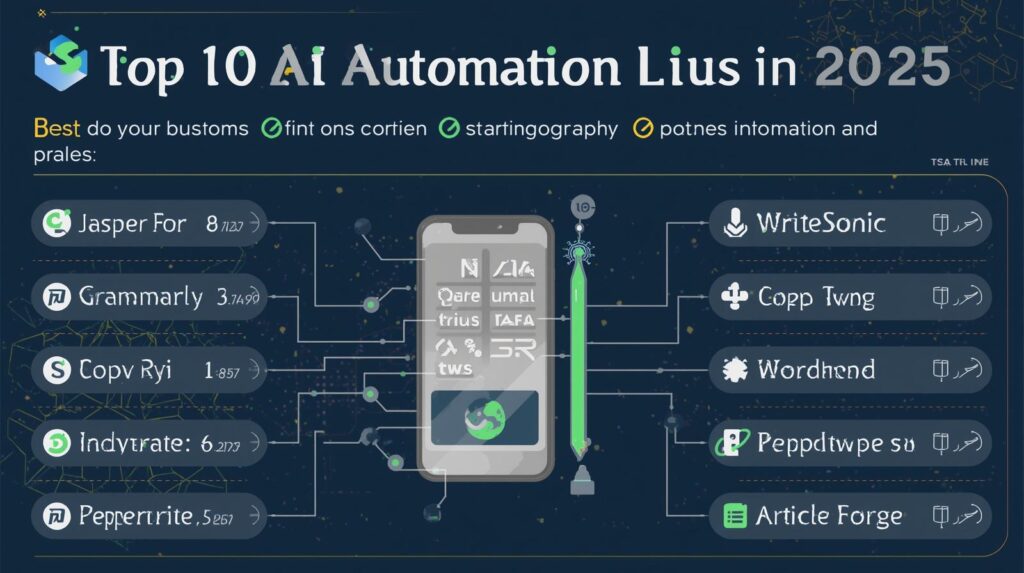
Here is a detailed comparison of the best AI automation tools available in 2025:
| Tool Name | Best For | Starting Price | Free Trial Available | Integrations |
| Jasper | Marketing & sales copy | $49/month | Yes (5-day trial) | Google Docs, WordPress, SurferSEO, Zapier |
| Grammarly | Grammar & tone checking | Free; $12/month billed annually | Yes (Premium free trial) | Gmail, Outlook, Web Browsers |
| Writesonic | E-commerce & ad copy | Free Plan | Yes (Free plan + paid upgrade) | Shopify, Chrome Extension |
| Rytr | Budget-friendly content creation | Free Forever Plan | Yes (Unlimited free plan) | Chrome Extension, Google Docs |
| Copy.ai | Quick marketing copy generation | $49/month | Yes (7-day trial) | Google Docs, Slack, Zapier |
| Wordtune | Rewriting & polishing | Free Plan | Yes (Premium trial) | Gmail, Outlook, Google Docs |
| Anyword | Data-driven marketing content | $29/month | Yes (Credits-based trial) | Google Sheets, Meta Ads |
| Sudowrite | Creative writing & storytelling | $10/month | Yes (Sample stories) | Google Docs |
| Peppertype.ai | Blogging & article writing | $12/month | Yes (Free trial) | Google Docs, WordPress |
| Article Forge | SEO-optimized long-form content | $57/month | Yes (30-day money-back guarantee) | WordPress, CSV Export |
How to Choose the Right AI Automation Tool
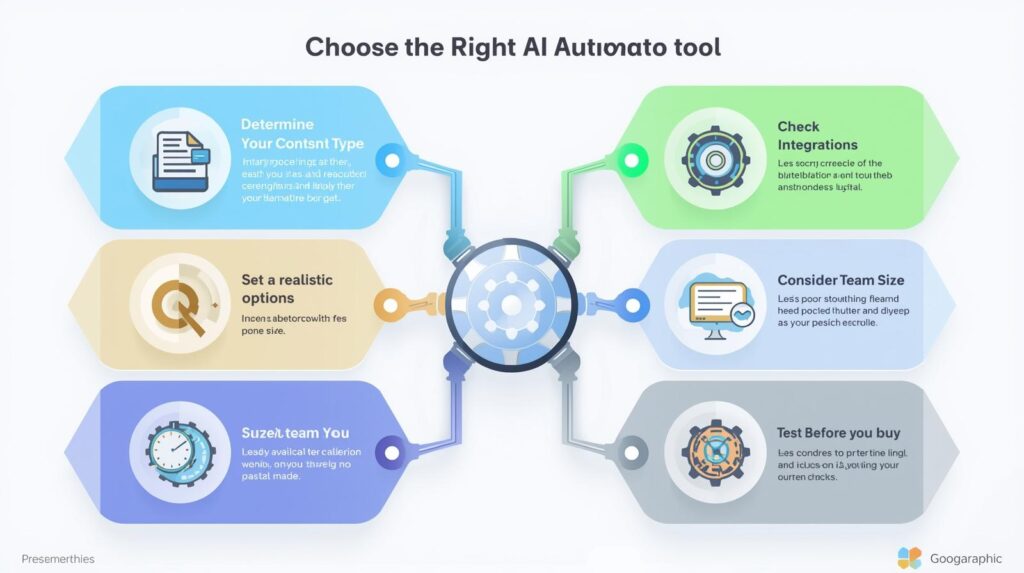
Choosing the right AI automation tool depends on your specific needs. Here’s a step-by-step buyer’s guide to help you make an informed decision:
1. Determine Your Content Type
Are you creating blog posts, ads, emails, product descriptions, or academic papers? Match your use case with the tool’s specialty.
2. Set a Realistic Budget
Choose a tool that fits your budget — whether it’s a free plan, a monthly subscription, or an enterprise solution.
3. Check Integration Options
Ensure the tool works with your current platforms like Google Docs, WordPress, email clients, or CRM systems.
4. Consider Team Size
If you’re working with a team, look for tools with collaboration features such as shared workspaces, permissions, and feedback systems.
5. Test Before You Buy
Take advantage of free trials or freemium plans to test usability, output quality, and integrations.
Frequently Asked Questions (FAQ)
Below are some of the most commonly asked questions about AI automation tools:
Q1: What is the best AI automation tool for small businesses?
For small businesses, Rytr and Writesonic are excellent choices due to their affordability, ease of use, and versatility.
Q2: Can AI automation tools generate SEO-optimized content?
Yes, several tools like Article Forge, Jasper, and Anyword offer SEO suggestions, including keyword placement, readability scores, and competitor analysis.
Q3: Are there AI automation tools for non-native English speakers?
Absolutely! Tools like Grammarly and Wordtune are especially helpful for improving grammar, clarity, and tone for non-native writers.
Q4: Do I still need human editing with AI-generated content?
Yes. While AI can assist with ideation and drafting, human oversight is essential for ensuring emotional depth, factual accuracy, and brand alignment.
Q5: Which AI automation tool works best for long-form content?
Jasper Boss Mode and Article Forge are ideal for long-form articles, blogs, and reports.
Final Thoughts
As we move further into 2025, AI automation tools have become indispensable for content creators, marketers, and business professionals. Whether you’re looking to boost productivity, enhance SEO performance, or overcome writer’s block, these tools offer valuable support in crafting compelling and efficient content.
While AI cannot fully replace human creativity and emotional nuance, it serves as a powerful assistant in refining and accelerating the writing process. By embracing these innovations, you’ll be better equipped to meet the growing demands of digital content creation.
So why not give one a try? Explore the tools listed above, take advantage of free trials, and discover how AI can elevate your workflow today.
Call to Action
Have a favorite AI automation tool? Share it in the comments below!
Don’t forget to share this guide with fellow writers, marketers, or entrepreneurs who could benefit from smarter automation tools.
Want more recommendations? Check out our other guides on AI design tools, voice generators, and SEO optimization strategies.