AI for healthcare operations has fundamentally transformed how modern medical institutions deliver care, shifting the paradigm from reactive, administrative-heavy environments to proactive, highly efficient, and patient-centric ecosystems. In an era where healthcare systems face unprecedented pressures from staffing shortages, rising costs, and complex patient needs, relying on legacy software and manual workflows is no longer a viable strategy. Today, forward-thinking hospitals and clinics are leveraging advanced machine learning, natural language processing, and predictive analytics to streamline workflows and enhance clinical outcomes. If you are a healthcare administrator, clinical leader, or health IT director looking to understand how to deploy AI for healthcare operations effectively, you are in the right place.
This comprehensive guide demystifies the complex landscape of medical artificial intelligence. We will explore the capabilities of AI clinical decision support systems, detail the mechanics of AI healthcare revenue cycle management, and provide a strategic roadmap for implementation. By the end of this article, you will have a clear, actionable blueprint for leveraging AI medical imaging analysis, ensuring AI healthcare compliance automation, and measuring your AI healthcare ROI measurement to drive sustainable, life-saving growth.
1. The Evolution of Care: Integrating AI into Healthcare Operations
Historically, healthcare technology has been fragmented, with disparate systems struggling to communicate. The integration of AI for healthcare operations represents a quantum leap forward, unifying clinical and administrative functions into a cohesive, intelligent network.
At the heart of this transformation is AI healthcare data interoperability. Modern AI platforms can ingest, normalize, and analyze data from electronic health records (EHRs), wearable devices, and laboratory systems in real-time. According to a comprehensive report by the Healthcare Information and Management Systems Society (HIMSS), organizations that successfully integrate AI into their operational workflows report a 20% to 30% improvement in administrative efficiency and a significant reduction in clinician burnout. This shift is not about replacing medical professionals; it is about augmenting their capabilities and removing the friction that impedes high-quality care.
2. Enhancing Clinical Outcomes: Decision Support and Diagnostics
The most profound impact of AI in medicine lies in its ability to assist clinicians in making faster, more accurate diagnoses and treatment plans.
AI Clinical Decision Support Systems AI clinical decision support systems analyze vast amounts of patient data against the latest medical literature to provide real-time, evidence-based recommendations. Whether it is suggesting differential diagnoses for complex symptoms or flagging potential adverse drug interactions, these systems act as a vital safety net for physicians.
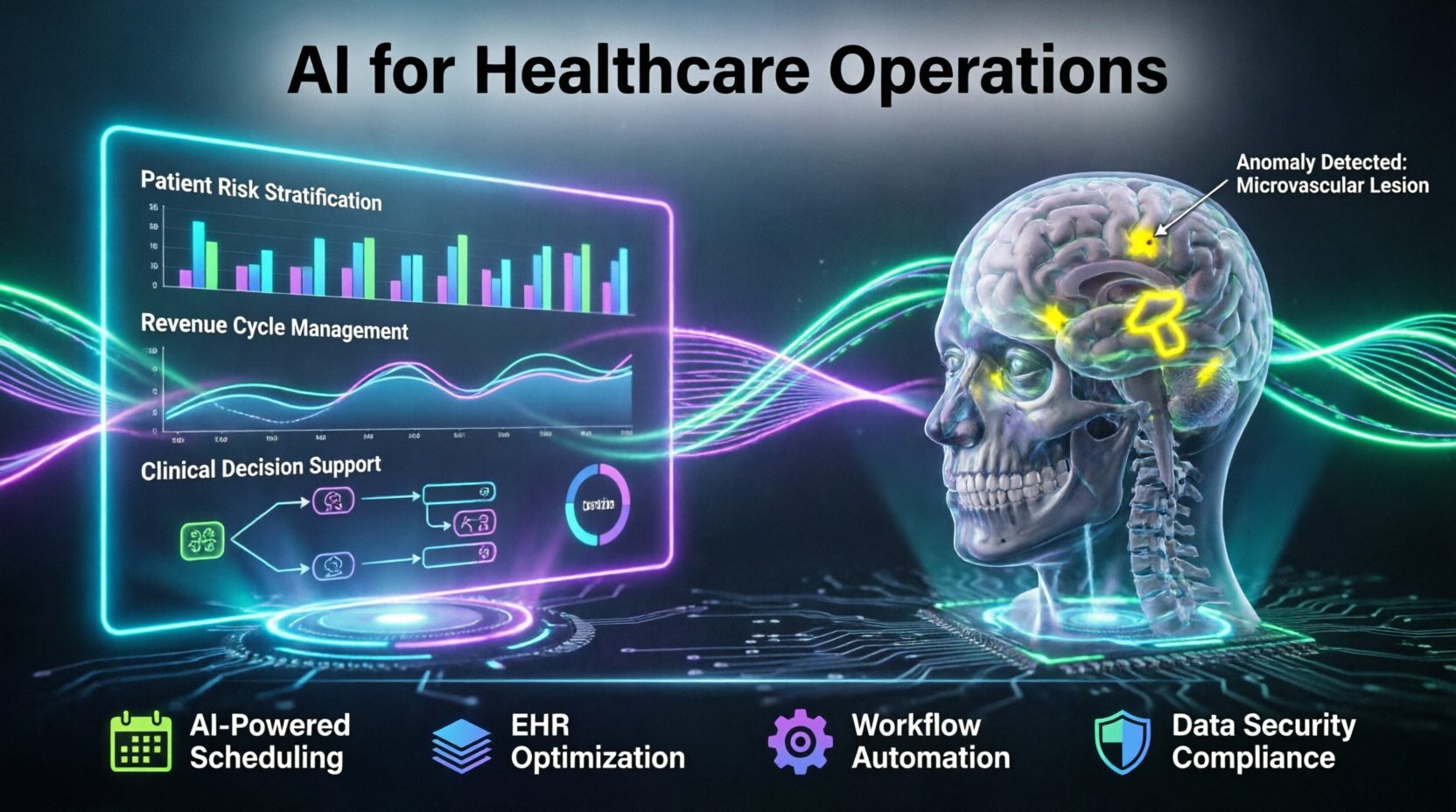
AI Medical Imaging Analysis Radiology has been revolutionized by AI medical imaging analysis. Deep learning algorithms can now detect anomalies in X-rays, MRIs, and CT scans with accuracy rates that match or exceed human radiologists. This not only speeds up diagnosis but also helps prioritize critical cases, ensuring that patients with life-threatening conditions receive immediate attention.
AI Patient Risk Stratification and Telehealth Proactive care is the future of medicine. AI patient risk stratification models analyze historical health data to identify individuals at high risk for chronic conditions or hospital readmission, allowing care teams to intervene early. Similarly, AI telehealth diagnostic tools are expanding access to care by providing preliminary assessments and triage through virtual platforms, ensuring patients are directed to the appropriate level of care efficiently.
AI Mental Health Screening Tools Mental health is a growing crisis, and AI is stepping in to bridge the gap. AI mental health screening tools analyze speech patterns, text responses, and behavioral data to detect early signs of depression, anxiety, or cognitive decline, enabling timely and compassionate interventions.
3. Optimizing the Business of Care: Revenue, Coding, and Scheduling
While clinical care is the mission, financial sustainability is the engine. AI for healthcare operations is drastically reducing administrative waste and optimizing financial performance.
AI Healthcare Revenue Cycle Management The revenue cycle is notoriously complex. AI healthcare revenue cycle management platforms predict claim denials before they happen, automate prior authorizations, and accelerate the billing process. This results in faster reimbursements and improved cash flow for healthcare providers.
AI Medical Coding Automation Medical coding is a tedious, error-prone process. AI medical coding automation utilizes natural language processing to read clinical notes and automatically assign the correct ICD-10 and CPT codes. This reduces coding errors, ensures compliance, and frees up medical coders to focus on complex, edge-case reviews.
AI Patient Scheduling Optimization No-shows and inefficient scheduling cost healthcare systems billions annually. AI patient scheduling optimization algorithms analyze historical attendance data, patient demographics, and provider availability to predict no-show risks and automatically overbook or send targeted reminders, maximizing clinic utilization.
AI Healthcare Fraud Detection Protecting resources is critical. AI healthcare fraud detection systems monitor billing patterns in real-time, identifying anomalous claims or suspicious provider behavior that may indicate fraudulent activity, saving payers and providers millions of dollars.
AI Healthcare Supply Chain From PPE to pharmaceuticals, AI healthcare supply chain solutions predict demand spikes, optimize inventory levels, and automate reordering, ensuring that critical medical supplies are always available without excessive carrying costs.
4. Advancing Research and Compliance: Drug Discovery and Regulatory Processes
Beyond the hospital walls, AI is accelerating the pace of medical innovation and ensuring strict adherence to regulatory standards.
AI Drug Discovery Acceleration Traditional drug development takes over a decade and costs billions. AI drug discovery acceleration platforms analyze molecular structures and biological pathways to identify promising drug candidates in a fraction of the time, bringing life-saving treatments to market faster.
AI Clinical Trial Matching Finding the right patients for clinical trials is a major bottleneck. AI clinical trial matching tools scan EHRs to identify eligible patients based on complex inclusion and exclusion criteria, dramatically speeding up trial enrollment and diversifying participant pools.
AI Healthcare Regulatory Approval Process and Compliance Navigating the regulatory landscape is daunting. AI healthcare compliance automation tools continuously monitor internal processes against evolving regulations like HIPAA and GDPR. Furthermore, AI is increasingly being used to streamline the AI healthcare regulatory approval process by helping pharmaceutical and device companies organize and submit the massive volumes of data required by agencies like the FDA.
5. Empowering Patients and Staff: Engagement and Workforce Optimization
Technology must serve both the patient and the provider to be truly effective.
AI Patient Engagement Platforms Modern patients expect digital convenience. AI patient engagement platforms deliver personalized health education, medication reminders, and post-discharge follow-ups via preferred communication channels, improving adherence and overall health outcomes.
AI Healthcare Workforce Optimization Burnout is a critical issue in healthcare. AI healthcare workforce optimization tools analyze staffing patterns, patient acuity, and workflow bottlenecks to create optimal nurse and physician schedules. This ensures adequate coverage during peak times while preventing staff exhaustion.
AI Electronic Health Records Optimization Clinicians spend far too much time documenting. AI electronic health records optimization features, such as ambient clinical intelligence, listen to patient-provider conversations and automatically generate structured clinical notes, allowing doctors to look at their patients, not their screens.
6. Implementation, ROI, and the Future of Medical AI
Deploying AI in a highly regulated environment requires a meticulous, phased approach.
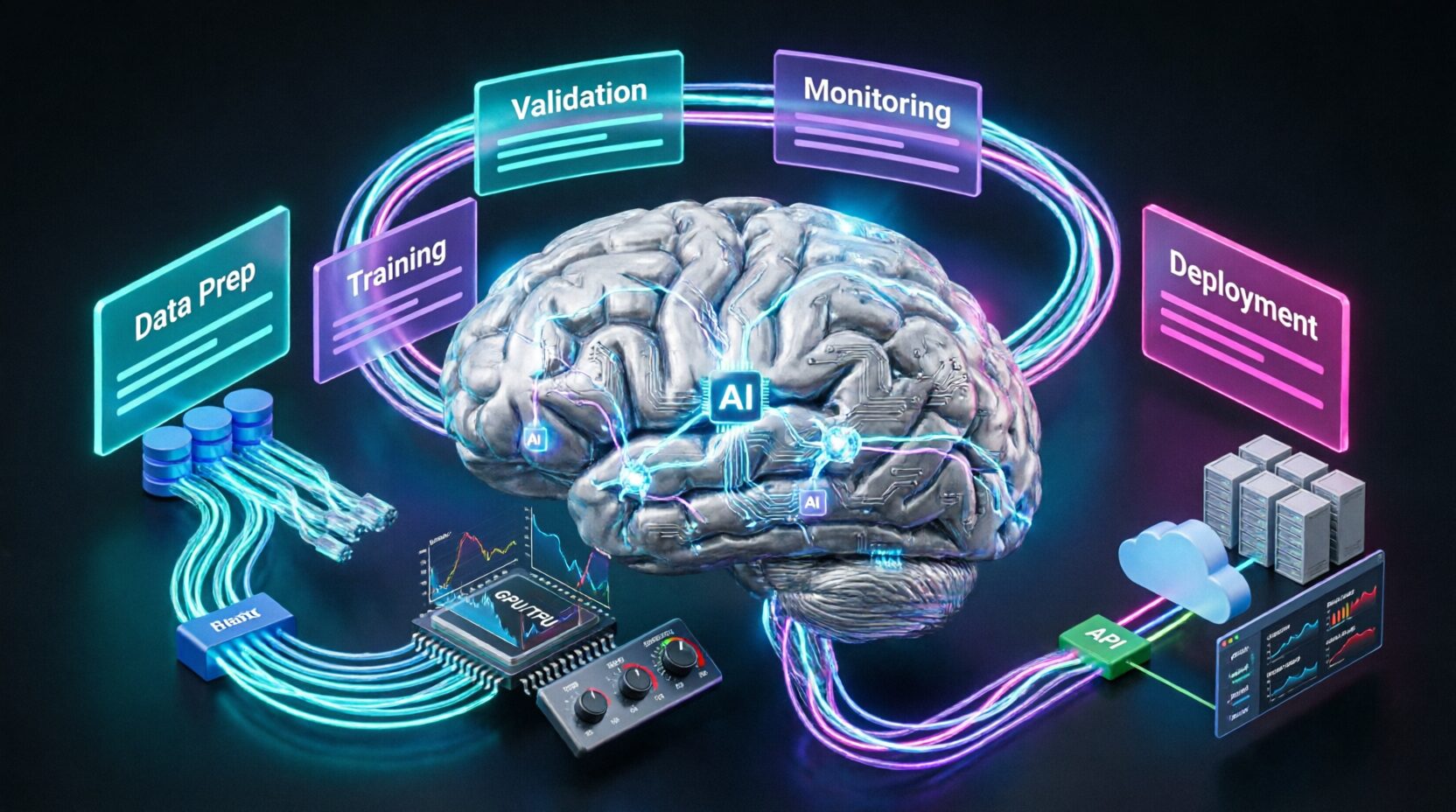
Strategic Implementation Successful AI for healthcare operations implementation begins with identifying high-impact, low-risk use cases (e.g., automating appointment reminders or prior authorizations). It requires robust data governance, cross-functional collaboration between IT and clinical staff, and rigorous validation of AI models to prevent algorithmic bias.
Measuring Success To secure ongoing investment, leaders must focus on AI healthcare ROI measurement. This involves tracking hard metrics like reduction in claim denial rates, decrease in average length of stay, and time saved per clinician, alongside soft metrics like improved patient satisfaction scores (HCAHPS) and reduced staff turnover.
The Future Landscape Looking ahead, the future of medical AI points toward autonomous, predictive health ecosystems. We are moving toward a model where AI not only manages hospital operations but also predicts community health trends, enabling public health interventions before outbreaks occur.
7. Comprehensive Query Coverage
What is the primary benefit of AI for healthcare operations? The primary benefit of AI for healthcare operations is the dual improvement of clinical outcomes and administrative efficiency. By automating routine tasks and providing predictive insights, AI allows healthcare professionals to focus more on patient care while reducing operational costs.
How does AI medical imaging analysis improve diagnostics? AI medical imaging analysis uses deep learning to detect subtle anomalies in scans that the human eye might miss. It acts as a “second reader,” prioritizing critical cases and reducing diagnostic errors, which leads to faster, more accurate treatment plans.
Can AI really optimize the healthcare revenue cycle? Yes. AI healthcare revenue cycle management platforms predict and prevent claim denials, automate prior authorizations, and streamline medical coding. This accelerates reimbursements and significantly improves the financial health of medical practices.
What are the compliance risks of using AI in healthcare? The main risks involve data privacy and algorithmic bias. Implementing robust AI healthcare compliance automation and ensuring AI healthcare data interoperability standards are met is crucial to protect patient information and ensure equitable care.
How do you measure the ROI of AI in healthcare? AI healthcare ROI measurement should track specific KPIs such as reduced administrative hours, lower claim denial rates, decreased patient no-show rates, and improved clinical outcomes like reduced hospital readmissions.
Conclusion
AI for healthcare operations is no longer a futuristic concept; it is the foundational infrastructure required for any medical institution to thrive in 2026 and beyond. By moving beyond legacy, fragmented systems and embracing AI clinical decision support systems, AI healthcare revenue cycle management, and intelligent workforce optimization, healthcare organizations can unlock unprecedented levels of efficiency and patient care.
Whether you are focused on accelerating research through AI drug discovery acceleration, ensuring strict adherence via AI healthcare compliance automation, or empowering your staff with AI electronic health records optimization, the key to success lies in a strategic, well-governed implementation. By carefully selecting the right technologies and rigorously tracking your AI healthcare ROI measurement, you can transform your healthcare facility from an administrative bottleneck into a dynamic, life-saving engine of innovation.
As you embark on this transformative journey, remember that technology is merely the enabler. The true value of AI in healthcare is realized when it is paired with a culture of continuous improvement, robust ethical guidelines, and a clear strategic vision. Embrace the future of intelligent healthcare, and position your organization to lead, heal, and innovate in the years to come.