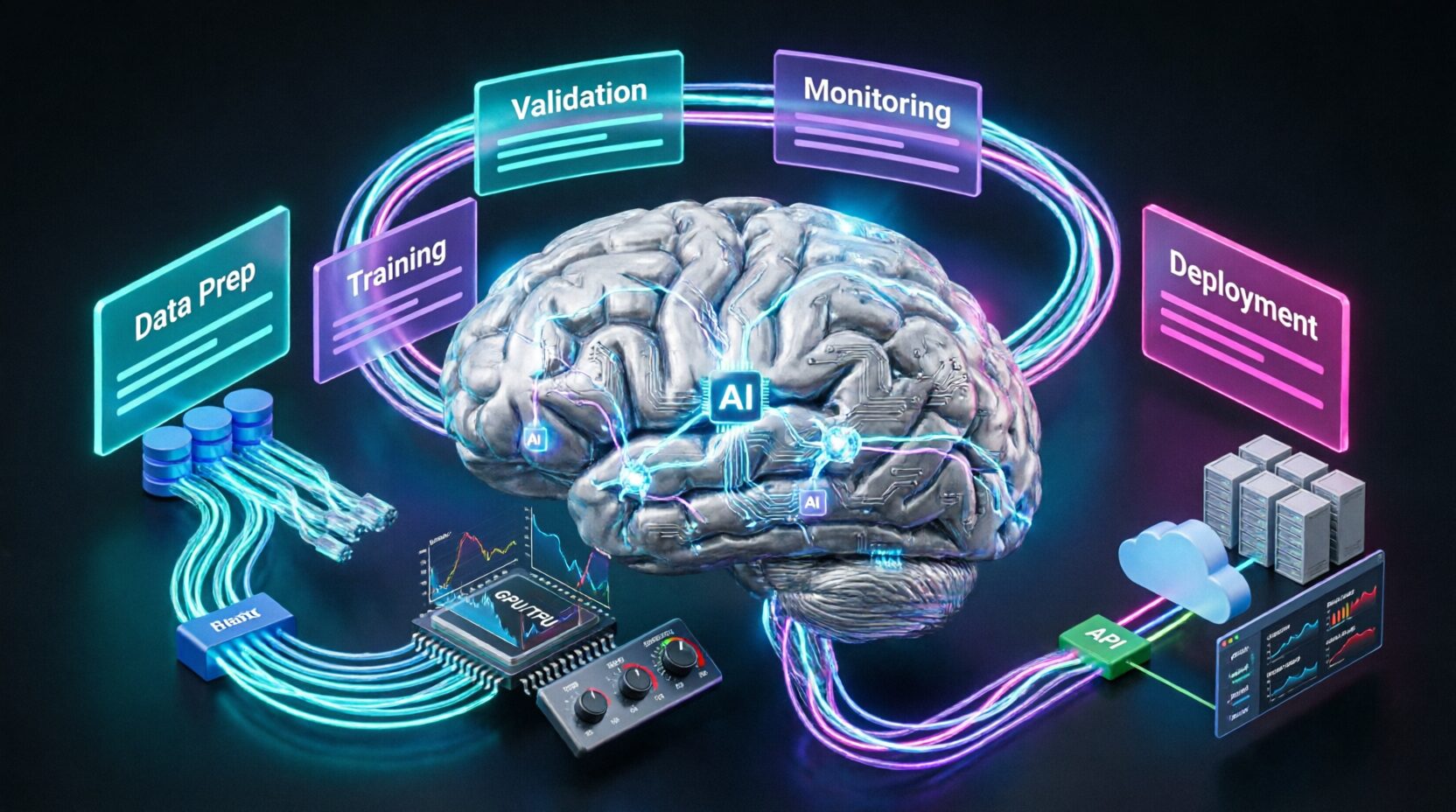
Data science is an ever-evolving field that requires the ability to process, analyze, and derive meaningful insights from large volumes of data. As data grows in complexity and volume, AI tools have become essential for data scientists to effectively manage their workflows and gain deeper insights. These tools leverage artificial intelligence, machine learning, and deep learning technologies to automate, streamline, and enhance data analysis tasks.
In this article, we’ll explore some of the most popular AI tools for data scientists, discussing how they can improve productivity, accuracy, and efficiency in data science workflows.
1. What Are AI Tools for Data Scientists?
AI tools for data scientists are software applications or platforms that help automate and augment various aspects of data science tasks, including data cleaning, exploration, visualization, model building, and deployment. These tools incorporate AI and machine learning algorithms to optimize processes, provide smarter insights, and make data analysis faster and more efficient.
With the right AI tools, data scientists can work more effectively, reduce the time spent on repetitive tasks, and gain insights from data that might otherwise be overlooked.
2. Key AI Tools for Data Scientists
Here are some of the most widely used AI tools that data scientists can leverage for different stages of their workflow:
1. TensorFlow
TensorFlow is one of the most powerful open-source libraries for machine learning and deep learning. Developed by Google, TensorFlow provides a comprehensive ecosystem for building and deploying machine learning models. It is particularly known for its ability to handle large-scale data, making it an ideal tool for deep learning tasks such as image recognition, natural language processing (NLP), and time series analysis.
- Key Features: Model building, neural network architectures, scalable machine learning, deployment tools (TensorFlow Serving), and support for various programming languages.
- Best For: Developing deep learning models, particularly for image and speech recognition.
2. PyTorch
PyTorch is another open-source machine learning library that has gained popularity for its flexibility and ease of use, particularly among researchers and developers working on deep learning projects. Developed by Facebook’s AI Research lab, PyTorch allows dynamic computation, making it more intuitive to work with than TensorFlow for many data scientists.
- Key Features: Dynamic computation graph, deep learning models, strong support for GPUs, extensive pre-trained models, and strong integration with Python.
- Best For: Deep learning, natural language processing, and research-focused machine learning.
3. Scikit-learn
Scikit-learn is a widely used Python library for machine learning that provides simple and efficient tools for data mining and data analysis. It is built on top of other Python libraries such as NumPy, SciPy, and matplotlib. Scikit-learn includes a wide range of algorithms for classification, regression, clustering, and dimensionality reduction.
- Key Features: A wide selection of machine learning algorithms, model evaluation tools, data preprocessing utilities, and cross-validation.
- Best For: Supervised and unsupervised learning, model building, and machine learning pipelines.
4. Keras
Keras is a high-level neural networks API, written in Python, that runs on top of TensorFlow. It is known for its ease of use, modularity, and extensibility. Keras enables fast experimentation and prototyping, which is ideal for building deep learning models without the need to deal with the complexities of TensorFlow’s low-level programming.
- Key Features: Simple API for neural networks, deep learning model prototyping, support for multiple backends (TensorFlow, Theano), and easy integration with other machine learning libraries.
- Best For: Fast prototyping of deep learning models with TensorFlow.
5. H2O.ai
H2O.ai is an open-source machine learning platform that simplifies the process of building machine learning models. It includes tools for data preparation, machine learning, and model evaluation. H2O.ai supports a range of algorithms, including generalized linear models (GLMs), gradient boosting machines (GBM), and deep learning models, and it allows for both automated machine learning (AutoML) and custom model building.
- Key Features: AutoML, deep learning, time-series forecasting, scalable models, integration with Apache Spark, and compatibility with multiple programming languages.
- Best For: Automated machine learning workflows and scalable machine learning solutions.
6. IBM Watson Studio
IBM Watson Studio is a powerful data science platform that enables data scientists to automate AI model development, deployment, and monitoring. It provides a collaborative environment for teams working on data science and AI projects, integrating with various tools and platforms for seamless project management. Watson Studio offers both AutoAI for automated model creation and tools for manual model development.
- Key Features: Data preparation, model building, AutoAI, deployment tools, cloud-native and collaborative workspace.
- Best For: Enterprise-level data science projects, collaboration, and AutoML tasks.
7. RapidMiner
RapidMiner is a no-code/low-code platform for data science, designed for both beginners and experienced data scientists. It offers tools for data preparation, machine learning, model deployment, and analysis. RapidMiner provides an intuitive drag-and-drop interface, making it a popular choice for users who want to build machine learning models quickly without deep programming knowledge.
- Key Features: Visual workflow designer, data mining, machine learning algorithms, and model evaluation.
- Best For: Business users and data scientists looking for an easy-to-use interface for machine learning tasks.
8. Google Cloud AI Platform
Google Cloud AI Platform offers a suite of AI and machine learning tools for building, deploying, and managing models at scale. This platform includes tools for AutoML, custom model building, and AI-driven data analysis. The AI Platform is deeply integrated with other Google Cloud services, providing seamless integration with BigQuery, TensorFlow, and other services.
- Key Features: AutoML, scalable machine learning, custom model development, and integration with Google Cloud services.
- Best For: Cloud-based machine learning and AI projects, especially for scalable model deployment.
9. DataRobot
DataRobot is an automated machine learning (AutoML) platform that allows data scientists to build and deploy machine learning models quickly. DataRobot automates many parts of the data science workflow, from data preparation to feature engineering and model tuning, enabling users to build powerful models without deep expertise in machine learning.
- Key Features: AutoML, automated feature engineering, model selection, and deployment tools.
- Best For: Users who want to automate machine learning model building and deployment processes.
10. BigML
BigML is a machine learning platform that provides an intuitive and user-friendly interface for building and deploying machine learning models. It offers a variety of tools for supervised and unsupervised learning, as well as time-series forecasting. BigML also includes a range of pre-built templates and workflows for common machine learning tasks.
- Key Features: Automated machine learning, time-series forecasting, visualization tools, and easy integration with other platforms.
- Best For: Data scientists who need an intuitive platform for building machine learning models quickly.
3. How AI Tools Help Data Scientists
AI tools are transforming the way data scientists work by automating repetitive tasks, accelerating model development, and improving the accuracy of insights. Here’s how AI tools help:
- Automation: AI tools automate tasks like feature engineering, data preprocessing, and hyperparameter tuning, reducing the manual effort needed and speeding up the process.
- Model Optimization: Many AI tools include algorithms that can automatically select the best models or optimize model parameters, saving data scientists time in model selection and fine-tuning.
- Data Preprocessing: AI tools can automatically clean and preprocess data, handling tasks like missing value imputation, outlier detection, and feature scaling, which are often time-consuming and error-prone.
- Insight Generation: By leveraging AI algorithms, data scientists can uncover hidden patterns and insights from complex datasets, which would be difficult to identify using traditional methods.
4. FAQs
1. What AI tools should I learn as a beginner in data science? For beginners, learning tools like Scikit-learn, TensorFlow, and Keras is a great starting point. These libraries offer user-friendly interfaces and abundant documentation to help you get started with machine learning and AI.
2. Are there any AI tools that can help me automate my machine learning workflow? Yes, platforms like H2O.ai, DataRobot, and IBM Watson Studio offer automated machine learning (AutoML) capabilities, which can help automate many aspects of the machine learning process, including model selection, feature engineering, and hyperparameter tuning.
3. Can AI tools help me with data cleaning and preprocessing? Yes, AI-powered tools like RapidMiner and BigML include features for automating data cleaning, handling missing values, outlier detection, and feature engineering. These tools can save data scientists considerable time and effort in the early stages of data analysis.
4. Are AI tools for data science free to use? Many AI tools offer free tiers or open-source versions, but more advanced features or cloud-based deployments may require a paid plan. Tools like Scikit-learn and TensorFlow are open-source, while platforms like Google Cloud AI and IBM Watson Studio may offer limited free tiers and paid subscription plans for more advanced features.
5. How do AI tools for data science integrate with my existing tools? Many AI tools are designed to integrate seamlessly with popular data science platforms, such as Jupyter notebooks, GitHub, and cloud services like AWS and Google Cloud. They often provide APIs, SDKs, or plugins for easy integration into your existing workflow.
Conclusion
AI tools are an invaluable asset to data scientists, providing advanced automation, optimization, and insights that can enhance the entire data science workflow. From model building and data preprocessing to insight generation and model deployment, these tools are changing the way data scientists approach problem-solving. By leveraging AI tools, data scientists can boost productivity, improve model performance, and ultimately unlock deeper insights from their data.