Artificial Intelligence (AI) writing tools are advanced software applications that use machine learning and natural language processing to generate, edit, and optimize written content. These tools can produce blog posts, social media captions, marketing copy, product descriptions, emails, and even assist with creative storytelling.
In 2025 , the demand for high-quality, engaging, and SEO-optimized content has never been higher — and neither has the need for speed and efficiency. That’s where AI writing tools come in. Whether you’re a solo blogger, a digital marketer, or part of a growing business, these tools offer powerful support in creating compelling content at scale.
They matter now more than ever due to:
- Rapid growth of online content
- Rising expectations for personalized and optimized writing
- Need for faster turnaround times in competitive markets
How Do AI Writing Tools Work?

At the heart of every AI writing tool lies a combination of Natural Language Processing (NLP) and machine learning models , such as GPT-4, GPT-4o, or Google Gemini. These systems are trained on vast datasets of human-written text from books, articles, and websites, enabling them to understand grammar, context, tone, and intent.
Key Components Behind AI Writing Technology:
- Natural Language Processing (NLP) : Helps the AI interpret and respond to human language accurately.
- GPT Models (Generative Pre-trained Transformers) : Predicts the next word in a sentence based on context, allowing for coherent and relevant content generation.
- LSI Keywords (Latent Semantic Indexing) : Enhances content relevance by understanding related terms and improving SEO performance.
- Content Automation : Uses prompts and templates to streamline repetitive writing tasks like email drafting or product descriptions.
By combining these technologies, AI writing tools can mimic human-like writing styles, adapt tone, and even suggest improvements for clarity and engagement.
Advantages & Disadvantages of AI Writing Tools
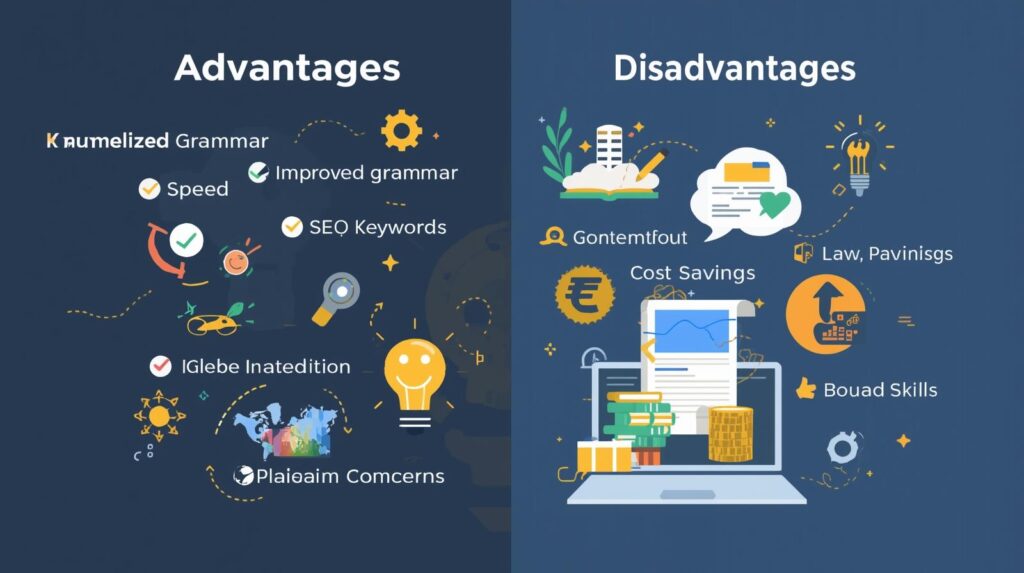
While AI writing tools offer many benefits, they also come with certain limitations. Here’s a balanced look at their pros and cons:
Advantages
- Speed up content creation : Generate drafts in minutes instead of hours.
- Improve grammar and clarity : Real-time suggestions enhance readability and professionalism.
- Support SEO with keyword integration : Suggests keywords, meta descriptions, and structure for better search rankings.
- Multilingual capabilities : Create content in multiple languages for global audiences.
- Reduce writer’s block : Get ideas, outlines, and even full paragraphs when inspiration runs dry.
- Cost-effective solution : Reduce reliance on freelance writers or in-house teams.
Disadvantages
- Lack emotional depth or creativity : May miss nuances like humor, sarcasm, or empathy.
- Potential inaccuracies or generic output : Requires editing for factual correctness and originality.
- Risk of unintentional plagiarism : Always review and modify outputs before publishing.
- Over-reliance may reduce writing skills : Excessive use can hinder personal development and critical thinking.
- Quality varies between tools : Some tools deliver better results than others depending on use case.
Despite their limitations, AI writing tools remain powerful allies when used alongside human oversight and creativity.
Top 10 AI Writing Tools
Here’s a detailed comparison of the best AI writing tools available in 2025:
| Tool Name | Best For | Starting Price | Free Trial Available | Integrations |
| Jasper | Marketing & sales copy | $49/month | Yes (5-day trial) | Google Docs, WordPress, SurferSEO, Zapier |
| Grammarly | Grammar & tone checking | Free; $12/month billed annually | Yes (Premium free trial) | Gmail, Outlook, Web Browsers |
| Writesonic | E-commerce & ad copy | Free Plan | Yes (Free plan + paid upgrade) | Shopify, Chrome Extension |
| Rytr | Budget-friendly content creation | Free Forever Plan | Yes (Unlimited free plan) | Chrome Extension, Google Docs |
| Copy.ai | Quick marketing copy generation | $49/month | Yes (7-day trial) | Google Docs, Slack, Zapier |
| Wordtune | Rewriting & polishing | Free Plan | Yes (Premium trial) | Gmail, Outlook, Google Docs |
| Anyword | Data-driven marketing content | $29/month | Yes (Credits-based trial) | Google Sheets, Meta Ads |
| Sudowrite | Creative writing & storytelling | $10/month | Yes (Sample stories) | Google Docs |
| Peppertype.ai | Blogging & article writing | $12/month | Yes (Free trial) | Google Docs, WordPress |
| Article Forge | SEO-optimized long-form content | $57/month | Yes (30-day money-back guarantee) | WordPress, CSV Export |
Pro Tip: Look for tools offering Chrome extensions , API access , or custom branding if you want deeper integration and scalability.
How to Choose the Right AI Writing Tool
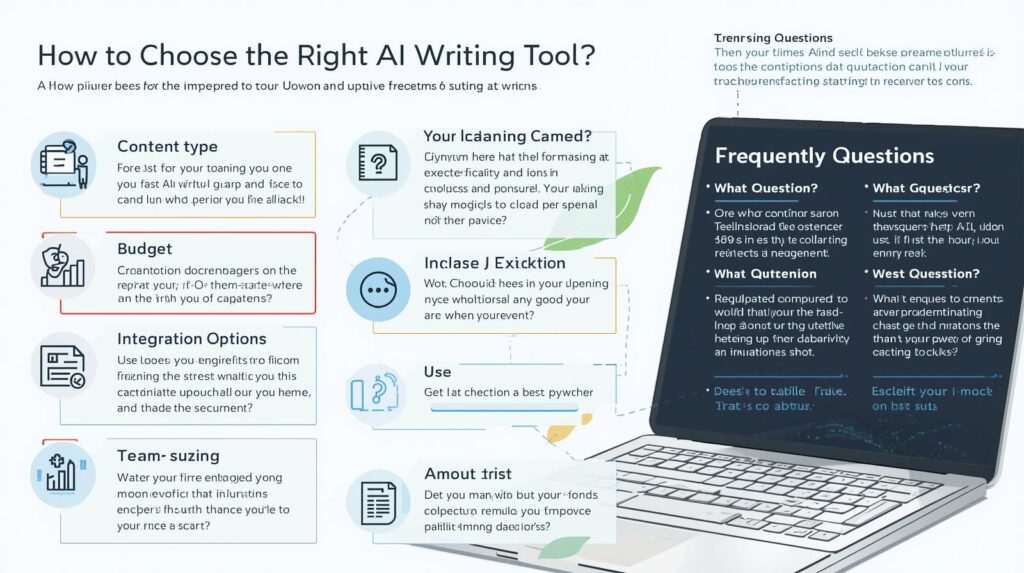
Choosing the right AI writing tool depends on your specific needs. Here’s a simple buyer’s guide to help you make the best decision:
1. Determine Your Content Type
Are you creating blog posts, ads, emails, product descriptions, or academic papers? Match your use case with the tool’s specialty.
2. Set a Realistic Budget
Choose a tool that fits your budget — whether it’s a free plan, monthly subscription, or enterprise solution.
3. Check Integration Options
Ensure the tool works with your current platforms like Google Docs, WordPress, email clients, or CRM systems.
4. Consider Team Size
If you’re working with a team, look for tools with collaboration features such as shared workspaces, permissions, and feedback systems.
5. Test Before You Buy
Take advantage of free trials or freemium plans to test usability, output quality, and integrations.
Frequently Asked Questions (FAQ)
Below are some of the most commonly asked questions about AI writing tools:
Q1: What is the best AI writing tool for small businesses?
For small businesses, Rytr and Writesonic are excellent choices due to their affordability, ease of use, and versatility.
Q2: Can AI writing tools generate SEO-optimized content?
Yes, several tools like Article Forge , Jasper , and Anyword offer SEO suggestions including keyword placement, readability scores, and competitor analysis.
Q3: Are there AI writing tools for non-native English speakers?
Absolutely! Tools like Grammarly and Wordtune are especially helpful for improving grammar, clarity, and tone for non-native writers.
Q4: Do I still need human editing with AI-generated content?
Yes. While AI can assist with ideation and drafting, human oversight is essential for ensuring emotional depth, factual accuracy, and brand alignment.
Final Thoughts
As AI technology continues to evolve, so too do the capabilities of AI writing tools. Whether you’re a blogger, marketer, student, or entrepreneur, leveraging these tools can significantly boost your productivity and content quality.
While AI cannot fully replace human creativity and emotional nuance, it remains an invaluable assistant in crafting engaging, optimized, and efficient content.
So why not give one a try? Explore the tools listed above, take advantage of free trials, and discover how AI can enhance your writing process today.