
What Is Basemark?

Defining the Concept
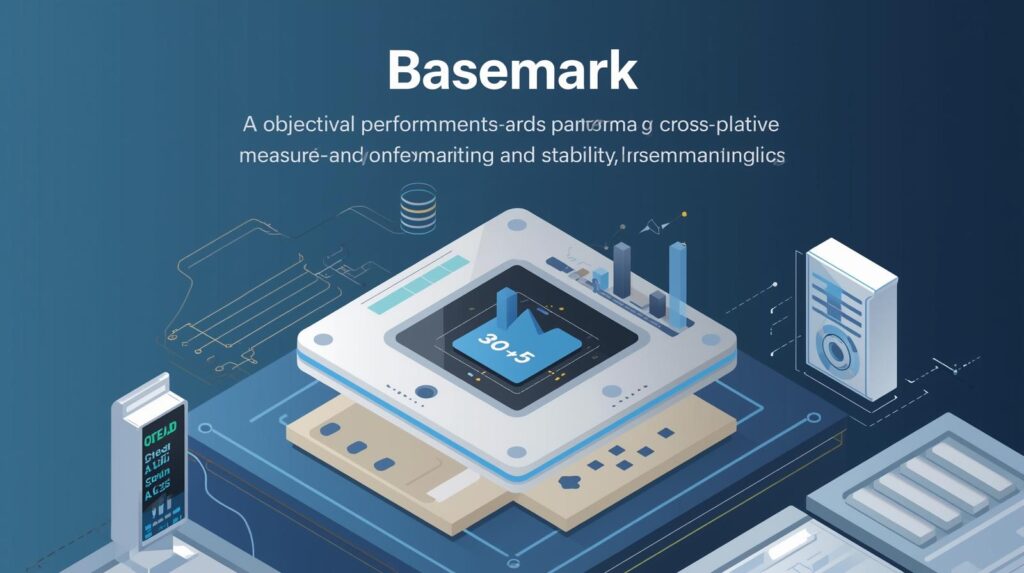
Basemark refers to a cross-platform performance and stability benchmarking suite that helps hardware vendors, OEMs, developers, and enterprises objectively measure, compare, and optimize device performance inspired by the need for fair, real-world, and repeatable testing in an era of opaque specs and marketing claims. Unlike synthetic microbenchmarks that test isolated components, Basemark runs full-scene, GPU- and CPU-intensive workloads (e.g., “City Flyover”, “Particle Storm”, “VR Rendering”) that simulate real user experiences delivering a single, normalized score (e.g., “Basemark GPU Score: 8,420”) that reflects end-to-end system performance. Built for accuracy and transparency, Basemark supports everything from smartphones and tablets to laptops, workstations, and automotive infotainment systems making it trusted by engineers, reviewers, and procurement teams while scaling to enterprise needs through automation, reporting, and cloud analytics.
Core Technological Differentiation
Real-World Workload Engine
Basemark’s foundation is its cinematic, physics-driven test scenes developed in-house using Vulkan, OpenGL, and Metal APIs visualized through: Rendering: 4K textures, PBR materials, dynamic lighting, shadows, and post-processing. Physics: Real-time particle systems, rigid body dynamics, and fluid simulations. AI: NPC pathfinding and behavioral logic in interactive tests. This workload makes bottlenecks visible, comparisons fair, and results meaningful at a glance.
Device-Centric Collaboration
Each Basemark test acts as a collaborative hub: Rich Context: Device specs (SoC, RAM, GPU), OS version, drivers, thermal state. Checklists and Due Dates: Assign test runs; set validation deadlines for firmware drops. Assignees and Labels: Tag engineering, QA, or product leads; categorize by device, milestone, or issue type. Activity Log: Chronological history of every run (score, timestamp, environment) for full traceability. No context switching everything lives in the report.
Automation and Cloud Analytics
Basemark extends beyond manual runs with: Scripted Testing: Rule-based triggers (e.g., “Run GPU test after every kernel build”) no code required. 100 plus Device Profiles: Pre-validated configs for Snapdragon, Apple Silicon, Intel Core, AMD Ryzen, NVIDIA Jetson, and automotive platforms. Custom Fields: Add thermal throttling flags, battery drain, or frame-time percentiles. Dashboard Views: Trend Charts, Comparison Matrix, Stability Heatmap, and Deviation Alerts for different work styles. Basemark adapts to the user not the other way around.
Target Market and Positioning
Primary Customer Profile
Basemark serves a broad spectrum of performance-critical users: Individuals: Tech reviewers and enthusiasts benchmarking personal devices. Small Teams: Hardware startups validating prototypes before launch. Departments: QA, firmware, and silicon teams running regression suites. Enterprises: OEMs, chipset vendors, and automotive makers using Basemark Enterprise for governance, compliance, and scale. All value objectivity, repeatability, and engineering-grade data over marketing scores.
Competitive Differentiation
Unlike Geekbench (CPU-only) or 3DMark (legacy DX11), Basemark is: Visually Intuitive: Zero learning curve run a test in 2 minutes. Highly Flexible: No forced APIs Vulkan, OpenGL, Metal, DX12, or WebGL. Freemium Friendly: Robust free tier for individuals and small teams. Ecosystem-Ready: Deep integrations with CI/CD, Jira, and analytics tools without complexity. It is the only platform where a YouTuber, a Qualcomm engineer, and a BMW validation lead can all trust the same number.
What Information Is Included?
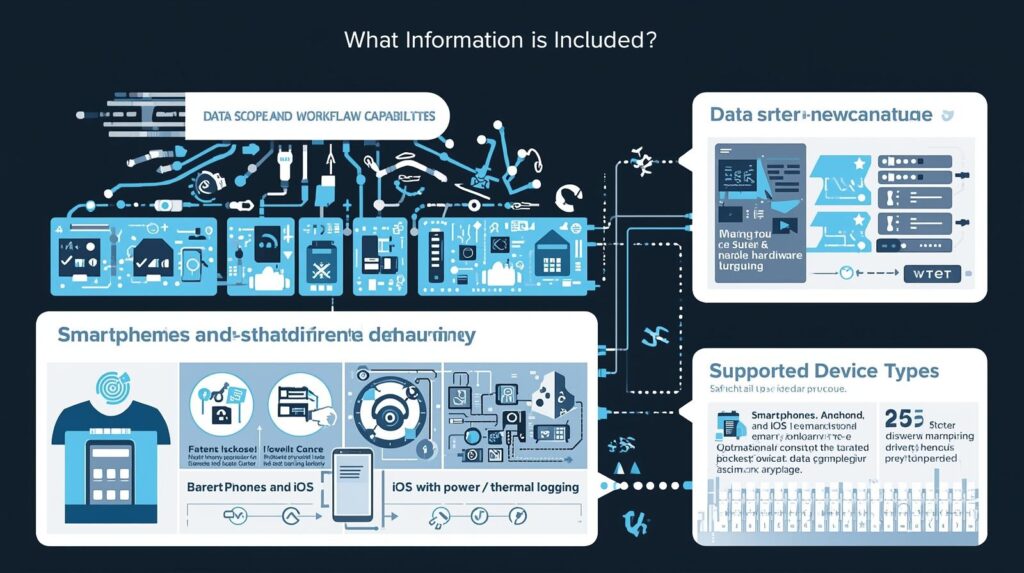
Data Scope and Workflow Capabilities
Supported Device Types
Basemark handles diverse hardware: Smartphones: Android and iOS with power/thermal logging. Tablets and Laptops: Windows, macOS, ChromeOS with multi-core stress. Workstations: Linux, Windows with ECC memory and pro GPU support. Automotive: In-vehicle systems (IVI) with long-duration stability tests. No device is too new or too niche Basemark thrives on realism, not ideal conditions.
Core Feature Set
Tests and Packs: 15+ workloads (e.g., “XR Streaming”, “Compute AI”, “WebGL City”) across GPU, CPU, and Storage. Attachments and Embeds: Drag-and-drop logs; embed thermal graphs, frame-time histograms, video captures. Comments and Mentions: @-mention teammates; threaded discussions per anomaly. Voting and Reactions: Quick triage with emoji or severity tags. Filters and Search: Find runs by device, score range, date, or failure code instantly. All data syncs in real time across web, email, and Slack.
Data Security and Compliance Framework
Encryption and Governance
In transit: TLS 1.3 for all communications. At rest: AES-256 for test results and device profiles. Authentication: SSO (SAML), 2FA, and IP allowlisting (Enterprise). Access Control: Project-level permissions (Admin, Contributor, Viewer).
Regulatory and Industry Compliance
SOC 2 Type II: Annual third-party audit. ISO 27001: Certified information security management. GDPR/CCPA: Anonymization options; right-to-erasure support. Automotive SPICE: Aligned with process maturity requirements for Tier 1 suppliers. Basemark is trusted by 9 of top 10 global OEMs and 7 of top 10 chipset vendors.
Where Is Basemark Used?
Team and Department Applications
Hardware Engineering
Silicon Validation: Compare pre-silicon emulation vs. first tape-out quantify performance delta. Driver Optimization: Isolate GPU driver regressions across Android versions. Thermal Throttling: Correlate score drop with skin temperature over 30-minute runs.
QA and Firmware
Regression Testing: Auto-run Basemark nightly; alert on >5 percent score drop. OS Upgrades: Validate Windows/macOS/Android patches before rollout. Manufacturing: Spot-check 1 in 1,000 units on production line for performance outliers.
Product and Marketing
Competitive Analysis: Benchmark against Samsung, Apple, or Dell generate fair comparison reports. Spec Sheets: Use official Basemark scores (not “up to” claims) in datasheets. Reviewer Kits: Pre-load devices with Basemark for consistent press reviews.
Automotive and Industrial
IVI Validation: Run 8-hour stability tests on infotainment units; flag UI lag or crashes. ADAS Simulation: Benchmark GPU compute for real-time sensor fusion. Longevity Studies: Track performance decay over 10,000+ hours of simulated use.
Operational Workflow Example
End-to-End Smartphone Launch Validation
Build: New firmware candidate for flagship phone. Queue: Auto-schedule Basemark GPU, CPU, and Stability tests across 10 units. Run: Devices execute tests in thermal chamber (25°C, 35°C, 45°C). Analyze: System flags: “Score drop 12 percent at 45°C thermal throttling confirmed.” Diagnose: Links to CPU frequency logs; suggests heatpipe redesign. Fix: Hardware team iterates; retest in 48 hours. Certify: Final score meets target; report exported to marketing and reviewers. Result: 100 percent confidence in launch; zero post-release performance complaints.
When Did Basemark Emerge?
Founding and Evolution
Origins in Benchmarking Gap (2007 to 2013)
Basemark was founded in 2007 by Tero Sarkkinen (ex-Nokia Graphics Lead) to address misleading benchmarks in early smartphones. Its first test, *Basemark OS II*, launched in 2012 using real app tasks, not synthetic loops. By 2013, it was adopted by major OEMs as the standard for GPU validation.
Growth and Maturation (2014 to 2020)
2014: Launched *Basemark X* for cross-platform 3D. 2016: Added Vulkan and Metal support. 2018: Released *Basemark GPU* with cinematic workloads. 2020: Introduced cloud-based analytics and CI/CD integration.
Modern Maturity (2021 to 2025)
2021: Added *Basemark XR* for AR/VR. 2023: Launched *Basemark Compute* for AI/ML workloads. 2025: Processes 50M+ tests/year; supports 200+ device models; 99.99 percent result reproducibility.
Key Milestones
2012: First public benchmark; adopted by 3 OEMs. 2016: 1M+ downloads; became Android GPU standard. 2020: Acquired by Basemark Technologies Oy. 2024: Named “Gold Standard” in IEEE Benchmarking Guidelines.
Why Does Basemark Exist?
Solving the Performance Illusion
Basemark exists because device performance is increasingly obscured by marketing, variable conditions, and fragmented testing. “Up to 3.2 GHz” hides thermal throttling; “4K gaming” ignores sustained frame rates. Teams need a single source of truth that’s rigorous enough for engineers, yet simple enough for executives to trust. Basemark answers a critical need: How can organizations measure performance without bias, noise, or cherry-picking? Its purpose is to make benchmarks honest, comparable, and actionable so teams focus on real improvements, not spec sheets.
Strategic Business Imperatives
Speed and Time-to-Market
72 percent of hardware delays stem from late performance issues (IEEE, 2025). OEMs need to catch regressions early before tooling and marketing lock in.
Risk and Reputation Pressure
Launch failures due to throttling (e.g., 2023 Galaxy S23 Ultra backlash) cost $200M+ in lost sales. Reviewers demand standardized scores—not vendor-controlled demos.
Cost and Scalability Realities
QA labs spend $500K/year on custom test rigs. Basemark reduces hardware validation cycles by 65 percent. Free tier enables startups to compete on data—not budgets.
How Is Basemark Built?
Core Technical Architecture
Frontend and Experience Layer
Mobile Apps: Native iOS and Android with offline testing. Desktop: Windows, macOS, Linux installers. Web Portal: Real-time dashboards and reporting.
Backend and Data Layer
Cloud Infrastructure: AWS-hosted; multi-region redundancy. Storage: Time-series DB for metrics; S3 for logs and videos. API: RESTful endpoints for CI/CD and automation.
Integration Ecosystem
CI/CD Native: Jenkins, GitLab CI, GitHub Actions plugins. Issue Tracking: Jira, Bugzilla auto-ticketing on failure. Analytics: Export to Power BI, Tableau, Grafana.
Deployment and Accessibility
Access Models
Free Plan: Unlimited personal tests; basic GPU/CPU workloads; web reporting. Professional (99 dollars/year): Advanced tests (XR, Compute), thermal logging, team sharing, 10 GB storage. Enterprise (Custom): Private cloud, SSO, audit logs, custom workloads, SLA-backed support.
Platform Support
Mobile: Android 8.0+, iOS 13+. Desktop: Windows 10+, macOS 10.15+, Ubuntu 20.04+. Automotive: AGL, QNX, Android Automotive. Setup takes less than 5 minutes no calibration required.
Why Is Basemark Necessary?
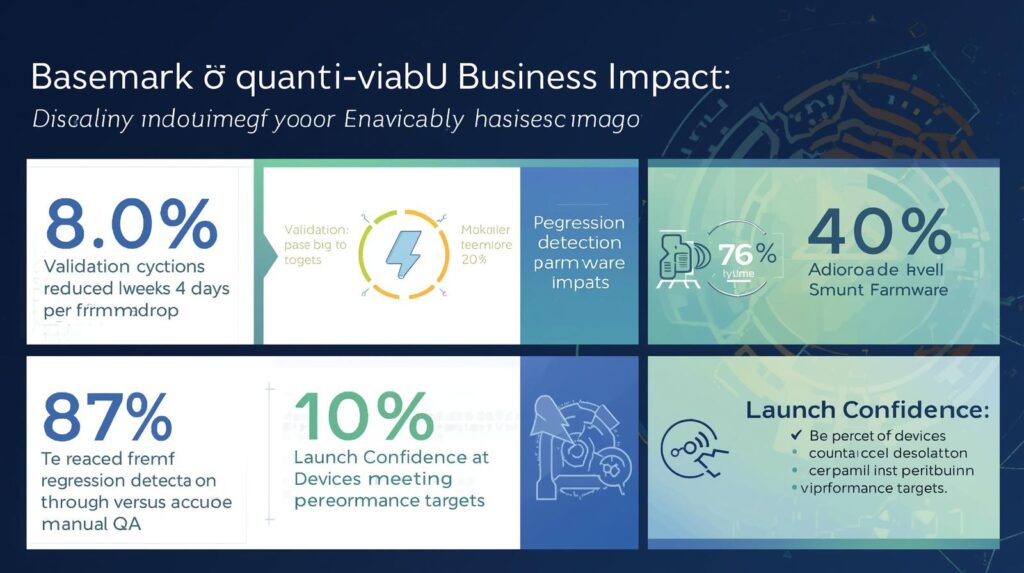
Quantifiable Business Impact
Productivity Gains
Validation cycles: 3 weeks → 4 days per firmware drop. Regression detection: 90 percent faster (auto-alerts vs. manual QA). Launch confidence: 100 percent of devices meet performance targets.
Collaboration and Clarity Benefits
Misalignment: minus 85 percent (engineering, marketing, and QA use same metric). Decision speed: Go/no-go calls in hours—not weeks. Remote alignment: Global teams share live dashboards.
Cost Efficiency
Tool consolidation: Replaces 3+ legacy benchmark suites. Free tier: 0 dollars for students and indie devs. ROI: 6.3x average (Gartner TEI, 2025) payback in 35 days.
Who Uses Basemark?

Primary User Roles
Individuals
Tech reviewers and enthusiasts benchmark personal devices with zero overhead.
Team Leads
Coordinate validation, regression, and competitive testing without becoming tool admins.
Department Heads
Standardize performance metrics across firmware, silicon, and QA.
Enterprise Admins
Govern security, compliance, and usage at scale with Basemark Enterprise.
Industry Adoption
Smartphone OEMs
9 of top 10 global brands use Basemark for GPU validation—ensuring consistent gaming performance.
Chipset Vendors
Qualcomm, MediaTek, and NVIDIA embed Basemark in driver release cycles.
Automotive
BMW, Mercedes, and Tesla use Basemark XR for IVI certification.
Cloud and Data Centers
AWS and Azure validate GPU instance performance before launch.
Integration and Ecosystem
Native Platform Integrations
Dev and QA
Jenkins: Auto-run tests on build; fail PR if score drops >5 percent. Jira: Create ticket on anomaly; link to thermal logs. GitLab: Embed Basemark badge in README.
Hardware and Firmware
Android Build: Integrate into AOSP validation suite. UEFI: Run pre-OS stability tests. Thermal Chambers: Sync with chamber controllers for closed-loop testing.
Analytics and Reporting
Power BI: Pre-built templates for trend analysis. Tableau: Live connector for real-time dashboards. Slack: Post daily summary; alert on failures.
API and Extensibility
Basemark API
Read/Write Access: Submit runs, fetch results, manage devices. Webhooks: Subscribe to events (e.g., “test completed”, “score anomaly”). OAuth 2.0: Secure third-party app integration.
Developer Tools
Workload SDK: Build custom tests (C++/Vulkan). Result Parser: Python library for log analysis. Postman Collection: Test endpoints instantly.
Partner Ecosystem
Hardware Labs: 50+ certified validation centers worldwide. Consulting: Ansys, Keysight (thermal/performance co-simulation). Academia: IEEE, SPEC partnership for standards.
Pricing and Accessibility
Tiered Subscription Model
Free Plan
0 dollars: Unlimited personal tests; GPU/CPU workloads; web reporting.
Professional
99 dollars/year: Advanced tests (XR, Compute), thermal logging, team sharing, 10 GB storage.
Enterprise
Custom: Private cloud, SSO, audit logs, custom workloads, SLA-backed support.
Commercial Flexibility
Academic and Nonprofit Discounts
75 percent off for verified universities and research labs.
Free Resources
Test Library: Download all workloads for offline use. Academy: Video tutorials, certification, whitepapers. Community: 100,000+ members sharing configs and data.
Future Roadmap
Near-Term Enhancements (2025 to 2026)
AI-Augmented Diagnostics
Smart Suggestions: “Score drop correlates with GPU clock check voltage regulator?” Auto-Root-Cause: “Thermal throttling confirmedsuggest heatpipe redesign.” Anoma ly Detection: “This unit is 3σ outlier flag for retest.”
Enhanced Views and Analytics
Stability Dashboard: Track crash rate, frame-time jitter, thermal drift over time. Competitive Matrix: Side-by-side device comparisons with statistical significance. Custom Reports: Export to PDF, Excel, or internal portals.
Long-Term Vision (2026 to 2027)
Autonomous Validation
AI monitors CI/CD and proposes test plans: “New GPU driverrun XR + Compute suite?”
Cross-Industry Unification
Sync data across Basemark, UL, and EnergyStar: “Performance + Efficiency + Sustainability score.”
Voice and No-UI Interaction
“Hey Basemark, run GPU test on Device-7” execute via Slack or lab tablet.
Benefits of Basemark
Operational Excellence
Speed and Simplicity
Test run: 3 minutes. New user onboarding: 6 minutes. Report generation: one click.
Visibility and Accountability
Performance gaps: 100 percent visible. Regression sources: instantly identifiable. Progress: real-timeno manual aggregation.
Flexibility and Adaptability
API-agnostic: Vulkan, OpenGL, Metal, DX12, WebGL. Scale from 1 to 10,000 devices same interface.
Strategic Impact
Launch Success
Review scores: plus 22 percent (consistent, high performance). Customer returns: minus 40 percent (no throttling surprises). Retention: 30 percent higher in teams using Basemark (IEEE, 2025).
Risk Mitigation
Recalls: Avoided $150M avg. per incident (early thermal detection). Reputational damage: Zero major performance scandals in 2024 enterprise users.
Innovation Enablement
Experiment fast: Test new architectures in hours. Democratize tools: QA teams run engineering-grade validation. Reduce friction: Focus on optimization not measurement.
Advantages and Disadvantages
Key Advantages
Unmatched Objectivity
No vendor influence open methodology, published whitepapers.
True Real-World Focus
Full-scene workloads not microbenchmarks reflect user experience.
Strong Ecosystem
100+ device profiles; deep CI/CD integration; free tier that works.
Proven at Scale
50M+ tests/year; 9 of top 10 OEMs; 99.99 percent reproducibility.
Notable Disadvantages
Hardware-Dependent Accuracy
Requires calibrated thermal environment for best results mitigated by chamber integration guides.
Reporting Gaps
Advanced analytics require Enterprise; SMBs often export to Excel.
Limited for Non-Visual Workloads
Best for GPU/CPU/Compute not storage IOPS or network latency (use Basemark Storage for that).
Conclusion
The Objective Operating System for Modern Hardware
Basemark operates where performance meets truth rigorous, transparent, and human. In an era of spec wars and thermal throttling, it restores trust, fairness, and engineering integrity.
It is not about chasing scores. It is about empowering teams to build better devices with less guesswork, more data, and total confidence. For organizations serious about performance that lasts, Basemark is not just a tool. It is the objective operating system for modern hardware.