Section 1: Understanding the Basics of AI Creation
Create AI starts with understanding its core components. At its heart, AI is about mimicking human intelligence in machines, enabling them to perform tasks that typically require human cognition, such as learning, problem-solving, and decision-making.
- Key Components of AI:
- Algorithms: The mathematical procedures that drive AI’s functionality, enabling it to analyze data and make predictions.
- Data: The fuel for AI systems. High-quality, structured, and relevant data is critical to AI’s success.
- Machine Learning: A subset of AI, it focuses on training models using data so that AI can make accurate predictions or decisions without being explicitly programmed.
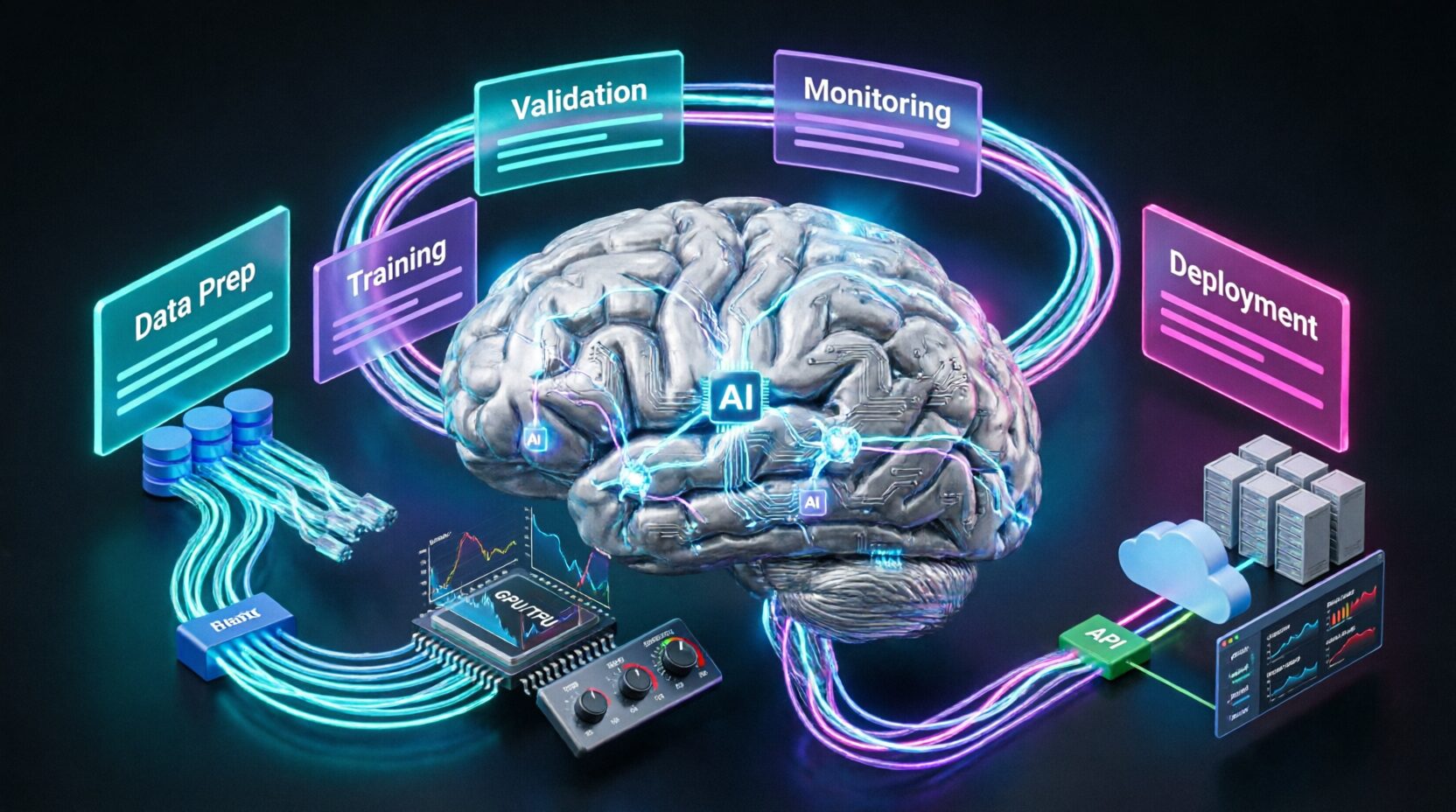
The AI development process involves several stages, including data collection, model training, testing, and deployment. Each stage requires careful consideration to ensure the creation of an effective and reliable AI solution.
Section 2: Why You Should Create AI-Powered Tools
AI-powered tools have revolutionized how businesses and industries operate. Here’s why create AI-powered solutions is a game-changer:
- Increased Efficiency: AI automates repetitive tasks, allowing businesses to focus on more complex work.
- Cost Reduction: Automating workflows reduces the need for manual labor, resulting in cost savings.
- Enhanced Decision-Making: AI tools analyze vast amounts of data quickly and accurately, enabling better decision-making.
- Personalization: AI helps businesses deliver personalized customer experiences, from tailored marketing to customized product recommendations.
Applications Across Industries:
- Healthcare: AI tools assist with diagnostic procedures, drug discovery, and personalized treatment plans.
- Finance: AI algorithms detect fraud, manage portfolios, and provide financial predictions.
- Marketing: AI helps in audience targeting, campaign optimization, and personalized advertising.
- Automation: Manufacturing, logistics, and customer service have seen massive improvements due to AI integration.
Section 3: The Key Steps to Create AI-Powered Solutions
To create an effective AI-powered tool, there are a few key steps to follow:
- Define Your Objective: What problem do you want AI to solve? Whether it’s automating customer support or enhancing product recommendations, clarity is essential.
- Gather and Preprocess Data: The quality and relevance of data are vital. Clean and structured data increases the accuracy of AI predictions.
- Choose the Right Algorithms: Different AI applications require different algorithms. For instance, supervised learning is ideal for labeled data, while unsupervised learning works for unlabeled data.
- Train and Test Your Model: Use a portion of your data to train the model, and then test it on new data to evaluate its performance. Adjust parameters if necessary to improve accuracy.
- Deploy and Monitor: Once the AI tool is deployed, continuous monitoring and updating are required to maintain its effectiveness and adapt to new data inputs.
Section 4: Top Tools and Platforms to Create AI
Several platforms simplify the process of create AI-powered tools. Below are some of the most popular:
- Google Cloud AI: A robust platform that offers AI development services including natural language processing (NLP), image recognition, and machine learning capabilities.
- Microsoft Azure AI: A suite of AI services and tools, including machine learning, bot services, and cognitive services that allow businesses to integrate AI into their systems.
- TensorFlow: This open-source machine learning framework developed by Google is widely used for building machine learning and deep learning models.
- IBM Watson: Known for its enterprise-grade AI capabilities, Watson provides a variety of APIs for natural language processing, computer vision, and other AI tasks.
These platforms offer user-friendly interfaces, pre-built models, and powerful APIs, making it easier to create AI tools without extensive coding knowledge.
Section 5: Challenges in Create AI-Powered Tools
While the benefits of AI are immense, developing AI-powered tools comes with its challenges:
- Data Quality: The effectiveness of AI depends on the quality of the data. Bad data can lead to inaccurate predictions and faulty models.
- Ethical Concerns: AI systems must be free from bias. Ethical issues like discrimination and privacy concerns need to be addressed early on in the development process.
- Scalability: Developing AI tools that can scale efficiently as data grows is a significant challenge, requiring strong computational resources and infrastructure.
Overcoming these challenges involves investing in high-quality data collection, continuous testing, and making ethical considerations a priority in your AI development process.
Section 6: Future Trends in AI-Powered Innovation
AI is constantly evolving, and the future promises even more exciting trends:
- AI for Personalization: AI will increasingly be used for hyper-personalization, especially in marketing and customer service.
- Autonomous Systems: AI is expected to advance in fields like autonomous vehicles, robotics, and drones.
- Natural Language Processing (NLP): As NLP technology advances, we’ll see more AI-powered tools capable of understanding and generating human language, enhancing communication between machines and humans.
AI is poised to play a central role in innovation, driving the next wave of technological breakthroughs.
Conclusion
Creating AI-powered tools is no longer a luxury—it’s a necessity for businesses that want to stay competitive and innovative. By understanding the key components of AI, utilizing the right tools, and overcoming challenges, you can harness the power of AI to improve efficiency, decision-making, and customer experiences.
FAQs
The future of AI includes advanced personalization, autonomous systems like self-driving cars, and improved natural language processing for better human-machine communication.
What is AI, and why is it important?
AI, or Artificial Intelligence, simulates human intelligence in machines to perform tasks like learning, problem-solving, and decision-making. It’s important because it enhances efficiency, accuracy, and innovation in various industries.
What tools do I need to create AI-powered solutions?
You can use platforms like Google Cloud AI, Microsoft Azure AI, TensorFlow, and IBM Watson, which provide the necessary infrastructure, APIs, and algorithms for creating AI-powered tools.
What are the main challenges in AI development?
Key challenges include obtaining high-quality data, addressing ethical concerns (like bias and privacy), and ensuring scalability of AI solutions as data grows.
What industries benefit the most from AI tools?
Industries like healthcare, finance, marketing, manufacturing, and automation are reaping the benefits of AI-powered tools for improving efficiency and decision-making.
What is the future of AI innovation?
The future of AI includes advanced personalization, autonomous systems like self-driving cars, and improved natural language processing for better human-machine communication.