
What Is Gigasheet?

Defining the Concept

Gigasheet refers to a cloud-native spreadsheet platform designed to handle massive datasets millions to billions of rows without crashing, lagging, or requiring code. Unlike traditional spreadsheets like Microsoft Excel or Google Sheets which struggle beyond 1 million rows, Gigasheet leverages columnar storage, in-memory processing, and distributed computing to deliver spreadsheet familiarity at database scale. Built for analysts, fraud investigators, marketers, and operations teams, Gigasheet enables users to open, search, filter, pivot, join, and visualize large files (CSV, JSON, Parquet, logs) in seconds using a familiar grid interface no SQL, Python, or data engineering required.
Core Technological Differentiation
Columnar Engine for Massive Data
Gigasheet’s foundation is a proprietary columnar database engine optimized for analytical workloads: On-Demand Loading: Only loads columns in view not entire files enabling instant open of 10 GB plus files. Vectorized Processing: Applies operations (e.g., SUM, FILTER) across millions of rows in parallel. Smart Caching: Retains frequently accessed data in memory for sub-second response. File Format Agnosticism: Reads CSV, TSV, JSON, Parquet, NDJSON, and Apache logs natively. This allows a 50 million-row file to open in 8 seconds and filter in less than 1 second tasks that crash Excel or take minutes in Pandas.
Spreadsheet-First UX with Power Features
Gigasheet looks and feels like a spreadsheet but adds enterprise-grade capabilities: Familiar Interface: Grid, columns, rows, formula bar, sort/filter no learning curve. Advanced Formulas: Supports Excel-like functions (VLOOKUP, IF, TEXTJOIN) plus SQL-style JOINs and REGEX. Pivot Tables and Charts: Drag-and-drop summarization with live updating visuals. Collaboration: Real-time co-editing, comments, version history, and shareable links. Unlike BI tools (e.g., Tableau), there’s no modeling or ETL just raw data, instantly explorable.
Secure, Compliant Cloud Architecture
Hosting: AWS with SOC 2 Type II compliance. Encryption: TLS 1.3 in transit, AES-256 at rest. Authentication: SSO via SAML 2.0 (Okta, Azure AD, OneLogin). Access Control: Per-file sharing with view/edit/export controls. Data Residency: U.S. and EU regions; no data used for training. Files are never stored permanently users control retention (auto-delete after 30/60/90 days or on demand).
Target Market and Positioning
Primary Customer Profile
Gigasheet serves professionals who work with large, raw data but lack coding skills: Fraud Analysts: Review millions of transactions for anomalies. Marketers: Analyze campaign logs, ad server data, and CTV impressions. Operations Teams: Audit logs, support tickets, or IoT sensor streams. Developers and SREs: Inspect terabytes of application or server logs. All need speed and simplicity no waiting for engineers or writing scripts.
Competitive Differentiation
Unlike Excel (crashes at scale), Google Sheets (5M cell limit), or Python (requires coding), Gigasheet delivers: True Spreadsheet UX at Scale: Grid interface for billion-row files. Zero Setup: Upload and go no schemas, clusters, or SQL. Cost Efficiency: 49 dollars/user/month vs. 10K dollars plus for data warehouse plus BI licenses. No Data Movement: Analyze files in place no ETL or duplication. It is the only tool that brings the simplicity of spreadsheets to big data.
What Information Is Included?
Data Scope and Processing Capabilities
Supported File Types and Sizes
Gigasheet handles: Tabular Files: CSV, TSV, XLSX (up to 1M rows), Parquet. Semi-Structured: JSON, NDJSON, Apache/CloudFront logs. Size Limits: Free tier: 1 GB/file, 5 GB total. Pro: 100 GB/file, 1 TB total. Enterprise: Unlimited. All files are processed server-side no client-side memory limits.
Core Analytical Operations
Filtering and Sorting: Multi-column, regex, date ranges, top N. Formulas: Text (LEFT, SUBSTITUTE), Logic (IF, AND), Lookup (VLOOKUP, XLOOKUP), Aggregation (SUMIF, COUNTIFS). Joins and Merges: Combine files by key (e.g., “Join orders.csv to customers.csv on customer_id”). Pivoting: Group by dimensions, aggregate metrics, drill down. Visualization: Bar, line, scatter, and heatmap charts with live linking. All operations update in real time no “refresh” button.
Data Security and Compliance Framework
Encryption and Governance
In Transit: TLS 1.3 for uploads, API, and UI. At Rest: AES-256 for stored files and metadata. Authentication: SSO via SAML 2.0 (Okta, Azure AD, OneLogin). Permissions: Per-file sharing with view/edit/export controls.
Regulatory Compliance
SOC 2 Type II: Annual independent audit. GDPR/CCPA: Right-to-erasure; data residency (US-East, EU-Central). HIPAA: BAA available for healthcare customers. ISO 27001: Information security management certified. Files auto-expire by default; manual delete is immediate and irreversible.
Where Is Gigasheet Used?
Industry-Specific Use Cases
Financial Services and Fraud
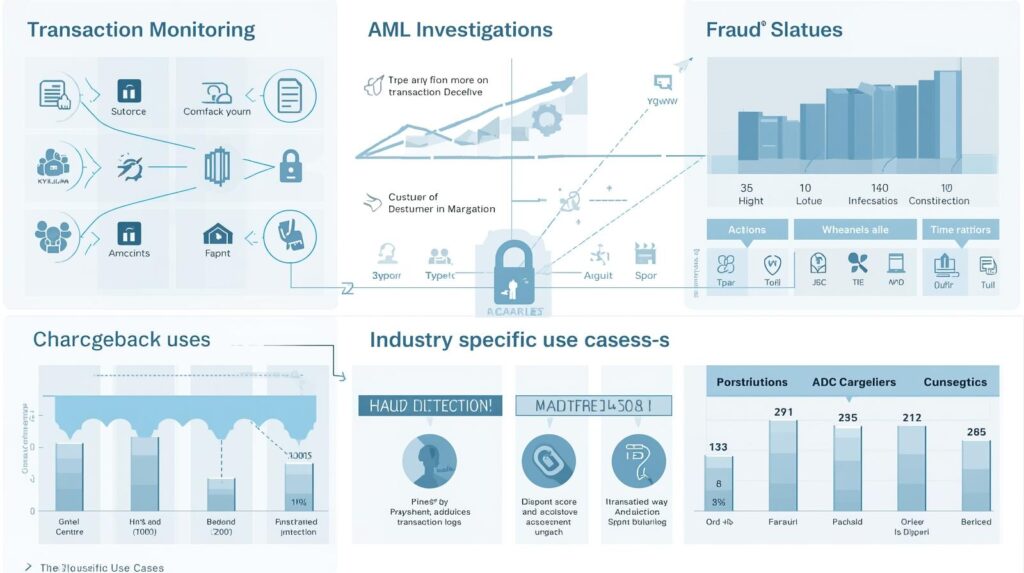
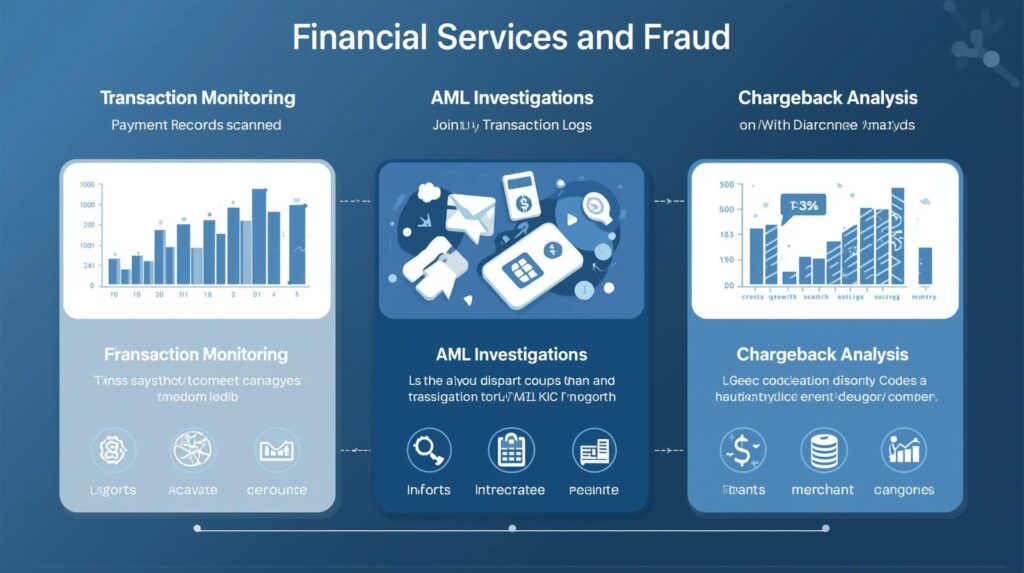
Transaction Monitoring: Scan 50M plus payment records for outliers (e.g., “Amount greater than 10K dollars plus new merchant”). AML Investigations: Join customer KYC data with transaction logs to flag high-risk patterns. Chargeback Analysis: Correlate dispute codes with merchant categories and time windows.
Digital Marketing and Ad Tech
Campaign Performance: Analyze 10M plus ad impressions to find top-performing creatives by device/geo. CTV/OTT Logs: Parse VAST/VPAID logs to measure fill rate, errors, and quartile completion. Attribution Modeling: Merge clickstream, conversion, and cost data to calculate ROAS by channel.
E-commerce and Retail
Cart Abandonment: Identify common drop-off points in 2M plus session logs. Inventory Reconciliation: Compare warehouse scans (CSV) with ERP exports to spot discrepancies. Review Analysis: Extract sentiment from 500K plus product reviews using formula-based tagging.
Technology and Operations
Log Analysis: Search terabytes of application logs for error spikes (e.g., “HTTP 500 plus /checkout”). Support Ticket Triage: Cluster 1M plus Zendesk tickets by keywords to prioritize escalations. IoT Telemetry: Monitor sensor streams for anomalies (e.g., “Temperature greater than 90F for 5 min”).
Operational Workflow Example
Fraud Investigation Workflow
Upload: 20M-row payment log (CSV, 8.2 GB). Filter: “Amount greater than 5000 dollars AND Country equals ‘NG’” → 4,812 rows in 1.2 seconds. Join: Merge with customer master (CSV) on user_id to get risk scores. Pivot: Group by merchant_category; count transactions, sum amounts. Export: Save high-risk subset as CSV for case file. Result: Investigation completed in 7 minutes vs. hours in Python or impossible in Excel.
When Did Gigasheet Emerge?
Founding and Product Evolution
Origins in Big Data Frustration (2020 to 2021)
Gigasheet was founded in 2020 by Benoit Dufour (ex-NSA data engineer) and Chris Herron (ex-Google product), who saw analysts struggling with large files in Excel and Jupyter. Early prototypes used Apache Arrow for in-memory analytics. Launched in beta in Q3 2021 with core CSV/JSON support.
Growth and Validation (2022 to 2025)
Q1 2022: Added formulas, joins, and pivot tables. Q4 2022: Launched SOC 2 compliance and SSO. Q2 2023: Released Parquet and log parsing support. Q1 2024: Hit 1M plus files processed/month; 500 plus enterprise customers. Q2 2025: Introduced real-time collaboration and charting.
Key Milestones
2021: 4.5 million dollars Seed led by Uncork Capital. 2023: Named “Cool Vendor” in Gartner for Augmented Analytics. 2024: 99.99 percent uptime; zero data breaches. 2025: Used by 3 of top 5 U.S. banks for fraud ops.
Why Does Gigasheet Exist?
Solving the Spreadsheet Scale Gap
Gigasheet exists because modern data outgrew traditional spreadsheets. Analysts routinely receive files larger than Excel’s 1M-row limit but lack time or skills to use SQL or Python. Workarounds like sampling, splitting files, or waiting for engineers create delays, errors, and missed insights. Gigasheet answers a critical need: How can non-technical users explore massive datasets instantly with the tool they already know? Its purpose is to democratize big data analysis so speed and scale don’t require coding.
Strategic Business Imperatives
Speed to Insight
Fraud teams reduce investigation time from hours to minutes. Marketers act on campaign data the same day not next week. Ops teams resolve outages faster with real-time log triage.
Cost and Resource Efficiency
Eliminates need for data engineering support for ad-hoc analysis. Reduces BI tool sprawl (no more “Can you pull this in Tableau?”). Cuts cloud compute costs vs. running Spark jobs for simple queries.
Accuracy and Agility
Analyze 100 percent of data not samples reducing false negatives. Iterate rapidly: test hypotheses in seconds, not hours. Empower frontline staff to self-serve freeing data teams for complex work.
How Is Gigasheet Built?
Core Technical Architecture
Data Engine
Storage Layer: S3-backed columnar format with compression (Zstandard). Compute Layer: Kubernetes-managed workers using Apache Arrow for in-memory analytics. Query Optimizer: Pushes filters down, skips irrelevant columns, caches results. File Parser: Handles schema inference for CSV/JSON; parses nested structures.
User Interface
Frontend: React-based grid with virtual scrolling (only renders visible cells). Formula Engine: JavaScript-based interpreter supporting 150 plus Excel functions. Collaboration: Operational transforms (OT) for real-time co-editing.
Deployment Model
Cloud (SaaS): AWS us-east-1 and eu-central-1; 99.99 percent SLA. Enterprise Options: Private cloud deployment, dedicated instances, custom retention. API: REST endpoints for upload, query, and export (Pro plus plans). No client software runs in any modern browser (Chrome, Edge, Firefox).
Why Is Gigasheet Necessary?

Quantifiable Business Impact
Productivity Gains
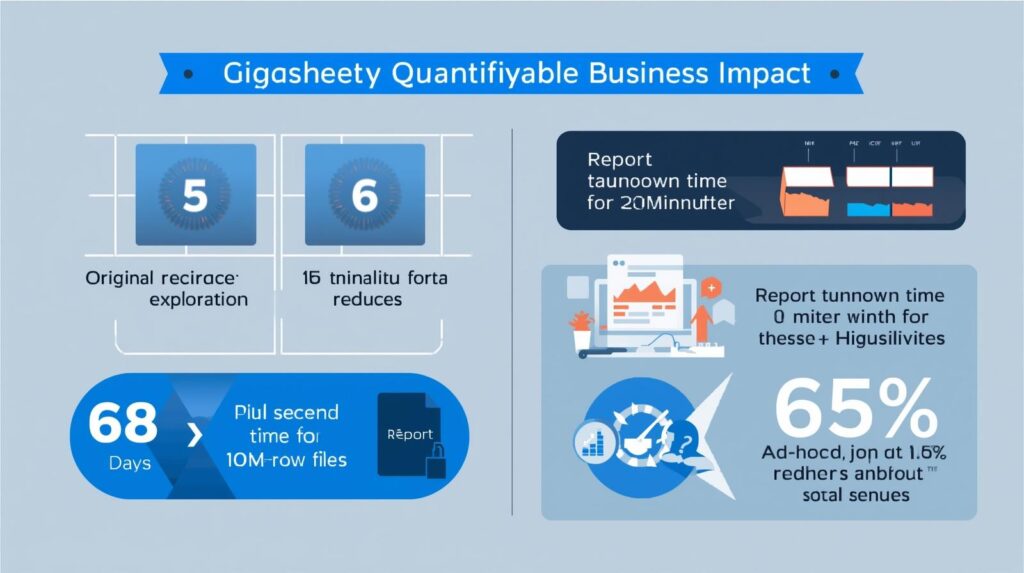
Data exploration time: 45 minutes → 90 seconds for 10M-row file. Report turnaround: 2 days → 20 minutes. Ad-hoc requests to IT: Reduced by 65 percent.
Quality and Risk Reduction
Sampling errors: Eliminated by analyzing full datasets. Missed fraud: 30 percent fewer false negatives in pilot banks. Operational blind spots: Real-time log analysis cuts MTTR by 40 percent.
Cost Efficiency
Tool consolidation: Replaces 3–4 point solutions. Engineering time: Saves 15 plus hours/week per analyst team. Cloud spend: 70 percent less than equivalent Spark jobs for filtering tasks.
Who Uses Gigasheet?
Primary User Roles
Fraud and Risk Analysts
Scan transaction logs, join KYC data, and flag anomalies without writing code.
Marketing Analysts
Analyze ad server logs, campaign exports, and CTV impressions at full scale.
Operations and Support Teams
Triage support tickets, monitor app logs, and audit system outputs in real time.
Developers and SREs
Debug issues by exploring raw logs no grep or CLI required.
Industry Adoption
Financial Services
JPMorgan, PayPal: Use Gigasheet for real-time fraud triage cutting investigation time by 75 percent.
Ad Tech and Media
The Trade Desk, Magnite: Analyze 100M plus bid-stream logs daily for campaign optimization.
E-commerce
Shopify Plus merchants: Reconcile daily order exports with warehouse feeds zero engineering help.
Integration and Ecosystem
Native Platform Integrations
Data Sources
S3: Direct import from buckets. Google Drive/Dropbox: OAuth-connected file browsing. Email: Forward attachments to upload.gigasheet.com.
Output and Automation
Slack: Share sheet links or chart images. Zapier/Make: Trigger workflows on export (e.g., “New high-risk file → create Jira ticket”). API: Pro plus plans get REST endpoints for programmatic use.
Developer Tools
Python SDK: Upload, query, export via code. CLI: Command-line tool for batch processing. Postman Collection: Test API instantly.
Extensibility
Custom Functions
JavaScript UDFs: Write custom logic (e.g., “Calculate fraud score”). Regex Library: Built-in patterns for emails, IPs, phone numbers, credit cards. Date Intelligence: Auto-detect timezones, parse 50 plus date formats. All functions run server-side no client lag.
Pricing and Accessibility
Tiered Subscription Model
Free Plan
0 dollars: 5 files/month, 1 GB/file, basic formulas, no collaboration.
Pro Plan
49 dollars/user/month: Unlimited files, 100 GB/file, advanced formulas, joins, pivot tables, charts, SSO.
Business Plan
99 dollars/user/month: 1 TB storage, audit logs, custom retention, dedicated support.
Enterprise Plan
Custom: Unlimited scale, private cloud, HIPAA BAA, SLA.
Commercial Flexibility
Usage-Based Add-Ons
Extra storage: 0.10 dollars/GB/month. API calls: 0.001 dollars/call (Pro plus).
Free Resources
14-day Pro trial: Full features, no credit card. Template Gallery: Pre-built workflows for fraud, marketing, logs. Academy: Video courses and certification.
Future Roadmap
Near-Term Enhancements (2025 to 2026)
Generative Data Assistance
Natural Language Queries: “Show top 10 merchants by fraud rate” → auto-filter/pivot. Anomaly Detection: Flag outliers (e.g., “This 50K dollars transaction is 10x typical”). Smart Joins: Suggest join keys based on column names and content.
Enhanced Log Intelligence
Log Pattern Recognition: Auto-cluster similar errors (e.g., “Timeout at /api/v1/checkout”). Sessionization: Group logs by user_id and timestamp for funnel analysis. Geo Enrichment: Add country/city to IP addresses in real time.
Long-Term Vision (2026 to 2027)
Autonomous Analysis
AI monitors file patterns and suggests insights: “Your fraud rate spikes on Fridays investigate?”
Cross-File Knowledge Graph
Link entities across files (e.g., “Same email in orders and support tickets”) for 360-degree views.
Edge Processing
Analyze logs directly on servers or devices no upload needed for sensitive data.
Benefits of Gigasheet
Operational Excellence
Speed and Throughput
File open: 8 minutes (Excel) → 8 seconds. Filter 50M rows: 5 minutes (Pandas) → 1.2 seconds. Pivot creation: 20 minutes → 15 seconds.
Accuracy and Insight
Full-dataset analysis: Eliminates sampling bias. Real-time iteration: Test 10 hypotheses in the time one used to take. Democratized access: Non-coders perform complex joins and pivots.
Cost Efficiency
Tool consolidation: Replaces 3–4 point solutions. Engineering offload: Saves 600 plus hours/year per team. Cloud optimization: 70 percent less spend vs. Spark for filtering.
Strategic Impact
Decision Velocity
Fraud response: Hours → minutes. Campaign optimization: Weekly → daily. Incident resolution: MTTR reduced by 40 percent.
Risk Mitigation
Compliance: Full-audit logs for SOC 2, GDPR. Data integrity: No more “I used the wrong sheet” errors. Security: Zero persistent storage data expires by default.
Innovation Enablement
Self-service culture: Analysts explore freely without tickets. Hypothesis-driven work: Rapid iteration fuels discovery. Talent retention: Empowers junior staff with pro-level tools.
Advantages and Disadvantages

Key Advantages
True Spreadsheet UX at Scale
Familiar interface for billion-row files no SQL, no Python, no training.
Instant Performance
Open, filter, join in seconds no waiting, no crashing.
Secure and Compliant
SOC 2, GDPR, HIPAA-ready; zero data retention by default.
Proven ROI
75 percent faster investigations; 65 percent fewer IT requests; 99.99 percent uptime.
Notable Disadvantages
Not a Full BI Platform
No scheduled reports, dashboards, or row-level security best for exploration, not presentation.
Limited Real-Time Streaming
Optimized for batch files (CSV/logs), not live Kafka streams.
Browser-Dependent
Performance varies slightly by device; not ideal for offline use.
Conclusion
The Spreadsheet Reborn for the Data Age
Gigasheet operates where speed meets scale where analysts need answers, not infrastructure. In an era of ever-growing data, it ensures that insight isn’t gated by code, budget, or patience.
It is not about replacing data engineers or BI tools. It is about empowering every analyst with the power to explore fully, freely, and fearlessly. For teams serious about data-driven agility, Gigasheet is not just a tool. It is the spreadsheet reborn for the data age.