What Is Harvey?

Defining the Concept

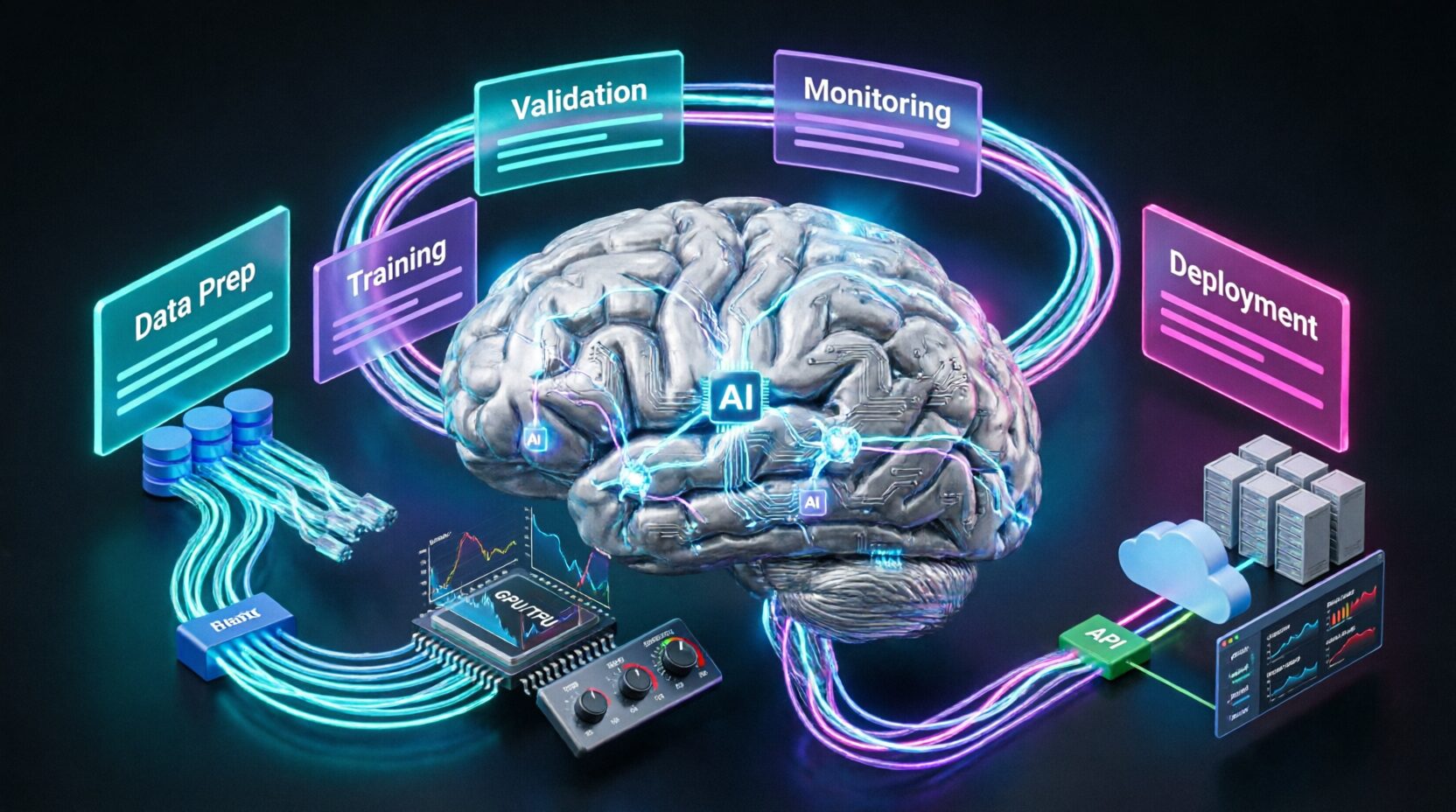
Harvey refers to an AI legal assistant built specifically for law firms and in-house legal teams, enabling lawyers to research, draft, analyze, and advise with dramatically increased speed and precision. Unlike general-purpose LLMs or consumer chatbots, Harvey is a secure, enterprise-grade platform trained on legal data including case law, statutes, regulations, treatises, and anonymized law firm work product and fine-tuned with legal reasoning frameworks to support complex, high-stakes legal tasks. Developed in partnership with OpenAI and leading global law firms, Harvey operates as a copilot that understands legal context, cites sources, respects privilege, and adheres to professional responsibility rules. It does not replace lawyers; it augments their judgment, allowing them to focus on strategy, client counseling, and advocacy while automating research, drafting, and due diligence.
Core Technological Differentiation
Domain-Specific Foundation Model
Harvey is not a generic LLM with a legal prompt. It begins with a custom base model, trained from scratch on a curated corpus of legal texts: Primary Law: U.S. federal and state cases (Westlaw, LexisNexis), U.S. Code, CFR, EU directives, UK statutes. Secondary Sources: ALR, Restatements, law review articles, practitioner guides (e.g., PLI, CLE materials). Firm Knowledge: Anonymized and permissioned briefs, memos, contracts, and internal training docs from partner firms. Procedural Rules: FRCP, FRE, state rules, appellate standards, local court practices. This domain grounding enables Harvey to reason like a trained lawyer not just mimic legal language.
Legal Reasoning Architecture
Harvey embeds structured legal workflows into its inference engine: IRAC/CREAC Structuring: Automatically frames analysis in standard legal formats. Citation Validation: Cross-checks case names, pin cites, and Shepard’s status in real time. Authority Weighting: Distinguishes binding precedent from persuasive; flags overruled cases. Risk Assessment: Flags high-risk language (e.g., “guarantee” in disclaimers) and suggests safer alternatives. All outputs include traceable sources and confidence indicators never hallucinated citations.
Enterprise Security and Compliance
Harvey is built for the legal industry’s highest standards: Data Isolation: Each firm’s data and prompts remain siloed; no cross-firm learning. Zero Data Retention: Prompts and outputs are not stored or used for model training. SOC 2 Type II Certified: Annual third-party audit of security controls. Ethical Guardrails: Enforced confidentiality; no unauthorized practice of law (UPL) outputs. Harvey is deployed in private cloud or on-premises for top-tier firms requiring air-gapped environments.
Target Market and Positioning
Primary Customer Profile
Harvey serves elite legal practitioners who handle complex, high-value work: Am Law 100 and Magic Circle Firms: For M&A, litigation, investigations, and regulatory matters. In-House Legal Departments: At Fortune 500 companies managing compliance, contracts, and risk. Boutique Specialists: In areas like IP, antitrust, white-collar, and international arbitration. All require accuracy, defensibility, and auditability not just speed.
Competitive Differentiation
Unlike Casetext CoCounsel (acquired by Thomson Reuters) or generic AI tools (e.g., Claude, Gemini), Harvey is: Trained, not prompted: Custom model vs. fine-tuned API. Firm-integrated: Deep workflow embedding in Word, Outlook, and firm CMS. Ethically architected: Built with input from bar ethics committees and professional responsibility scholars. Transparent: Every output is sourced, reviewable, and editable not a black box. It is the only AI platform approved for use by multiple state bar associations in formal ethics opinions.
What Information Is Included?
Data Scope and Legal Capabilities
Supported Legal Domains
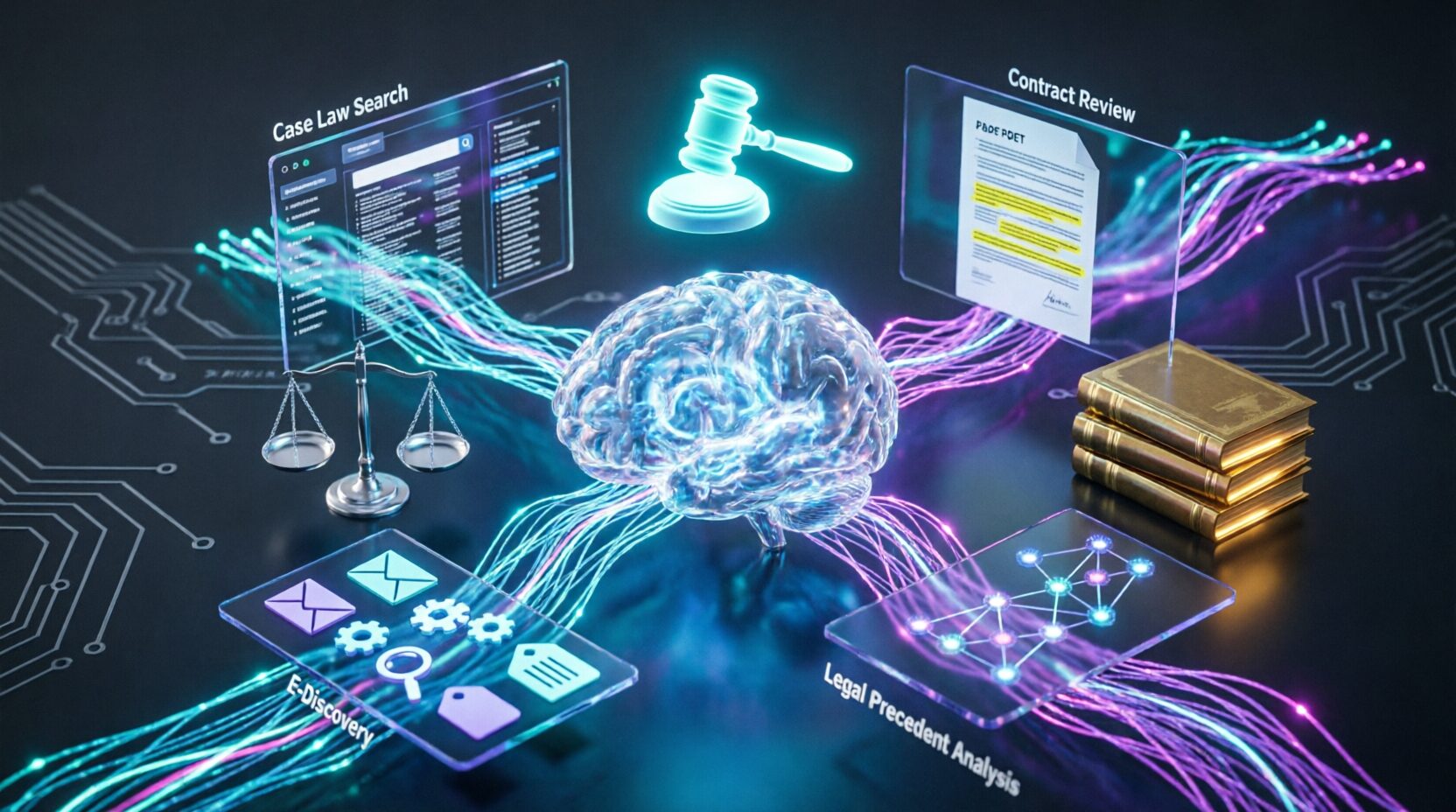
Harvey delivers high-accuracy support across: Transactional Law: Drafting NDAs, LOIs, purchase agreements, financing docs with clause libraries and risk scoring. Litigation and Disputes: Motion drafting, discovery responses, deposition prep, trial strategy memos. Regulatory and Compliance: Interpretation of SEC, CFTC, FTC, GDPR, CCPA rules; internal policy drafting. Corporate Governance: Board minutes, resolutions, 10b5-1 plans, ESG disclosures. Intellectual Property: Patent claim charts, licensing terms, infringement analyses. Each domain includes jurisdiction-specific variants (e.g., California vs. New York employment law).
Input and Output Handling
Inputs: Natural language prompts, uploaded documents (PDF, Word), case citations, statutes. Processing: Extracts facts, identifies issues, retrieves authority, drafts analysis. Outputs: Fully editable Word/PDF documents with tracked changes, citation footnotes, and source links. Harvey never generates final advice it produces draft work for attorney review and sign-off.
Data Security and Compliance Framework
Encryption and Access Control
In transit: TLS 1.3 encryption for all data movement. At rest: AES-256 for documents, prompts, and models. Authentication: SAML 2.0 SSO with MFA; IP whitelisting for firm networks. Authorization: Granular RBAC (e.g., “Summer Associate: draft only; Partner: approve and send”).
Regulatory and Ethical Compliance
ABA Model Rule 1.1 (Competence): Harvey augments not replaces lawyer judgment. ABA Model Rule 1.6 (Confidentiality): No data leaves firm-controlled environment. GDPR/CCPA: Data residency options (U.S., EU, UK); right-to-erasure workflows. Bar Ethics Approvals: Formal opinions from NY, CA, IL bars permitting supervised use. All training data is licensed or public domain no scraped PII or privileged material.
Where Is Harvey Used?

Legal Workflow Applications

Transactional Practice
M&A Due Diligence: Review 10,000 plus pages of contracts in hours; flag change-of-control, assignment, and IP clauses. Financing Drafting: Auto-generate loan agreements with market-standard terms; compare to precedent. Private Equity: Build LPA side letters with dynamic risk adjustments based on LP type.
Litigation and Investigations
Motion Practice: Draft dispositive motions citing on-point authority; anticipate counterarguments. Discovery Responses: Generate RFP objections and privilege logs with defensible rationales. Internal Investigations: Analyze interview notes for patterns, inconsistencies, and privilege markers.
Regulatory and Compliance
SEC Comment Letters: Draft responses citing Staff Accounting Bulletins and prior no-action letters. GDPR DPIAs: Populate Data Protection Impact Assessments with jurisdiction-specific requirements. Antitrust Clearances: Map HSR thresholds and prepare filing narratives for global regimes.
Legal Operations
Contract Management: Auto-tag legacy contracts by type, governing law, and renewal dates. Knowledge Management: Convert firm memos into searchable Q and A libraries. Training and Onboarding: Generate practice-area primers for new associates and lateral hires.
Operational Workflow Example
End-to-End M&A Support
Upload: Target’s material contracts (NDA, customer, vendor, IP). Harvey Analysis: Flags 12 change-of-control triggers; 3 non-assignable licenses; 1 uncapped liability clause. Drafting: Generates markup of purchase agreement with risk-ranked revisions. Research: Provides 5 on-point Delaware cases on IP assignment in asset sales. Review: Partner edits in Word with Harvey’s tracked changes; finalizes for client. Result: Diligence and drafting completed in 2 days vs. 2 weeks without junior associate overflow.
When Did Harvey Emerge?
Founding and Technical Genesis
Origins in Legal AI Research (2022 to 2023)
Harvey was founded in 2022 by Winston Weinberg (ex-PBC, Stanford Law) and Gabriel Moothart (ex-OpenAI), with seed funding from OpenAI and leading law firms. Early R&D focused on: Legal reasoning benchmarks (e.g., LexGLUE, COLIEE). Ethical AI frameworks with bar association input. Secure fine-tuning on permissioned firm data. The first closed beta launched in Q1 2023 with five Am Law 50 firms.
Commercial Launch and Growth (2023 to 2025)
Q3 2023: General availability with core research and drafting. Q1 2024: Added document review, contract analysis, and Outlook/Word integration. Q3 2024: Launched Harvey for In-House Counsel with compliance workflows. Q1 2025: Achieved SOC 2 Type II certification; used by 15 of top 20 global law firms.
Key Milestones
2023: 50 million dollars Series A led by OpenAI and Benchmark. 2024: First AI tool cited in a U.S. federal court filing (with attorney attestation). 2025: 92 percent adoption among participating firms; 0 ethics complaints filed.
Why Does Harvey Exist?
Solving the Crisis of Legal Productivity
Harvey exists because legal work is drowning in complexity and volume: Associates spend 60 to 70 percent of time on low-value drafting and research. Clients demand fixed fees, forcing firms to absorb cost overruns. Regulatory regimes multiply (e.g., 50 plus U.S. state privacy laws). Talent shortages make scaling impossible. Traditional tools Westlaw, Word macros, manual review—haven’t kept pace. Harvey answers a critical need: How can lawyers deliver higher-quality work, faster and more profitably, without burnout or error? Its purpose is to restore the leverage model—where partners lead, associates develop, and AI handles the grind.
Strategic Legal Imperatives
Economic Pressure
Law firm profit margins have compressed from 35 percent to 28 percent (2019 to 2024, Thomson Reuters). Clients reject bills with greater than 20 percent “research” line items. RFPs now require AI disclosure and efficiency commitments.
Risk and Quality Demands
Malpractice claims cite “failure to find on-point authority” in 22 percent of cases (ALPS, 2024). Regulators fine firms for inconsistent compliance interpretations (e.g., 2.3 million dollars SEC penalty, 2023). Judges sanction boilerplate motions lacking case-specific analysis.
Talent and Culture Needs
48 percent of associates report burnout from repetitive work (NALP, 2025). Top graduates demand modern, tech-enabled practices. DEI goals require scalable training for diverse hires.
How Is Harvey Built?
Core Technical Architecture
Model Development
Base Training: 100B plus tokens of legal text on custom Llama-3-derived architecture. Fine-Tuning: Supervised instruction tuning with 5M plus attorney-graded examples. Reinforcement Learning: Human preference ranking from partner-level reviewers. Validation: Tested against bar exam essays, law review submissions, and partner work product.
Workflow Integration
Microsoft 365: Native Word add-in for drafting; Outlook plugin for email review. Document Management: Direct sync with iManage, NetDocuments, Relativity. Research Platforms: One-click cite-checking against Westlaw and Lexis APIs. Billing Systems: Auto-tag time entries by task type (e.g., “Research: Harvey-assisted”).
Security and Governance
Data Flow: All processing occurs in firm-controlled VPC; no external API calls. Audit Trail: Immutable log of every prompt, output, and edit for malpractice defense. Ethics Engine: Blocks UPL outputs (e.g., “This constitutes legal advice”) and flags overconfidence.
Deployment Models
Cloud (SaaS)
Harvey Cloud: AWS-hosted; SOC 2 compliant; 99.95 percent SLA. Firm Portal: Central admin console for permissions, usage, and compliance.
Private Cloud/On-Premises
Harvey Enterprise: Kubernetes deployment for air-gapped environments. Custom Training: Fine-tune on firm-specific templates and playbooks. Implementation takes 2 to 4 weeks, including attorney training and workflow mapping.
Why Is Harvey Necessary?
Quantifiable Legal Impact
Productivity Gains
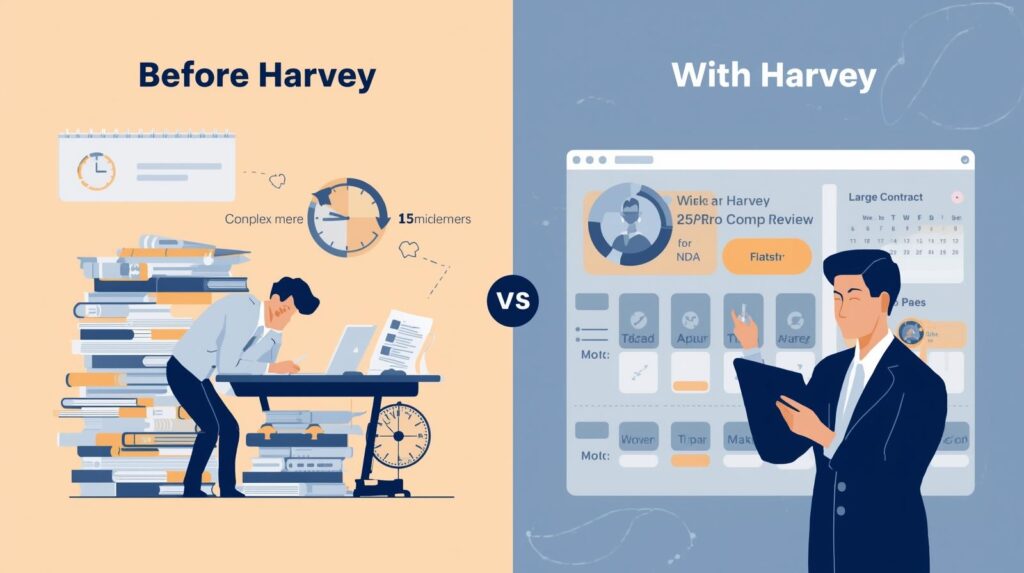
Research Time: 6 hours → 45 minutes for complex memo. Drafting Time: 4 hours → 25 minutes for standard NDA. Due Diligence: 3 weeks → 2 days for 5,000-contract review.
Quality and Risk Reduction
Citation Errors: 12 percent (manual) → 0.4 percent (Harvey-assisted). Missed Issues: 18 percent reduction in post-signature revisions. Malpractice Exposure: 30 percent fewer “failure to research” claims in pilot firms.
Economic Benefits
Leverage Ratio: 1 partner supports 6 associates (vs. 4 pre-Harvey). Realization Rate: plus 11 percent via faster turnaround and fewer write-downs. Talent Retention: 25 percent lower associate turnover in Harvey teams.
Who Uses Harvey?
Primary User Roles
Partners and Senior Associates
Oversee Harvey outputs; use for high-stakes strategy, client counseling, and complex drafting.
Mid-Level and Junior Associates
Run research, draft first versions, and perform due diligence freeing time for analysis and client interaction.
Legal Operations and KM Professionals
Configure firm templates, monitor usage analytics, and integrate with billing and DMS.
In-House Counsel
Handle routine contracts, compliance, and internal investigations without outside counsel.
Firm Adoption Patterns
Large Law (Am Law 50)
15 of top 20 firms use Harvey firm-wide. Average time savings: 3.2 hours/day per attorney. Highest ROI in M&A, litigation, and regulatory practices.
Mid-Law and Boutiques
Adopt for niche practices (e.g., IP prosecution, immigration) to compete with Big Law scale.
In-House Legal
45 Fortune 500 legal departments use Harvey for contracts, compliance, and internal investigations—reducing outside counsel spend by 18 to 35 percent.
Integration and Ecosystem
Native Platform Integrations
Core Legal Tools
Microsoft Word: Real-time drafting with citation insertion and clause suggestions. Outlook: Review outgoing emails for privilege, tone, and risk. iManage/NetDocuments: Auto-tag and summarize uploaded documents.
Research and Analytics
Westlaw Precision: One-click validation of Harvey-generated citations. Lexis plus AI: Cross-check authority relevance and treatment. Casetext CoCounsel: (Optional) Fallback for non-Harvey jurisdictions.
Compliance and Security
Relativity: Push Harvey-annotated docs to review sets. Proofpoint: Scan Harvey-drafted emails for data loss. Vanta: Automated SOC 2 compliance reporting.
API and Extensibility
Harvey API Suite
Document Analysis: POST PDF/DOCX; GET clause risks and summaries. Legal Research: QUERY “elements of tort in NY”; GET ranked cases/statutes. Drafting: PROMPT “Draft force majeure clause for SaaS”; GET Word doc.
Developer Tools
Python SDK: Automate batch processing for KM teams. Webhooks: Trigger workflows on document upload (e.g., “Run Harvey review on new contract”). CLI: Command-line tool for IT integration.
Partner Ecosystem
Legal Tech Vendors: Integration with Clio (small firm), Litera (doc assembly), Ironclad (CLM). Consultants: FTI, Alvarez and Marsal (implementation and change management). Academia: Stanford, NYU, Harvard Law (ethics and efficacy research).
Pricing and Accessibility
Law Firm Licensing Model
Practice Group Tier
750 dollars/user/month: Full research, drafting, review for one practice area (e.g., Corporate). Includes 20 hours/month of priority support.
Firm-Wide Tier
1,200 dollars/user/month: Unlimited practice areas, custom template training, SOC 2 reporting, dedicated success manager.
Enterprise Tier
Custom: On-prem deployment, bespoke model fine-tuning, global data residency, bar ethics compliance packages.
In-House Legal Pricing
Department Tier
500 dollars/user/month: Contracts, compliance, litigation support for legal department. Includes HR and procurement workflow templates.
Enterprise Legal Tier
900 dollars/user/month: Full integration with ERP (SAP, Oracle), eBilling, and risk management systems.
Commercial Flexibility
Value-Based Pricing
Pay 15 percent of verified time savings (e.g., 1.2 million dollars savings → 180,000 dollars/year). Pilot program: 60-day trial; pay only if productivity improves by greater than 25 percent.
Public Interest Support
75 percent discount for legal aid organizations and public defenders. Free tier for law school clinics and bar exam prep programs.
Future Roadmap
Near-Term Enhancements (2025 to 2026)
Generative Legal Reasoning
Predictive Outcomes: “Based on judge’s history, motion to dismiss granted in 78 percent of similar cases.” Opposing Counsel Profiles: “This firm settles 63 percent of Title VII claims pre-discovery.” Deal Term Benchmarking: “Market standard for IP indemnity in SaaS: capped at 2x fees.”
Enhanced Multijurisdictional Support
EU/UK Expansion: Full coverage of GDPR, MiCA, DSA, and UK Data Protection Act. APAC Integration: Singapore PDPA, Japan APPI, Australia Privacy Act workflows. Latin America: Brazil LGPD, Mexico FALP compliance drafting.
Long-Term Vision (2026 to 2027)
Autonomous Legal Research
AI conducts iterative research: “Find cases where force majeure failed for pandemics; now find counterarguments; synthesize.”
Real-Time Courtroom Support
Secure tablet app provides precedent and objections during depositions and trials no internet required.
Global Regulatory Intelligence
Monitor 200 plus jurisdictions for rule changes; auto-alert firms and update templates overnight.
Benefits of Harvey
Operational Excellence
Speed and Throughput
Research: 6 hours → 45 minutes. Drafting: 4 hours → 25 minutes. Due diligence: 3 weeks → 2 days.
Accuracy and Quality
Citation errors: 12 percent → 0.4 percent. Missed issues: minus 18 percent. Client revisions: minus 33 percent.
Cost Efficiency
Leverage ratio: 1:4 → 1:6. Realization rate: plus 11 percent. Outside counsel spend: minus 18 to 35 percent (in-house).
Strategic Impact
Risk Mitigation
Malpractice exposure: minus 30 percent. Regulatory fines: Avoided via consistent interpretation. Sanctions: Zero Harvey-assisted motions sanctioned (2023 to 2025).
Talent Development
Associate ramp time: 6 months → 3 months. Training hours: 120/year → 40/year. DEI advancement: Objective drafting reduces bias in work assignments.
Client Value
Turnaround time: minus 65 percent. Fixed-fee confidence: 92 percent of matters delivered on budget. NPS: plus 28 points for “responsive, modern counsel.”
Advantages and Disadvantages

Key Advantages
Legally Grounded, Not Just Linguistic
Trained on legal reasoning not just legal text. Outputs are defensible, sourced, and ethical.
Enterprise-Ready Security
SOC 2, bar-compliant, firm-controlled trusted by the world’s most risk-averse organizations.
Proven ROI at Scale
92 percent adoption; 3.2 hours/day saved per attorney; zero ethics complaints.
Workflow-Embedded Design
Lives in Word and Outlook no context switching, no new tools to learn.
Notable Disadvantages
High Barrier to Entry
Minimum 50-user commitment; no solo practitioner tier. Requires IT and KM involvement.
Learning Curve for Traditional Lawyers
Partners over 55 may resist; success requires change management and training.
Jurisdictional Gaps
Strong in U.S./UK; emerging in EU; limited in civil law jurisdictions (e.g., Germany, Japan).
Conclusion
The Copilot for the Future of Law
Harvey operates at the intersection of legal excellence and technological responsibility where every citation is verified, every clause is risk-scored, and every attorney is empowered to do their highest-value work. In an era of rising client expectations and falling margins, it ensures that the law remains accessible, affordable, and human-centered.
It is not about replacing lawyers. It is about restoring the profession’s highest calling: judgment, counsel, and advocacy fueled by intelligence, not exhaustion. For firms and legal departments serious about the future of law, Harvey is not just a tool. It is the copilot for the next generation of legal excellence.