What Is a Perfect Wiki?
Defining the Concept
A Perfect Wiki is not a real website you can visit today. Instead, it is a theoretical ideal of a collaborative knowledge platform that is always accurate, up to date, unbiased, accessible, and easy to understand. It represents the ultimate evolution of wiki-based systems like Wikipedia, enhanced with flawless verification, global inclusivity, and intelligent design.

What Data Is Included?
A Perfect Wiki would contain verified, well-sourced information across all domains of human knowledge—science, history, culture, technology, health, and more. Every claim would be backed by credible references, with transparent edit histories and contributor credentials. Crucially, it would include diverse global perspectives, not just dominant Western narratives, and feature content in hundreds of languages, including indigenous and minority tongues.

Where Would It Exist?
As a digital public utility, a Perfect Wiki would be hosted on a decentralized, nonprofit infrastructure, accessible to anyone with an internet connection. It could be integrated into schools, libraries, and public services worldwide, and available offline through lightweight apps or community servers in low-connectivity regions.
When Did the Idea Emerge?
The vision of a Perfect Wiki has roots in the Enlightenment dream of a universal encyclopedia, but it gained modern relevance with the rise of Wikipedia in 2001. As misinformation, algorithmic bias, and digital divides have grown, the need for a more reliable, equitable knowledge commons has become urgent—making the Perfect Wiki not just a fantasy, but a necessary goal.
Why Does It Exist as a Concept?
The Perfect Wiki exists as a guiding ideal to push real-world platforms toward higher standards of truth, inclusion, and usability. It answers a fundamental question: What if humanity pooled its knowledge not for profit or power, but for collective understanding?
How Would It Work?
A Perfect Wiki would combine human expertise with ethical AI tools. Volunteers and credentialed contributors would write and review content, while AI would assist with translation, fact-checking, bias detection, and readability improvements. Edits would undergo layered review, vandalism would be instantly flagged, and disputed topics would display multiple viewpoints fairly. Users could explore not just what is known, but how and why it is accepted.
Why Is a Perfect Wiki Necessary?
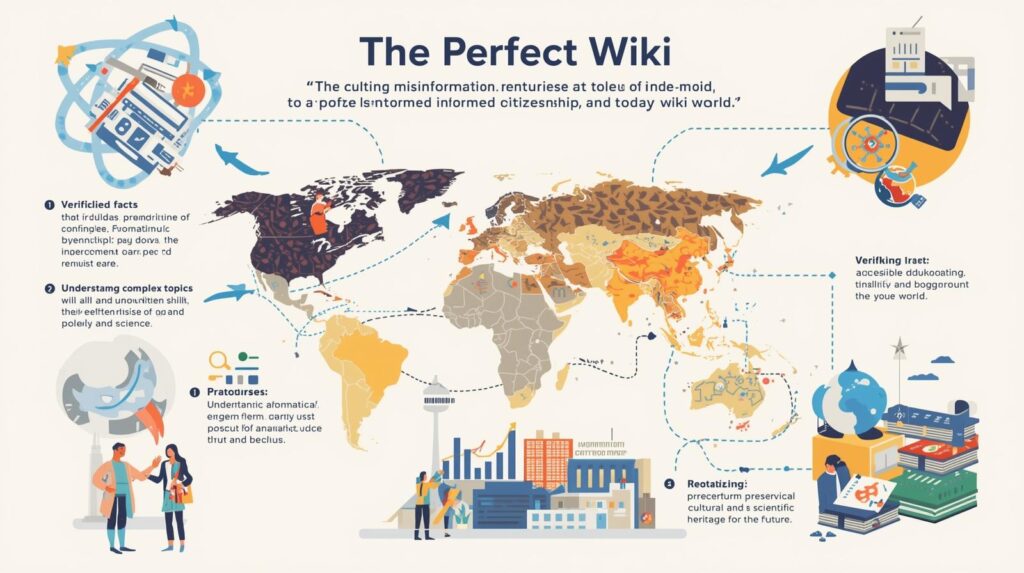
In an age of deepfakes, conspiracy theories, and fragmented information ecosystems, a trusted source of shared knowledge is more critical than ever. A Perfect Wiki is necessary because:
- It combats information inequality, giving everyone access to verified facts regardless of income or location.
- It supports informed citizenship, enabling voters to understand policy, science, and history without manipulation.
- It preserves cultural and scientific heritage for future generations in a structured, accessible format.
- It reduces redundant research effort, allowing innovators to build on existing knowledge rather than rediscover it.
- It fosters global dialogue by presenting diverse viewpoints with fairness and context.
Without such a resource, society risks drifting further into echo chambers, where truth becomes a matter of belief rather than evidence.
Benefits of a Perfect Wiki
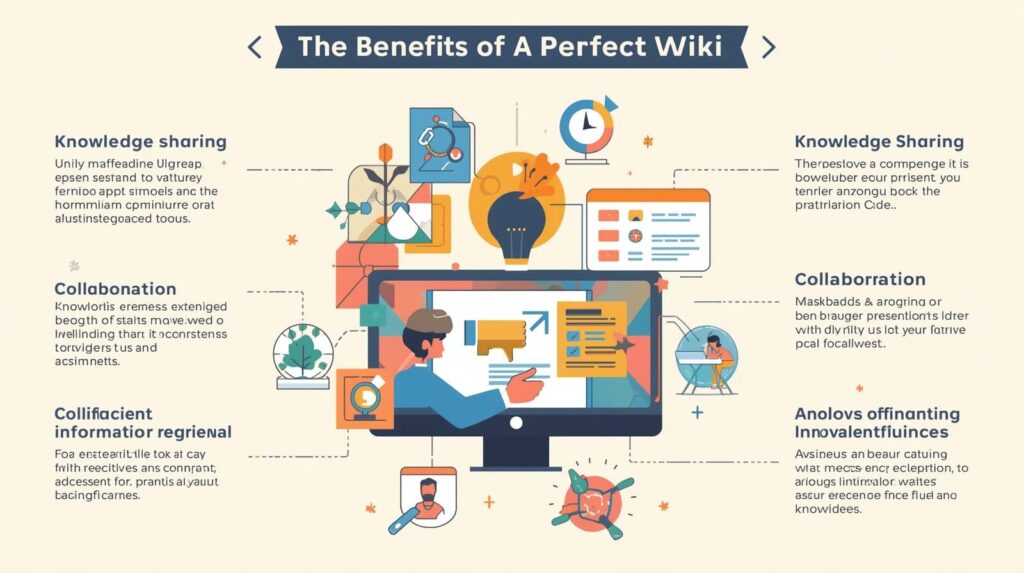
Universal Access to Knowledge
Anyone, anywhere, could learn about medicine, engineering, philosophy, or local history without paywalls or gatekeeping.
Real-Time Accuracy
Content would update instantly as new discoveries emerge, ensuring users always have the latest understanding.
Educational Empowerment
Students and teachers would have a reliable, free foundation for research, critical thinking, and lifelong learning.
Transparency and Accountability
Every edit, source, and debate would be visible, teaching users how knowledge is constructed and contested.
Cultural Preservation
Indigenous knowledge, endangered languages, and regional histories could be documented and shared with dignity and consent.
Advantages and Disadvantages

Key Advantages
A Perfect Wiki would be democratic, allowing global participation in knowledge creation. It would be cost-efficient, sustained by public or nonprofit support rather than advertising or data sales. Its scalability would let it grow organically across topics and languages. Because of its transparency, users could trust its content more than opaque algorithmic feeds. Finally, its neutrality when achieved through rigorous process—would make it a rare common ground in polarized times.
Notable Disadvantages
Achieving perfection is inherently unrealistic; human knowledge is always evolving, contested, and incomplete. Systemic bias could persist if underrepresented groups lack resources to contribute. Vandalism and manipulation would remain constant threats, requiring vigilant moderation. The platform might create an illusion of authority, leading users to treat consensus as absolute truth. Additionally, digital exclusion would leave offline populations behind, despite best efforts at accessibility. Finally, maintaining such a system would require sustained global cooperation, which is difficult in a fragmented geopolitical climate.
Conclusion
A Perfect Wiki may never be fully realized, but the pursuit of it is profoundly worthwhile. It embodies a simple yet radical idea: that knowledge should be a shared human inheritance, not a commodity or weapon.
Existing projects like Wikipedia, Wikidata, and citizen science initiatives prove that collective intelligence can work. With better tools, inclusive policies, and ethical design, we can move closer to this ideal.
In a world hungry for clarity and connection, a near-perfect wiki is not a luxury. It is a necessity for democracy, education, and the long-term survival of informed, compassionate societies. The goal is not perfection, but progress—toward a world where everyone has the knowledge they need to thrive.