What Is Seal Security?
Defining the Concept
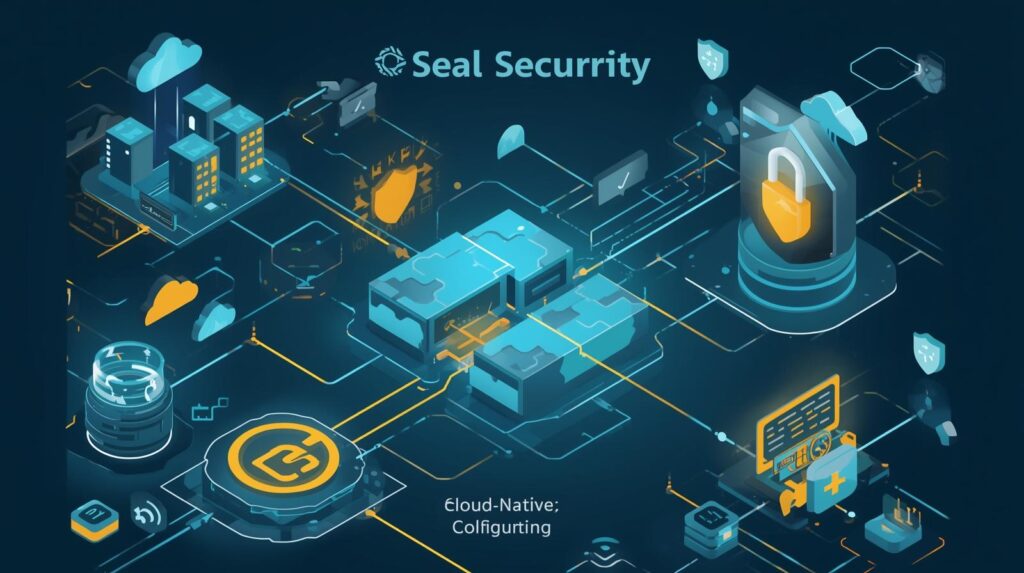
Seal Security refers to the automated vulnerability remediation platform developed by Seal Cybersecurity Solutions Inc., an Israeli cybersecurity company focused on software supply chain integrity. Designed for engineering, security, and DevOps teams, Seal Security uses AI-powered automation to detect, prioritize, and remediate open-source vulnerabilities at scale—without requiring manual intervention from development teams. Unlike traditional vulnerability scanners that generate overwhelming alert volumes and leave patching to overburdened engineers, Seal Security delivers ready-to-apply, R&D-independent patches that integrate directly into CI/CD pipelines, dependency managers, and version control systems. By transforming vulnerability management from a reactive firefighting exercise into a proactive, automated workflow, Seal Security enables organizations to secure their software supply chain without slowing release velocity or diverting engineering resources from feature development.
What Information Is Included?
Data Scope and Intelligence Capabilities
Seal Security processes and analyzes vulnerability intelligence across the entire software development lifecycle, including:
- Vulnerability intelligence: Real-time ingestion of CVEs, GitHub Security Advisories, and vendor disclosures mapped to specific package versions and dependencies
- Code context analysis: Static and dynamic analysis to determine exploitability based on actual code usage—not just library presence
- Patch curation: AI-assisted identification and validation of remediation paths, including version upgrades, dependency substitutions, and backported fixes
- Risk scoring: Context-aware severity ratings that factor in deployment environment, network exposure, authentication requirements, and business criticality
- Supply chain provenance: SBOM (Software Bill of Materials) generation and tracking of transitive dependencies across repositories and container images
- Remediation validation: Automated testing of patches against regression suites and security benchmarks before deployment
All vulnerability data is encrypted in transit (TLS 1.3+) and at rest (AES-256). Seal Security maintains SOC 2 Type II and ISO 27001 compliance. Customer code and proprietary dependencies are never used to train public models, and organizations retain full ownership of their vulnerability data and patch history. Sensitive intellectual property is processed within customer-controlled environments or isolated tenant instances by default.
Where Is Seal Security Used?
Software Supply Chain and Application Security Operations
Seal Security is deployed by organizations where rapid, secure software delivery is mission-critical:
- Enterprise technology companies: Automating patching for thousands of microservices and internal libraries across distributed engineering teams
- Financial services: Enforcing strict vulnerability SLAs for PCI-DSS and SOX compliance without delaying quarterly releases
- Healthcare and life sciences: Securing medical device firmware and clinical SaaS platforms against supply chain attacks with audit-ready remediation trails
- E-commerce and retail: Protecting customer-facing applications during peak seasons by auto-remediating critical vulnerabilities without engineering downtime
- Government and defense contractors: Meeting CMMC and NIST 800-161 requirements for software supply chain risk management with zero-day response automation
- Cloud-native startups: Scaling security posture alongside engineering headcount by eliminating manual triage for early-stage teams
Seal Security supports monolithic, microservices, and serverless architectures across public cloud (AWS, Azure, GCP), private data centers, and hybrid environments.
When Did Seal Security Emerge?
From Manual Patching to Autonomous Remediation
Seal Cybersecurity Solutions Inc. was founded in Israel to address the growing crisis in open-source vulnerability management. The platform emerged publicly in 2023–2024 as software supply chain attacks surged and engineering teams faced unsustainable patching backlogs. Early capabilities focused on automated CVE detection and dependency graph analysis. By 2025, Seal Security evolved to deliver true auto-remediation—applying validated patches directly to repositories via pull requests, dependency updates, and container rebuilds—powered by proprietary AI models trained on millions of historical vulnerabilities and remediation patterns across the global open-source ecosystem. Today, Seal Security is positioned as the autonomous remediation layer that turns vulnerability data into secured code without human intervention.
Why Does Seal Security Exist?
Solving the Remediation Gap in Modern Application Security
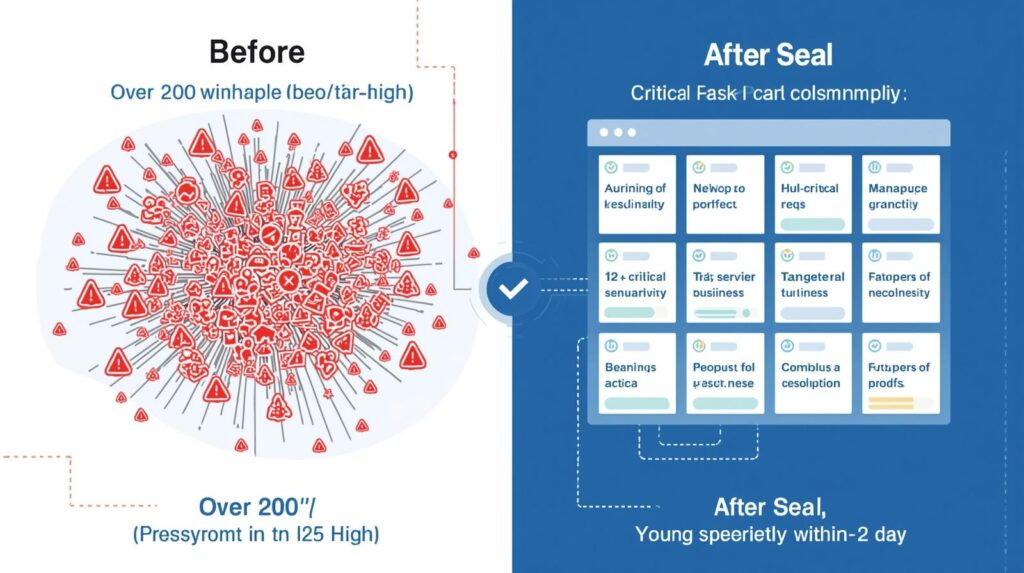
Seal Security exists because vulnerability detection has far outpaced remediation capacity. Engineering teams now manage applications with hundreds of open-source dependencies, generating thousands of vulnerability alerts annually—yet lack bandwidth to patch them all. Meanwhile, attackers exploit unpatched CVEs within days of disclosure, and compliance frameworks mandate strict remediation timelines. Traditional scanners offer visibility but no action. Seal Security answers a critical need: How can organizations achieve true vulnerability closure at the speed of modern development? Its purpose is to make remediation autonomous—so security teams enforce policy while engineers focus on building product.
How Is Seal Security Built?
Architecture and Core Components
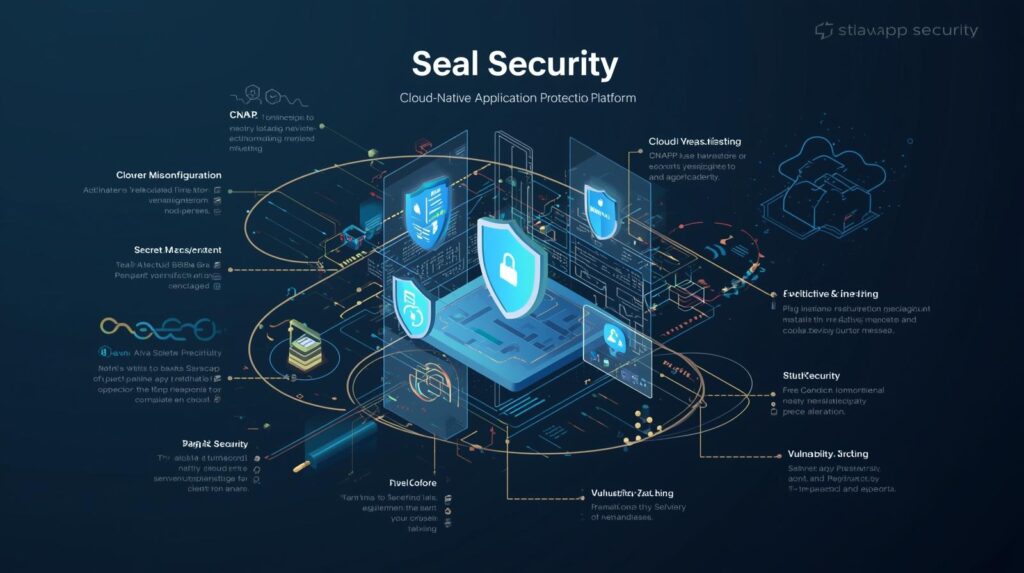
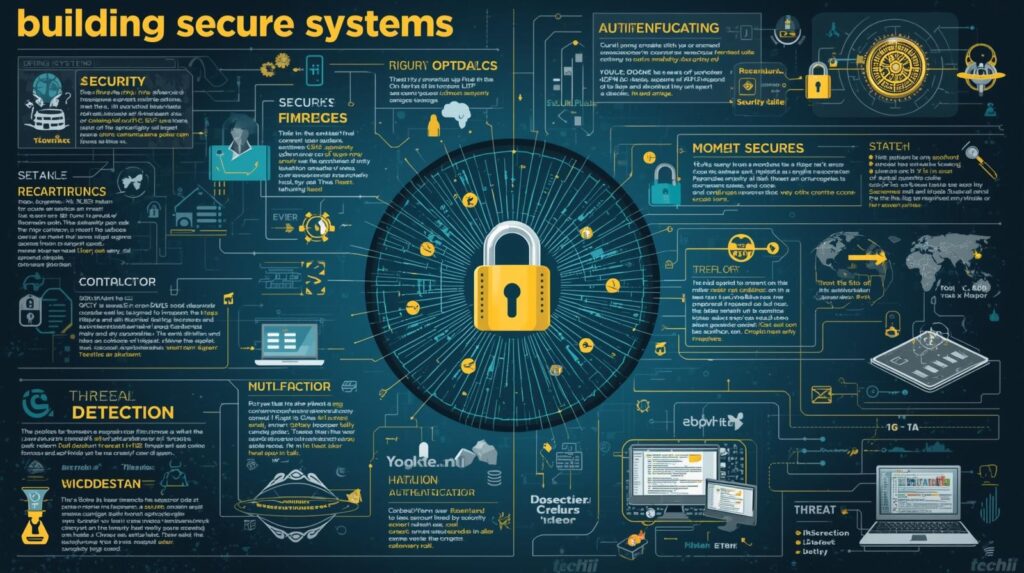
Seal Security is built as a cloud-native remediation engine with four integrated capabilities:
- Vulnerability Intelligence Engine: Continuously aggregates and normalizes threat data from 30+ sources (NVD, GitHub, vendor advisories, dark web monitoring) with deduplication and false-positive filtering
- Context Analyzer: Determines exploitability by scanning actual code paths, configuration files, and runtime environments—reducing noise by up to 90 percent compared to presence-only scanners
- Patch Orchestrator: Generates and validates remediation paths (version upgrades, dependency swaps, config changes) then applies them via Git PRs, dependency managers (npm, pip, Maven), or container registries
- Policy Enforcement Hub: Allows security teams to define SLAs by severity (e.g., “Critical CVEs auto-patched within 24 hours”), approval workflows, and exception handling with audit trails
All components operate with human-in-the-loop validation for production-critical systems and full rollback capability if regression is detected.
Why Is Seal Security Necessary?
The Hidden Costs of Unpatched Vulnerabilities
Seal Security is necessary because manual remediation creates dangerous gaps between detection and closure:
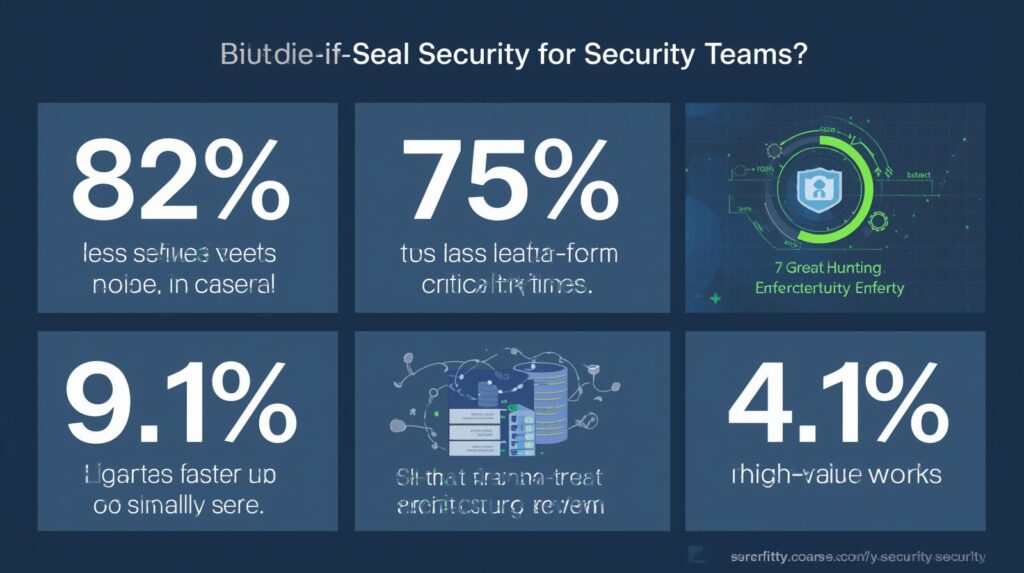
- Engineering teams spend 20–30 percent of sprint capacity on vulnerability patching—slowing feature delivery and increasing burnout
- 60 percent of breaches originate from known, unpatched vulnerabilities—yet median remediation time exceeds 60 days for non-critical CVEs
- False positives from scanners waste hundreds of engineering hours annually on non-exploitable alerts
- Compliance failures due to missed patching deadlines trigger regulatory fines and contract penalties
- Supply chain attacks (e.g., dependency confusion, typosquatting) require rapid, org-wide patching that manual processes cannot deliver
Seal Security ensures that every detected vulnerability achieves timely, validated closure—closing the remediation gap that scanners alone cannot solve.
Who Uses Seal Security?
Target Users and Team Roles
Seal Security serves professionals across the software delivery and security ecosystem:
- Application Security Engineers: Define patching policies, review auto-generated fixes, and monitor remediation coverage across the portfolio
- DevOps/SRE Teams: Integrate auto-remediation into CI/CD pipelines and infrastructure-as-code workflows without disrupting deployments
- Engineering Managers: Reduce context-switching for developers by offloading patching to autonomous workflows
- CISOs and Security Leaders: Demonstrate continuous compliance and reduced mean-time-to-remediate (MTTR) to boards and auditors
- Compliance Officers: Enforce regulatory patching requirements (e.g., PCI-DSS 6.2, NIST 800-53) with automated evidence collection
- CTOs: Accelerate release velocity while maintaining security posture as engineering teams scale
The platform provides role-specific dashboards—from executive risk summaries to engineer-level patch diffs—to align cross-functional stakeholders.
Integration and Ecosystem
Connecting Seal Security to Developer Workflows
Seal Security integrates natively with tools engineering teams already use:
- Version Control: GitHub, GitLab, Bitbucket—auto-create PRs with validated patches and assign reviewers
- CI/CD Platforms: Jenkins, CircleCI, GitHub Actions, GitLab CI—trigger automated testing and deployment of patched builds
- Dependency Managers: npm, pip, Maven, Gradle, Go modules—execute version upgrades and lockfile updates programmatically
- Container Registries: Docker Hub, AWS ECR, Google Artifact Registry—rebuild and rescan images with patched base layers
- Vulnerability Scanners: Snyk, Mend (formerly WhiteSource), Dependabot, Trivy—ingest alerts and execute remediation where scanners stop
- Ticketing Systems: Jira, ServiceNow—create and auto-resolve tickets linked to patch deployments for audit trails
These integrations ensure vulnerability closure happens where code lives—without forcing engineers into yet another security console.
Pricing and Accessibility
Plans for Enterprise and Scaling Organizations
Seal Security is available as a SaaS platform with pricing based on repository count, dependency volume, and remediation volume. There is no free tier Seal serves mid-market and enterprise clients requiring production-grade automation with dedicated security engineering support. All core remediation capabilities are included in base licensing, with premium features (custom patch validation, air-gapped deployments, FedRAMP environments) available as add-ons. A 45–60 day implementation period ensures integration with existing toolchains and policy calibration before autonomous operation begins.
Future Roadmap
What’s Next for Seal Security
Seal Security is expanding its autonomous capabilities to deepen supply chain protection:
- Predictive Vulnerability Forecasting: Identify libraries likely to receive critical CVEs based on maintainer activity, code complexity, and historical patterns
- Zero-Day Response Automation: Deploy virtual patches and runtime protections within hours of zero-day disclosure while awaiting upstream fixes
- SBOM-Driven Risk Modeling: Correlate vulnerability exposure across the software portfolio using dependency graphs and deployment topology
- Third-Party Risk Integration: Extend auto-remediation to vendor-supplied components and managed services via API-driven coordination
- Developer Copilot: Embed contextual remediation guidance directly into IDEs (VS Code, JetBrains) as engineers write dependency declarations
These innovations aim to make Seal Security the autonomous nervous system for software supply chain integrity.
Benefits of Seal Security
Strategic and Operational Impact
Reduced Mean Time to Remediate (MTTR)
Close critical vulnerabilities in hours—not weeks—by automating patch generation, testing, and deployment across thousands of repositories.
Engineering Capacity Recovery
Free 20–30 percent of developer time previously spent on manual patching, redirecting resources to feature work and innovation.
Compliance Assurance
Achieve continuous adherence to PCI-DSS, SOC 2, ISO 27001, and NIST frameworks with automated evidence collection and SLA enforcement.
Attack Surface Reduction
Eliminate known vulnerabilities before exploitation by closing the remediation gap that scanners alone cannot address.
Release Velocity Preservation
Maintain rapid deployment cadence even during vulnerability crises by removing security bottlenecks from the critical path.
Advantages and Disadvantages

Key Advantages and Limitations
Key Advantages
Seal Security delivers the industry’s first true auto-remediation platform—not just detection—for open-source vulnerabilities. Its AI-curated patches are validated against regression risk before deployment, minimizing breakage. The platform operates autonomously within existing developer workflows (Git, CI/CD), eliminating context-switching. Policy-driven enforcement ensures consistent remediation across the entire software portfolio, not just high-visibility projects. Most importantly, it transforms AppSec from a cost center that slows delivery into an enabler of secure, rapid innovation.
Notable Disadvantages
Seal Security requires integration with source control and CI/CD systems—organizations with highly fragmented or legacy toolchains face longer implementation cycles. The platform focuses exclusively on open-source and third-party dependencies; custom application vulnerabilities still require manual developer attention. Auto-remediation carries inherent risk—while validation reduces breakage, organizations must establish rollback procedures and may prefer human approval for mission-critical systems initially. Pricing targets mid-market and enterprise clients, making it inaccessible to very small teams. And because remediation requires write access to repositories, security and engineering teams must align on trust boundaries and approval workflows before deployment.
Conclusion
The Autonomous Layer for Software Supply Chain Integrity
Seal Security operates where vulnerabilities become risk—but its impact is measured in breaches prevented, engineering hours recovered, and releases shipped on time. In an era where software supply chain attacks dominate headlines and compliance demands accelerate, patching can no longer be manual, optional, or slow. Seal Security ensures vulnerabilities are not just found, but fixed—autonomously and at scale.
It is not about scanning more dependencies. It is about closing the remediation gap that leaves organizations exposed long after vulnerabilities are discovered. For engineering and security leaders serious about securing software without sacrificing velocity, Seal Security is not just another scanner. It is the foundation of a modern, autonomous application security program.