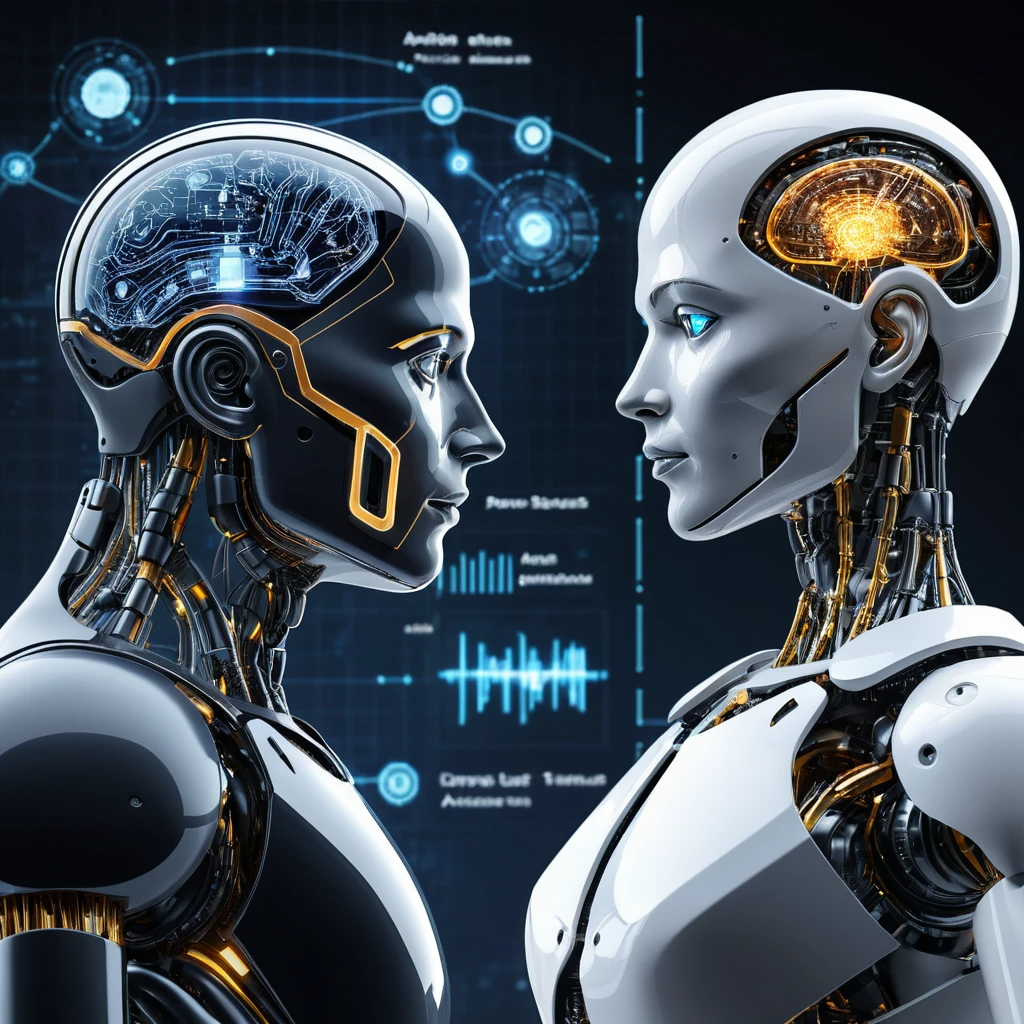
Artificial Intelligence (AI) and Machine Learning (ML) have revolutionized the tech world, driving innovations across industries. From chatbots to self-driving cars, these technologies are shaping the future. However, many people mistakenly use AI and ML interchangeably, not realizing that ML is a subset of AI.
In this blog, we’ll break down the key differences, explore their benefits, and discuss how they work together. Understanding AI vs Machine Learning is crucial for businesses, developers, and tech enthusiasts looking to leverage these powerful technologies.
AI vs Machine Learning: What is Artificial Intelligence (AI)?
Artificial Intelligence (AI) refers to the simulation of human intelligence in machines. AI enables computers to perform tasks that typically require human cognition, such as reasoning, problem-solving, and decision-making.
Key Capabilities of AI:
- Natural Language Processing (NLP): AI chatbots like ChatGPT understand and respond to human language.
- Computer Vision: AI-powered image recognition helps in medical diagnostics and autonomous driving.
- Robotics: AI-driven robots automate manufacturing and logistics tasks.
Examples of AI Applications:
- Virtual Assistants (Siri, Alexa, Google Assistant)
- Self-driving Cars (Tesla’s Autopilot)
- Fraud Detection Systems (AI in banking to prevent fraudulent transactions)
What is Machine Learning (ML)?
AI vs Machine Learning: Machine Learning (ML) is a branch of AI that focuses on building systems that learn from data. Unlike traditional programming, where rules are explicitly defined, ML algorithms improve automatically through experience, making AI systems more adaptive and intelligent.
How ML Works:
- Data is collected and processed.
- The ML model analyzes patterns and relationships.
- The model makes predictions and refines itself over time.
Examples of ML Applications:
- Spam Filters: Gmail uses ML to detect spam emails.
- Recommendation Systems: Netflix suggests movies based on viewing history.
- Predictive Analytics: Businesses forecast sales trends using ML models.
Key Differences: AI vs Machine Learning
| Aspect | Artificial Intelligence (AI) | Machine Learning (ML) |
|---|---|---|
| Definition | AI is a broader concept of creating intelligent systems. | ML is a subset of AI that enables machines to learn from data. |
| Functionality | AI mimics human intelligence. | ML improves performance based on data. |
| Scope | Includes ML, Deep Learning, NLP, etc. | Focuses on algorithms that improve with experience. |
| Examples | Self-driving cars, AI chatbots | Netflix recommendations, Fraud detection |
How AI and Machine Learning Work Together
While AI vs Machine Learning are often used interchangeably, AI is the umbrella term, and Machine Learning plays a significant role in making AI systems smarter.
Real-World Applications Combining AI and ML:
- Healthcare: AI diagnoses diseases using ML-trained models.
- Finance: AI-powered fraud detection uses ML algorithms to identify suspicious transactions.
- Marketing: AI personalizes ads and product recommendations based on ML-driven customer insights.
Benefits of AI and Machine Learning
Benefits of AI:
✔ Automates repetitive tasks – Increases efficiency in industries like customer support.
✔ Enhances decision-making – AI-powered analytics help businesses make data-driven decisions.
✔ Improves customer experience – Chatbots and virtual assistants provide instant responses.
Benefits of Machine Learning:
✔ Processes large datasets quickly – Essential for real-time analytics in finance and e-commerce.
✔ Increases accuracy in predictions – Helps in weather forecasting and stock market analysis.
✔ Reduces human intervention – ML models automate complex decision-making tasks.
Challenges and Limitations
Despite their advantages, AI and ML face challenges such as data bias, high computational costs, lack of transparency, and ethical concerns. Ensuring accuracy, fairness, and responsible AI usage remains a key priority in their development.
Challenges in AI:
❌ Ethical concerns – AI can be biased based on training data.
❌ High implementation costs – Developing AI models requires significant resources.
❌ Lack of transparency – AI decision-making processes can be difficult to explain.
Challenges in ML:
❌ Requires large datasets – ML models need vast amounts of data to function effectively.
❌ Risk of overfitting – ML models may perform well on training data but poorly on real-world data.
❌ Data privacy concerns – Businesses must ensure customer data is protected.
FAI vs Machine Learning: Future Outlook
The future of AI and ML is promising, with continuous advancements in deep learning and neural networks driving innovation. These technologies will enhance automation, decision-making, and problem-solving across various industries.
Predictions for the Next Decade:
- AI will enhance human-AI collaboration in workplaces.
- ML will drive real-time personalization in digital marketing.
- AI-powered automation will revolutionize industries like healthcare, finance, and logistics.
Businesses and individuals who understand AI vs Machine Learning will be better positioned to leverage these technologies effectively.
Conclusion
AI vs Machine Learning are transforming industries, offering endless possibilities for automation, data analysis, and decision-making. While AI is the broader concept of intelligent systems, ML is a key component that enables AI to learn and improve.
Understanding the differences and benefits of Artificial intelligence vs Machine Learning helps businesses and professionals stay ahead in this fast-evolving digital landscape.
FAQs
Can AI exist without Machine Learning?
Yes, AI can function using rule-based algorithms, but ML significantly enhances AI’s ability to adapt and improve automatically.
What is the main difference between AI vs Machine Learning?
AI is a broad field focused on creating intelligent systems, while ML is a subset of AI that enables machines to learn from data and improve over time.
Is Machine Learning necessary for AI?
Not always. Some AI systems rely on rule-based programming instead of ML algorithms.
Which is more powerful: AI or Machine Learning?
AI is more powerful as it includes ML, deep learning, and other intelligent technologies, enabling broader applications.
What are some real-world applications of AI vs Machine Learning?
AI powers virtual assistants like Siri, while ML enhances recommendations on platforms like Netflix and improves fraud detection in banking.