What Is GovDash?
Defining the Concept
GovDash refers to an AI-powered government market intelligence platform that enables businesses to discover, analyze, and act on U.S. federal, state, and local government procurement opportunities with unprecedented speed, precision, and strategic insight. Unlike legacy bid-matching services that rely on basic keyword alerts or static data dumps from SAM.gov, GovDash ingests, normalizes, and enriches millions of public contracting records using natural language processing, machine learning, and graph-based relationship mapping. The platform transforms fragmented, unstructured public data including solicitations, awards, agency budgets, entity registrations, and subcontracting requirements into a dynamic, searchable intelligence layer that predicts win probability, identifies competitor activity, surfaces teaming opportunities, and forecasts market trends. Built specifically for government contractors, BD teams, consultants, and small businesses, GovDash eliminates the noise of manual procurement tracking and replaces it with a proactive, data-driven go-to-market engine for the 700 billion plus U.S. public sector market.
What Information Is Included?
Data Scope and Intelligence Capabilities
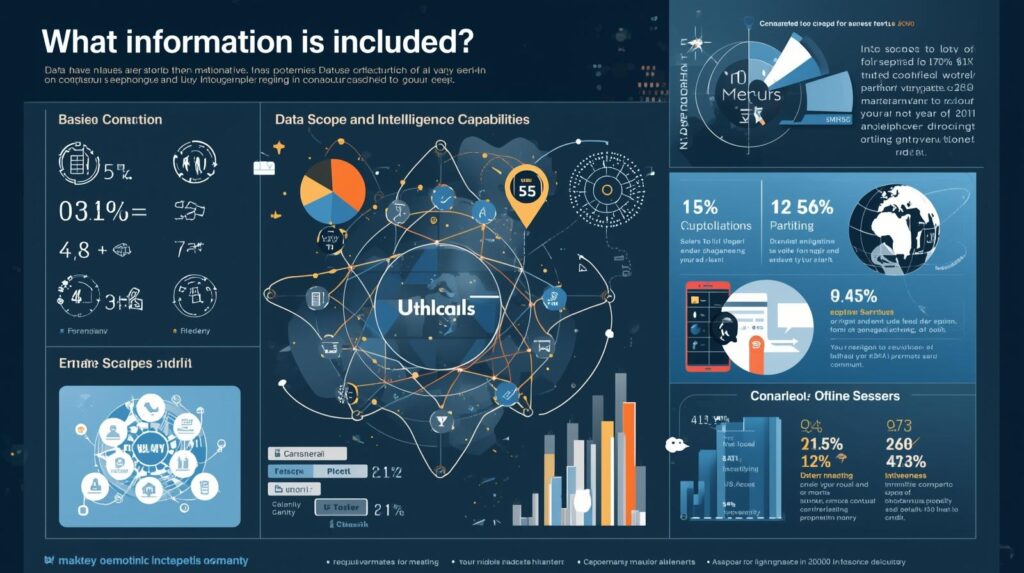
GovDash aggregates and structures data from over 30 authoritative public sources, updated multiple times per day.
Federal Solicitations include full-text RFPs, RFQs, Sources Sought, and Presolicitations from beta.SAM.gov, agency-specific portals such as GSA eBuy, NIH STR, DoD EMALL, and FBO Archive. Award Data covers contract awards, modifications, values, periods of performance, PSC and NAICS codes, and prime-sub relationships from USAspending.gov, FPDS, and agency financial systems. Entity Intelligence features detailed profiles of 1.2 million plus registered contractors, including UEI and DUNS, CAGE codes, socioeconomic certifications such as 8(a), HUBZone, SDVOSB, WOSB, past performance narratives, and points of contact. Budget and Forecasting data comes from agency budget justifications, Congressional appropriations, and procurement forecasts sourced from USAspending, OMB, and agency strategic plans. Subcontracting Opportunities are extracted from RFP Section L, SAM entity registrations, and prime contractor outreach. Market Signals include AI-detected urgency cues such as “immediate need” or “urgent requirement,” evaluation criteria weightings, and technical keywords pulled directly from solicitation text.
All data is publicly sourced and legally redistributable under U.S. federal data policies including FAR 5.102 and OMB Circular A-130. GovDash does not scrape non-public systems or use proprietary databases. User data such as searches, saved opportunities, and team notes is encrypted in transit using TLS 1.3 plus and at rest using AES-256, with SOC 2 Type II compliance and GDPR-ready data handling. Customers retain full ownership of their annotations and can export all data in CSV, JSON, or PDF formats. Data residency is U.S. only on AWS us-east-1, with no international processing.
Where Is GovDash Used?
Government Contracting and Public Sector Sales
GovDash is deployed across the public sector ecosystem to solve high-stakes operational challenges.
Small Businesses use it to automatically match certified status such as 8(a) to set-aside opportunities, receive alerts for “small business only” bids, and avoid wasting time on full-and-open competitions. Large Primes monitor RFPs for subcontracting clauses, identify qualified small business partners by capability and past performance, and validate teaming arrangements before submission. BD and Capture Teams build competitive intelligence dossiers on rivals such as “Which firms won DoD cloud contracts in Q2,” assess win themes based on historical source selection outcomes, and prioritize high-value pipelines. Proposal Centers access historical RFPs with evaluation criteria to ensure compliance and reuse past performance examples from similar awards. State and Local Vendors track municipal RFPs for infrastructure, IT modernization, healthcare services, and public safety across 50 states and 10,000 plus local jurisdictions. Consultants and Advisors provide clients with market entry strategies, competitive positioning maps, and pipeline health assessments. Investors and Analysts monitor government spending trends in emerging sectors such as AI, clean energy, and biodefense to inform M&A or funding decisions.
Use cases span the full lifecycle from market research and pipeline development to bid or no-bid decisions and post-award analysis.
When Did GovDash Emerge?
From Public Data Aggregation to Predictive GovCon Intelligence
GovDash was founded in 2021 by a team of former federal contractors, data scientists, and BD executives who experienced firsthand the inefficiencies of navigating SAM.gov’s 20,000 plus monthly solicitations with spreadsheets and keyword alerts. Recognizing that 70 percent of small businesses miss relevant set-asides due to poor visibility, the team built a prototype that applied NLP to extract structured fields from unstructured RFPs. The platform launched publicly in Q2 2022 with core aggregation, alerting, and filtering features, quickly gaining adoption among 8(a) and SDVOSB firms. In 2023, GovDash introduced AI Win Scoring, a machine learning model trained on 500,000 plus historical awards to predict likelihood of success based on factors like agency history, competition density, and solicitation language. By 2024 to 2025, the platform expanded to include state and local procurement data, subcontracting intelligence, and budget forecasting, establishing itself as a comprehensive GovCon intelligence suite trusted by thousands of contractors across defense, IT, professional services, healthcare, and infrastructure.
Why Does GovDash Exist?
Solving the Noise and Fragmentation of GovCon
GovDash exists because the U.S. government procurement ecosystem is vast, fragmented, and opaque. Despite spending over 700 billion dollars annually on contracts, the process remains inefficient for vendors.
Information overload is rampant. SAM.gov publishes 800 to 1,000 new federal opportunities daily, most irrelevant to any single vendor. Missed set-asides are common. Sixty-eight percent of small businesses fail to identify opportunities matching their certifications according to SBA 2024 data. Slow response leads to missed deadlines. Speed-to-bid is critical in competitive markets. Blind competition is widespread. Teams often bid without knowing who else is competing or what won historically. Subcontracting friction persists. Primes struggle to find vetted small business partners, while subs miss prime outreach.
Traditional solutions such as generic RSS feeds, manual searches, or off-the-shelf bid services lack context, personalization, and predictive power. GovDash answers a critical need. How can contractors cut through the noise and focus only on opportunities they can win? Its purpose is to make government market intelligence proactive, predictive, and personalized so BD teams spend time on strategy, not scrolling.
How Is GovDash Built?
Architecture and Core Components
GovDash’s platform is built on a modern, cloud-native stack designed for scale, accuracy, and compliance.
The Data Ingestion Layer uses proprietary crawlers that continuously pull data from SAM.gov APIs, USAspending.gov bulk downloads, state procurement portals such as Cal eProcure and NY State Contract Reporter, and agency sites. Data is normalized into a unified schema using entity resolution and fuzzy matching. The AI Enrichment Engine includes an NLP Pipeline that extracts entities such as agencies, NAICS, requirements, deadlines, and evaluation criteria using transformer-based models fine-tuned on federal RFPs. The Win Probability Model uses logistic regression and gradient-boosted trees trained on historical award data to score opportunities from 0 to 100 percent based on 20 plus features including competition count, agency spend history, and solicitation urgency. The Competitor Graph maps relationships between primes, subs, and agencies to surface teaming patterns and market concentration. The Intelligence Dashboard is a React-based UI with faceted search, saved filters, pipeline views, and visual analytics such as spend heatmaps by agency. Workflow Automation delivers custom alerting rules via email, Slack, or in-app notifications triggered by new matches, deadline proximity, or award announcements.
The system runs on AWS with daily backups, role-based access control, audit logging, and 99.9 percent uptime SLA. All models are retrained weekly to adapt to market shifts.
Why Is GovDash Necessary?
The Cost of Missed or Misguided Bids
GovDash is necessary because pursuing the wrong opportunity wastes significant time, money, and strategic focus. It is essential because proposal costs are high. A single federal bid can cost 50,000 to 250,000 dollars in labor and overhead. Win rates are low. The average federal win rate is 15 to 25 percent. Targeting improves this to 40 percent plus. Deadlines are unforgiving. Late submissions are automatically rejected with no exceptions. Compliance is complex. Missing a set-aside requirement or past performance format can disqualify a bid. Market shifts are rapid. Budget reallocations such as the CHIPS Act or IRA create new opportunities that vanish if not acted on quickly.
GovDash ensures that every bid pursuit is data-driven, timely, and aligned with winnable criteria, maximizing ROI on BD investment and reducing costly misfires.
Who Uses GovDash?

Target Users and Team Roles
GovDash serves a wide range of professionals across the government contracting lifecycle.
Small Business Owners navigate certifications, find set-asides, and compete confidently without BD staff. Business Development Managers build targeted pipelines, prioritize opportunities, and track competitor wins. Capture Managers conduct deep competitive analysis, shape win themes, and validate solution alignment. Proposal Writers access historical RFPs, evaluation criteria, and past performance examples to ensure compliance. Teaming and Partnerships Leads discover primes seeking subs or identify complementary partners for joint bids. Executive Leadership monitors market trends, assesses growth vectors, and allocates BD resources strategically. Consultants and Advisors deliver data-backed recommendations to clients on market entry and positioning.
The platform supports individual, team, and enterprise licensing with shared pipelines, role-based views, and collaboration features.
Integration and Ecosystem
Connecting GovDash to Existing Workflows
GovDash is designed to enhance, not replace, existing tools.
CRM Integration includes native sync with Salesforce and HubSpot to push opportunities, contacts, and activity logs and auto-create leads from new matches. Calendar and Email features deliver deadline reminders in Google Calendar or Outlook and daily or weekly email digests of new opportunities. Collaboration Tools enable users to share opportunity snapshots or competitor reports in Slack or Microsoft Teams with one click. Proposal Software integration allows export of RFP requirements to RFPIO, Loopio, or Privia for response management. BI and Analytics connectivity supports API or CSV export to Tableau, Power BI, or Looker for custom dashboards. API Access for Enterprise customers provides a RESTful API for pulling opportunity data, win scores, and entity profiles into internal systems.
These integrations ensure GovDash fits seamlessly into the modern GovCon tech stack.
Pricing and Accessibility
Plans for Every Contractor Size
GovDash offers transparent, value-based pricing aligned with public sector realities.
The Free Tier includes 10 alerts per week, basic search, and federal data only, ideal for solopreneurs or initial evaluation. The Professional Plan costs 99 dollars per user per month and includes unlimited searches, AI win scoring, subcontracting leads, state and local data, CRM sync, and email alerts. The Team Plan costs 79 dollars per user per month when billed annually for 5 plus seats and adds shared pipelines, team notes, Slack alerts, and admin controls. The Enterprise Plan offers custom pricing and includes SSO with SAML, audit logs, dedicated API access, custom data feeds, and priority support.
All plans include access to the full U.S. dataset covering federal, state, and local. No credit card is required for the free tier. Fourteen-day trials are available for paid plans. GovDash offers 20 percent discounts for certified small businesses including 8(a), HUBZone, SDVOSB, WOSB and non-profits.
Future Roadmap
What’s Next for GovDash
GovDash is actively expanding its capabilities to meet evolving market demands.
Predictive Budget Modeling in 2025 will deliver AI-driven forecasts of agency spending 6 to 12 months ahead using historical trends, appropriations bills, and economic indicators. The AI Proposal Assistant in 2026 will draft compliance matrices, past performance narratives, and technical volumes using award history and RFP requirements. The Prime-Sub Matchmaking Network in 2026 will be a secure, opt-in platform for primes and subs to connect, share capabilities, and form teams. International Expansion in 2026 to 2027 will pilot coverage of Canadian Buyandsell.gc.ca and UK Contracts Finder procurement markets. A Mobile App in 2025 will support iOS and Android for on-the-go alerts, deadline tracking, and opportunity review. Contract Lifecycle Insights will monitor post-award modifications, extensions, and recompetes.
These innovations aim to make GovDash a full-lifecycle partner from market discovery to contract renewal.
Benefits of GovDash
Strategic and Operational Impact
Higher Win Rates are achieved by focusing only on opportunities with strong fit and low competition, lifting win rates from 20 percent to 40 percent plus. Faster Opportunity Discovery reduces search time from 5 to 10 hours per week to minutes with AI-curated, personalized matches. Stronger Teaming Strategies help identify and vet qualified small business partners in hours, not weeks, accelerating joint bid readiness. Improved Pipeline Forecasting models revenue potential with 85 percent plus accuracy using agency budgets, historical awards, and win scores. Compliance Confidence ensures alignment with set-aside rules, submission formats, and evaluation criteria, reducing disqualifications. Reduced BD Overhead eliminates manual tracking, spreadsheet chaos, and missed deadlines, freeing teams for high-value work.
Advantages and Disadvantages
Key Advantages
GovDash offers one of the most comprehensive, U.S.-focused government intelligence platforms available. Its AI goes beyond keyword matching to understand context, urgency, and competitive dynamics. The interface is intuitive for non-technical users yet powerful enough for seasoned capture managers. Pricing is transparent and tiered by team size, making it accessible to small businesses. Integration with CRM and collaboration tools ensures adoption without workflow disruption. Most importantly, it turns public data, which is free but chaotic, into a strategic, actionable asset.
Notable Disadvantages
GovDash is focused exclusively on the U.S. public sector. It does not cover international or commercial markets. While AI scoring is robust and validated against historical outcomes, win probability remains an estimate. Human judgment is still required for final go or no-go decisions. Some niche agency portals such as DoD EMALL may have 12 to 24 hour delays in data ingestion due to API limitations. The platform requires users to maintain accurate entity profiles such as NAICS and certifications for best matching. Outdated profiles reduce relevance. Because it relies solely on public data, it cannot access internal agency priorities, source selection committee notes, or classified opportunities.
Conclusion
The Intelligence Layer for Public Sector Growth
GovDash may operate behind the scenes, but its impact is measured in won contracts, strategic partnerships, recovered revenue, and accelerated growth. In an era where government spending is accelerating in defense modernization, infrastructure resilience, digital health, and clean energy, contractors need more than data. They need intelligence. GovDash provides the clarity, speed, and foresight to compete with confidence in the world’s largest buyer.
It is not about listing more bids. It is about pursuing the right ones with precision, insight, and strategic advantage. For businesses serious about the public sector, GovDash is not just a data tool. It is the foundation of a winning government growth strategy, turning public opportunity into private success.