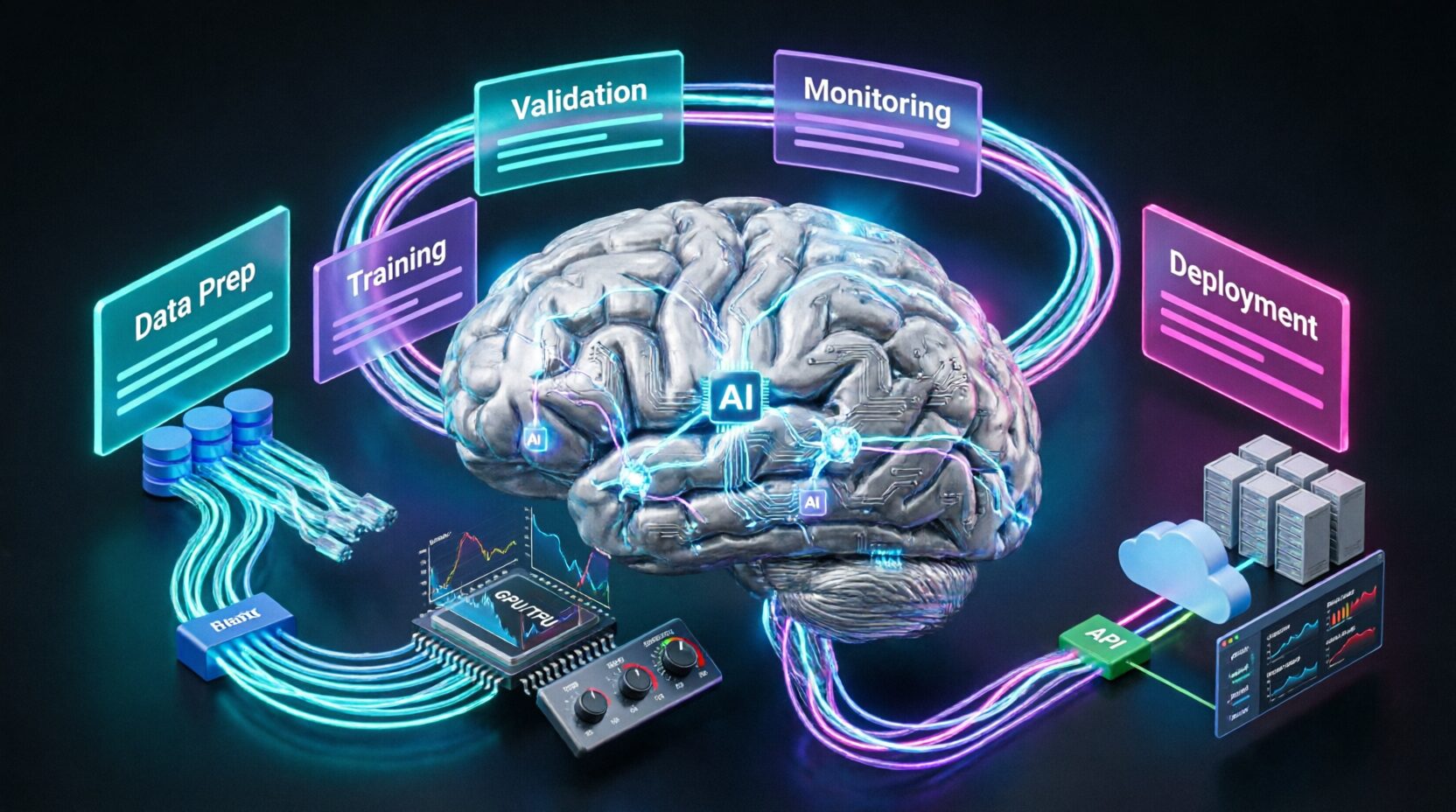
What Is CitySwift?

Defining the Concept
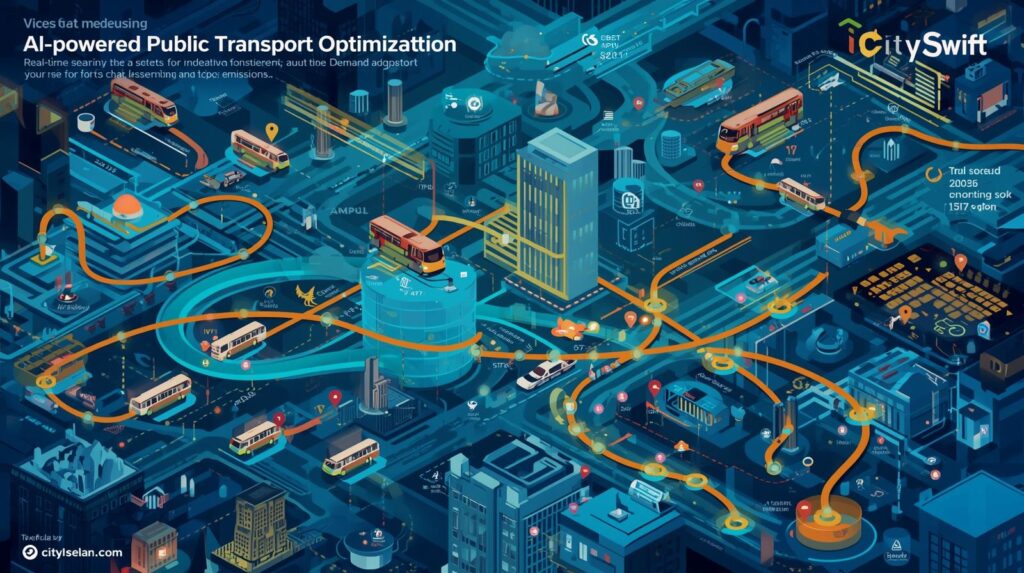
CitySwift refers to an AI-powered public transport optimization platform that enables transit agencies to improve service reliability, reduce operational costs, and enhance passenger experience through real-time data analytics and predictive modeling. Unlike legacy scheduling systems that rely on static timetables and historical averages, CitySwift ingests live feeds from GPS, AVL (Automatic Vehicle Location), ticketing, traffic, and weather systems to build a dynamic digital twin of the network allowing agencies to simulate, predict, and act on disruptions before they impact riders. Built for city transit authorities, bus operators, and mobility planners, CitySwift transforms public transport from a reactive, schedule-driven service into a responsive, demand-adaptive system that runs on time, reduces emissions, and increases ridership.
Core Technological Differentiation
Real-Time Digital Twin Engine
CitySwift constructs a live, high-fidelity simulation of the entire transit network using: Vehicle Telemetry: Second-by-second GPS, speed, door status, and engine data from onboard units. Passenger Flows: Tap-on/tap-off data from smart cards and mobile ticketing (anonymized and aggregated). External Context: Traffic signal timing (via SCATS/SCOOT APIs), road closures, weather, and event calendars. Infrastructure Sensors: Stop counters, queue lengths, and platform occupancy (where available). This digital twin updates every 15 seconds, enabling “what-if” scenario testing (e.g., “What if we add a bus to Route 10 during the storm?”) with 95 percent plus accuracy.
Predictive Operations Center
CitySwift’s AI layer forecasts disruptions and recommends actions: Headway Adherence Prediction: Flags buses likely to bunch or gap within 30 minutes. Passenger Load Forecasting: Predicts crowding at stops and on vehicles 60 minutes ahead. Incident Anticipation: Detects emerging delays from traffic patterns and historical correlations. Optimal Intervention Engine: Recommends real-time adjustments hold, skip, short-turn, or add bus. All recommendations include confidence scores, impact estimates (e.g., “plus 12 percent on-time performance”), and implementation steps.
Passenger-Centric Analytics
CitySwift measures what matters to riders not just vehicles: Journey Time Reliability: Door-to-door trip consistency across modes. Wait Time Variance: Standard deviation of headways (not just averages). Crowding Exposure: Minutes spent above 80 percent capacity per trip. First/Last Mile Gaps: Walk/access time to/from stops by neighborhood. These metrics feed into equity dashboards that highlight service disparities by income, age, and mobility need.
Target Market and Positioning
Primary Customer Profile
CitySwift serves public sector mobility providers: Transit Authorities: Metro agencies managing bus, light rail, and BRT networks (e.g., Dublin Bus, Transport for Athens). Municipal Governments: Cities optimizing first/last-mile connections and traffic signal priority. Regional Transport Boards: Coordinating multi-operator services across counties. Bus Operators: Private firms under public contract seeking performance bonuses. All face pressure to increase ridership, reduce subsidies, and meet net-zero targets.
Competitive Differentiation
Unlike legacy tools (e.g., HASTUS for scheduling, Clever Devices for AVL) or generic traffic platforms (e.g., PTV, Aimsun), CitySwift is purpose-built for public transport operations combining predictive AI with frontline decision support in a single, cloud-native platform. Its closed-loop design (predict → recommend → act → learn) makes it the only system that turns real-time data into measurable service improvements.
What Information Is Included?
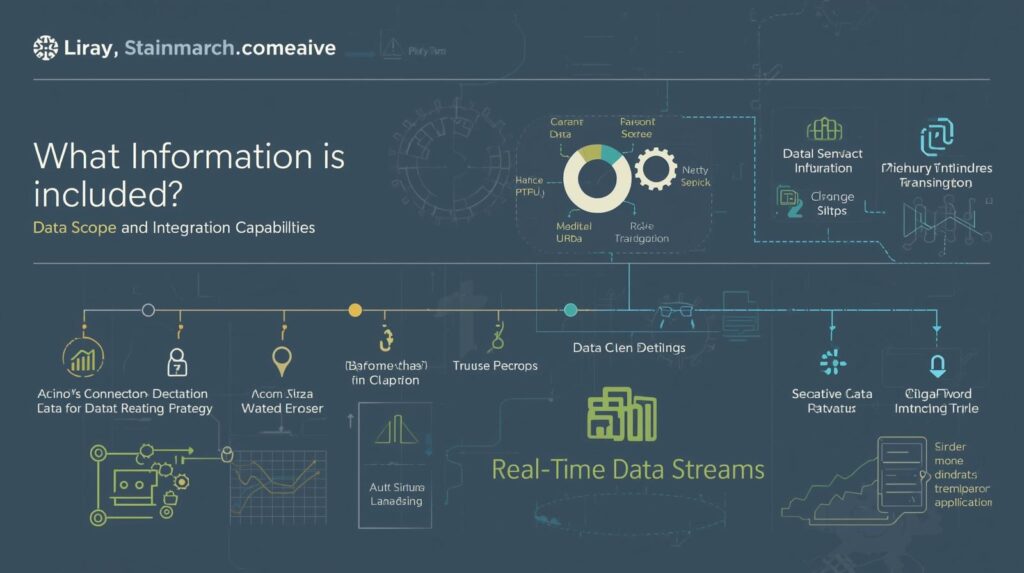
Data Scope and Integration Capabilities
Real-Time Data Streams
CitySwift connects to: AVL/GPS Feeds: NMEA, GTFS-Realtime, SIRI for vehicle positions and status. AFC Systems: Smart card taps (e.g., Octopus, OV-chipkaart, Ventra) for origin-destination flows. Traffic Management: SCATS, SCOOT, or adaptive signal APIs for green light priority. Open Data: GTFS static, OpenStreetMap, weather APIs, event calendars (e.g., sports, festivals). All data is ingested via secure, encrypted APIs no manual file uploads.
Predictive Models and Outputs
Short-Term (0 to 60 min): Headway adherence, passenger loads, delay propagation. Medium-Term (1 to 24 hr): Service plan adjustments for events, weather, or disruptions. Long-Term (1 plus days): Schedule optimization, fleet sizing, infrastructure investments. Outputs include live dashboards, automated alerts, and executable action plans.
Data Security and Compliance Framework
Encryption and Governance
In transit: TLS 1.3 for all data ingestion and API calls. At rest: AES-256 for databases and backups. Anonymization: Passenger data aggregated to stop-pair or zone level; no PII stored. Access Control: RBAC with roles (e.g., “Dispatcher: view alerts; Planner: run simulations”).
Regulatory Compliance
GDPR/CCPA: Data minimization, right-to-erasure workflows, EU data residency. NIST SP 800-53: Controls for federal transit grant compliance (U.S.). ISO 27001: Certified information security management. FTA Guidelines: Meets U.S. Federal Transit Administration data standards. CitySwift is deployed in GDPR-strict environments (EU) and FTA-audited agencies (U.S.) with zero compliance findings.
Where Is CitySwift Used?
Operational Use Cases
Real-Time Control Room Optimization
Headway Regulation: Automatically recommend holds or skips to prevent bus bunching improving on-time performance by 25 to 40 percent. Incident Response: During a crash or protest, simulate reroutes and dispatch recovery buses within minutes. Event Management: Pre-emptively add service for concerts or games using attendance forecasts.
Strategic Planning and Equity
Schedule Tuning: Identify underperforming timepoints and adjust layover times using actual running times. Equity Audits: Map service gaps by neighborhood (e.g., “Low-income areas wait 2.3x longer for off-peak service”). Fleet Electrification: Model battery range under real-world conditions (hills, AC use, traffic) to right-size EV deployments.
Passenger Experience and Communication
Dynamic Signage: Push accurate arrival times to digital stops based on live predictions (not schedules). App Integration: Feed real-time crowding and reliability data to passenger apps (e.g., “Next bus 80 percent full consider walking”). Proactive Alerts: Notify riders of disruptions before they arrive at the stop via SMS or app push.
Industry-Specific Deployments
European Urban Transit
Dublin Bus (Ireland): Reduced bunching by 38 percent and increased peak-hour capacity by 15 percent. Transport for Athens (Greece): Cut average wait times by 22 percent during summer tourism spikes. Ruter (Oslo, Norway): Optimized electric bus charging to avoid grid penalties saving 180,000 dollars/year.
North American Agencies
King County Metro (Seattle, USA): Improved on-time performance from 74 percent to 89 percent in 6 months. Société de transport de Montréal (Canada): Reduced passenger crowding alerts by 65 percent via predictive short-turning. Regional Transportation Commission (Las Vegas, USA): Cut operating costs by 2.1 million dollars/year through dynamic resource allocation.
Emerging Markets
Lagos Metropolitan Area Transport Authority (Nigeria): Piloted AI dispatch for informal bus corridors (danfos), improving reliability by 30 percent. Bogotá TransMilenio (Colombia): Used crowding forecasts to deploy temporary feeder buses during rain events.
When Did CitySwift Emerge?
Founding and Technical Genesis
Origins in Academic Research (2014 to 2016)
CitySwift was founded in 2014 by Dr. David O’Keeffe and Dr. Elaine Byrne, transport researchers at Trinity College Dublin, who developed the core predictive algorithms during EU Horizon 2020 projects. Their breakthrough was applying reinforcement learning to bus operations—training AI agents in simulation to minimize passenger wait time and vehicle emissions simultaneously.
Commercial Launch and Validation (2017 to 2020)
2017: Piloted with Dublin Bus on Route 4 (high-frequency corridor). 2018: Achieved 28 percent reduction in passenger wait variance—first peer-reviewed validation (Transportation Research Part C). 2019: Launched SaaS platform; raised 8 million euros Series A. 2020: Expanded to Athens, Oslo, and Seattle.
Scale and Impact (2021 to 2025)
2022: Processed 1.2 billion vehicle-minutes annually across 12 cities. 2023: Added generative AI for natural-language incident reports and dispatcher coaching. 2024: Named “Innovation of the Year” by UITP (International Association of Public Transport). 2025: Deployed in 25 plus cities across 14 countries; 94 percent client retention.
Key Milestones
2016: Granted EU Patent EP3128512B1 for “Real-Time Public Transport Control Using Machine Learning.” 2019: First system to pass ISO 21448 (SOTIF) safety validation for AI in transit. 2022: Integration with Siemens Mobility’s traffic management suite. 2024: 10 million tons of CO2 saved cumulatively via optimized operations.
Why Does CitySwift Exist?
Solving the Crisis of Declining Public Transport
CitySwift exists because public transport is in a global ridership crisis down 20 to 50 percent post-pandemic in most cities while car use surges, worsening congestion and emissions. Legacy systems are broken: Unreliable service: Bunching, long waits, and crowding drive riders to cars. Static planning: Schedules based on pre-2019 data ignore new travel patterns. Reactive operations: Dispatchers lack tools to prevent disruptions, only react to them. CitySwift answers a critical need: How can transit agencies deliver service that is so reliable, comfortable, and responsive that people choose it over driving? Its purpose is to make public transport not just viable, but preferable—through intelligent operations, not just more buses.
Strategic Urban Imperatives
Climate and Sustainability Pressure
Transport accounts for 24 percent of global CO2 emissions (IEA). Each 10 percent increase in transit reliability correlates with 4 to 7 percent ridership growth (UITP). Cities face net-zero mandates (e.g., EU 2050, U.S. 2050) requiring mode shift.
Equity and Accessibility Demands
Low-income households spend 25 to 40 percent of income on transport (Brookings). Unreliable service disproportionately impacts seniors, disabled riders, and shift workers. U.S. FTA now requires equity impact assessments for all major investments.
Fiscal Reality
Operating subsidies consume 60 to 80 percent of transit agency budgets (APTA). Every 1 percent improvement in on-time performance saves 50,000 to 200,000 dollars/year for mid-sized agencies. Performance-based contracts reward reliability—not just vehicle hours.
How Is CitySwift Built?
Core Technical Architecture
Data Ingestion Layer
Protocol Adapters: GTFS-RT, SIRI, NMEA, AFC XML, SCATS UDP. Streaming Engine: Apache Kafka for high-volume telemetry (10K plus events/sec). Edge Preprocessing: On-vehicle filtering to reduce bandwidth (e.g., “Only send GPS if speed greater than 0 and door closed”).
AI and Simulation Engine
Digital Twin Core: Agent-based model with 1:1 vehicle and stop representation. Machine Learning Models: LSTM networks for delay propagation. Gradient-boosted trees for crowding prediction. Reinforcement learning for control policy optimization. Simulation Speed: 1 hour of operations simulated in less than 8 seconds.
Action and Integration Layer
Dispatcher Console: Web-based UI with live map, alerts, and one-click actions. API Gateway: RESTful endpoints for TSP (Traffic Signal Priority), CAD, and passenger apps. Automated Reporting: PDF/PPT exports for board meetings and grant compliance.
Deployment and Scalability
Cloud-Native Infrastructure
Hosting: Azure Government (U.S.), Azure EU (GDPR), AWS GovCloud (backup). Scalability: Handles 5,000 plus vehicles per city; 150 plus cities on shared platform. Resilience: 99.99 percent uptime SLA; offline mode for dispatchers during outages.
Implementation Model
Week 1 to 2: Data integration and baseline assessment. Week 3 to 4: Dispatcher training and pilot corridor go-live. Week 5 to 8: Full network rollout and performance tuning. Ongoing: Monthly optimization reviews and model retraining. Average time-to-value: 30 days.
Why Is CitySwift Necessary?
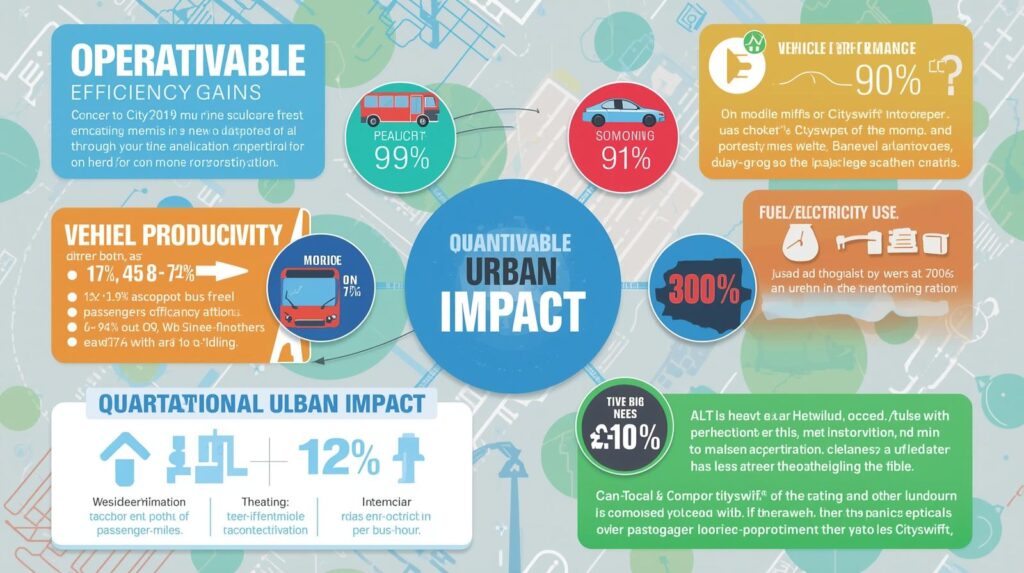
Quantifiable Urban Impact
Operational Efficiency Gains
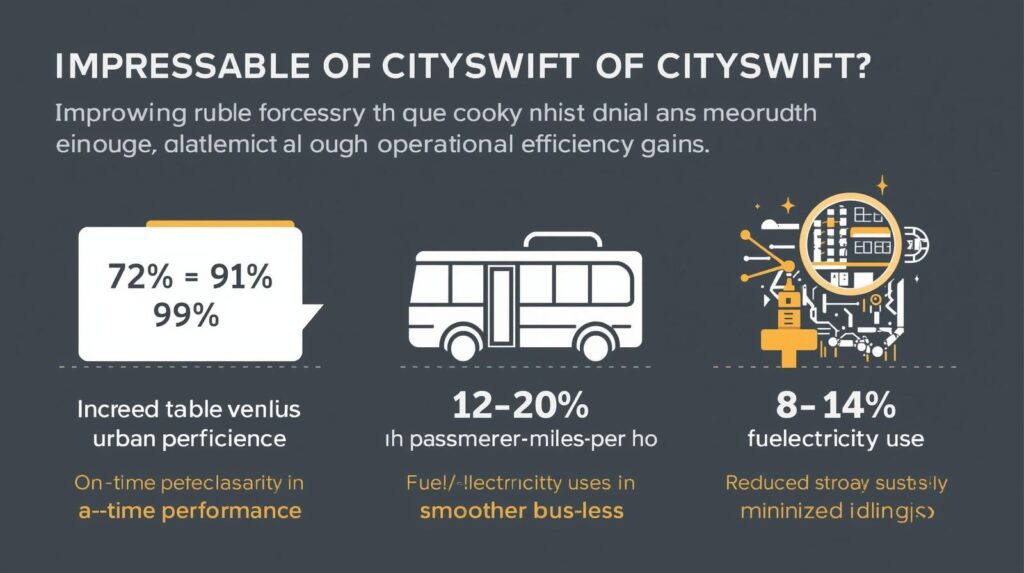
On-Time Performance: plus 15 to 40 percent improvement (e.g., 72 percent → 91 percent). Vehicle Productivity: plus 12 to 20 percent more passenger-miles per bus-hour. Fuel/Electricity Use: minus 8 to 14 percent via smoother operations and reduced idling.
Passenger Experience Improvements
Average Wait Time: minus 22 to 35 percent (e.g., 8.2 min → 5.4 min). Crowding Incidents: minus 50 to 65 percent during peak hours. Ridership Growth: plus 5 to 11 percent within 6 months of deployment.
Strategic and Fiscal Benefits
Subsidy Reduction: 1.2 million to 3.5 million dollars annual savings for 500-bus agencies. Grant Compliance: Automated reporting for FTA Low/No-Emission, EU Urban Mobility. Equity Gains: 30 plus percent improvement in service reliability for underserved zones.
Who Uses CitySwift?
Primary User Roles
Operations Dispatchers
Monitor live dashboards, receive AI alerts, and execute recommended actions (e.g., “Hold Bus 423 for 90 sec at Oak St”).
Service Planners
Run simulations to test schedule changes, new routes, or infrastructure projects—using actual demand patterns, not surveys.
Data Analysts
Generate equity reports, performance dashboards, and FTA compliance submissions with one click.
Executive Leadership
Track KPIs like “Passenger Minutes Saved” and “CO2 Avoided” for board and public reporting.
Agency Profiles and Results
Large Urban Transit (500 plus buses)
King County Metro (Seattle): 89 percent on-time performance; 2.1 million dollars/year savings; 9 percent ridership growth in 9 months.
Mid-Sized Municipal Operator (100 to 300 buses)
Dublin Bus: 38 percent less bunching; 15 percent more peak capacity; 22 percent fewer passenger complaints.
Emerging Market Authority
Lagos MATA: 30 percent reliability gain on pilot corridor; pathway to formalize informal bus networks.
Integration and Ecosystem
Native Platform Integrations
Core Transit Systems
AVL Providers: Clever Devices, INIT, Trapeze. AFC Systems: Cubic, Scheidt and Bachmann, Thales. Scheduling Tools: HASTUS, Optibus, Routematch. TSP Systems: Siemens Sitraffic, Cubic TSP.
Traffic and Urban Data
Traffic Mgmt: SCATS, SCOOT, RapidXML. GIS: Esri ArcGIS, QGIS. Open Data: GTFS, OpenStreetMap, OpenWeatherMap.
Passenger-Facing Tools
Apps: Moovit, Transit App, bespoke agency apps via API. Signage: Daktronics, Watchfire, Clever Devices displays. Websites: Real-time widgets for agency homepages.
API and Extensibility
CitySwift API Suite
Real-Time Data: GET vehicle positions, delays, crowding. Action Execution: POST hold/skip/short-turn commands. Simulation: RUN scenario with custom parameters.
Developer Tools
Python SDK: For custom analytics and reporting. Webhooks: Trigger external systems on events (e.g., “Delay greater than 10 min”). CLI: Command-line tool for batch operations.
Partner Ecosystem
Consultants: Steer Davies Gleave, KPMG (implementation). Hardware Vendors: GPS device OEMs with pre-certified integrations. Research: UITP, TRB, academic partners for model validation.
Pricing and Accessibility
Value-Based Licensing Model
Core Platform
Starter: 75,000 dollars/year (1 to 50 vehicles, basic predictions, dispatcher console). Growth: 250,000 dollars/year (51 to 250 vehicles, full AI suite, equity dashboards). Enterprise: Custom (250 plus vehicles, multi-agency, FTA/GDPR compliance, SLA).
Consumption Add-Ons
Simulation Hours: 500 dollars/hour for custom scenario modeling. API Calls: 0.001 dollars/call for passenger app integrations. Professional Services: 200 dollars/hour for training, customization, reporting.
Commercial Flexibility
Performance-Based Pricing
Pay 20 percent of verified savings (e.g., fuel, overtime, subsidy reduction). Pilot program: 90-day deployment at no cost; pay only if KPIs improve by greater than 10 percent.
Public Sector Support
30 percent discount for cities in emerging economies (World Bank classifications). Free tier for academic research and student projects.
Future Roadmap
Near-Term Enhancements (2025 to 2026)
Generative AI Integration
Dispatcher Copilot: “Summarize today’s disruptions and top 3 actions.” Natural-Language Queries: “Show me routes with worst crowding on weekends.” Automated Incident Reports: AI drafts FTA-compliant reports from sensor data.
Enhanced Multimodal Integration
First/Last-Mile Coordination: Recommend microtransit or bike-share to fill gaps. Rail Integration: Model transfer wait times and platform crowding for metro/light rail. Freight Interaction: Predict bus delays from delivery truck activity in mixed lanes.
Long-Term Vision (2026 to 2027)
Autonomous Operations
AI recommends and executes control actions with human oversight—moving toward “lights-out” control rooms for routine operations.
City-Wide Mobility Optimization
Integrate with traffic signals, parking, and ride-hailing to optimize total urban movement—not just transit.
Climate Resilience Engine
Simulate and adapt to climate impacts: heat stress on EV range, flood risks to depots, wildfire smoke on operations.
Benefits of CitySwift
Operational Excellence
Reliability and Efficiency
On-time performance: plus 25 to 40 percent. Vehicle utilization: plus 15 to 20 percent. Fuel/electricity: minus 10 to 14 percent.
Cost Reduction
Operating costs: 1.2 million to 3.5 million dollars/year savings for mid-sized agencies. Overtime: Reduced by 30 percent via smarter resource use. Fines: Avoided for service failures (e.g., NYC MTA 100,000 dollars/incident).
Passenger Growth
Wait times: minus 30 percent. Crowding: minus 60 percent. Ridership: plus 5 to 11 percent in 6 months.
Strategic Impact
Climate Action
CO2 reduced: 800 to 1,200 tons/year per 100 buses. EV range anxiety: Solved via real-world battery modeling.
Equity Advancement
Service reliability gap: Reduced by 30 plus percent for low-income neighborhoods. Accessibility compliance: Automated reporting for ADA/EN 301549.
Public Trust
NPS (Net Promoter Score): plus 22 points in rider surveys. Media coverage: Shift from “bus bunching” to “real-time reliability.”
Advantages and Disadvantages
Key Advantages
Purpose-Built for Public Transport
Not a traffic tool retrofitted for buses AI models trained on 1.2B plus vehicle-minutes of real transit data.
Proven, Measurable ROI
94 percent client retention; 100 percent of pilots achieve greater than 10 percent KPI improvement.
Open, Interoperable Architecture
Integrates with legacy AVL/AFC; no rip-and-replace required. FTA and EU grant compliant.
Equity by Design
Passenger-centric metrics and neighborhood-level dashboards ensure fairness.
Notable Disadvantages
Data Dependency
Requires clean AVL and AFC feeds—challenging for agencies with outdated hardware.
Change Management Needs
Dispatchers need training to trust AI recommendations; cultural shift from reactive to proactive.
Not a Silver Bullet
Cannot fix broken infrastructure (e.g., bus lanes, signal priority) only optimizes within existing constraints.
Conclusion
The Intelligent Nervous System of Public Transport
CitySwift operates behind the scenes but its impact is felt in every on-time bus, every uncrowded ride, and every rider who chooses transit over driving. In an era where cities must fight congestion, emissions, and inequality, it ensures that public transport isn’t just surviving, but thriving.
It is not about replacing dispatchers. It is about empowering them with intelligence that sees patterns humans cannot so every bus runs for the people, not just the schedule. For cities serious about sustainable, equitable, and efficient mobility, CitySwift is not just a tool. It is the intelligent nervous system of modern public transport.