
What Is Elastic?

Defining the Concept
Elastic refers to the unified search, observability, and security platform built on the open Stack comprising Elasticsearch, Kibana, Beats, and Logstash. Designed for developers, DevOps engineers, security analysts, and business intelligence teams, Elastic leverages distributed search and analytics engines to ingest, index, correlate, and visualize massive volumes of structured and unstructured data in real time. Unlike siloed monitoring or legacy SIEM tools that require complex pipelines and delayed insights, Elastic delivers a single platform where logs, metrics, traces, security events, and business data converge enabling instant search, dynamic dashboards, anomaly detection, and automated alerting across the entire digital ecosystem. By transforming fragmented data streams into a unified source of truth, Elastic empowers organizations to observe system health, investigate threats, and deliver lightning-fast search experiences all from a single, scalable architecture.
What Information Is Included?

Data Scope and Intelligence Capabilities
Elastic processes and analyzes heterogeneous data streams across infrastructure, applications, security layers, and user interactions, including:
- Observability data: Logs, metrics, and distributed traces from cloud services, containers, servers, and applications enabling full-stack visibility and root cause analysis
- Security telemetry: Network flows, endpoint events, authentication logs, and threat intelligence feeds correlated for detection, investigation, and response
- Search and relevance signals: User queries, clickstreams, and engagement metrics to power personalized search experiences and recommendation engines
- Business analytics: Transaction records, customer profiles, and operational data indexed for real-time business intelligence and reporting
- Machine learning insights: Unsupervised anomaly detection models that identify deviations in metrics, logs, or user behavior without predefined rules
- Geospatial and temporal context: Location-aware data enrichment and time-series analysis for mapping events across physical and digital environments
All data is encrypted in transit (TLS 1.3+) and at rest (AES-256). Elastic Cloud is SOC 2 Type II, ISO 27001, HIPAA, and GDPR compliant. Self-managed deployments give organizations full control over data residency and processing. Customer data is never used to train third-party AI models, and organizations retain complete ownership of their indexed content and analytics artifacts.
Where Is Elastic Used?
Cross-Domain Visibility and Intelligence Operations
Elastic is deployed by organizations where real-time data convergence drives operational excellence, security resilience, and customer experience:
- Technology and SaaS companies: Monitoring microservices architectures across Kubernetes clusters while powering site search for millions of users
- Financial services: Detecting fraudulent transactions in real time, meeting FINRA/SOX audit requirements, and monitoring trading platform performance
- E-commerce and retail: Delivering sub-second product search with typo tolerance and personalization while observing checkout funnel health during peak traffic
- Healthcare providers: Securing PHI across EHR systems, monitoring medical device telemetry, and enabling clinical staff to search patient records instantly
- Government and critical infrastructure: Centralizing security operations across agencies with air-gapped deployments and FedRAMP authorization
- Media and entertainment: Analyzing viewer engagement patterns, troubleshooting streaming quality issues, and powering content discovery engines
Elastic supports hybrid and multi-cloud environments (AWS, Azure, GCP), on-premises data centers, and edge deployments scaling from single-node development instances to petabyte-scale production clusters.
When Did Elastic Emerge?
From Open Source Search to Unified Data Platform
Elasticsearch was created in 2010 by Shay Banon as an open source distributed search engine built on Apache Lucene. The Elastic Stack (then ELK Stack) gained rapid adoption among developers seeking alternatives to monolithic log management tools. Elastic NV (formerly Elastic.co) was founded to commercialize and extend the platform. The “Elastic” brand evolved beyond search between 2018–2020 as the company unified observability and security solutions under a single data model and user interface. By 2021–2025, it introduced machine learning-powered anomaly detection, Elastic Agent for simplified data collection, and AI Assistant for natural language querying transforming from a search engine into an integrated data platform where observability, security, and search share infrastructure, tooling, and expertise. Today, Elastic stands as the convergence layer for real-time data where every byte ingested becomes instantly searchable, analyzable, and actionable.
Why Does Elastic Exist?
Solving Data Fragmentation in the Digital Enterprise
Elastic exists because modern organizations drown in data yet starve for insight. Engineering teams juggle separate tools for logs, metrics, and traces. Security teams correlate events across disconnected SIEMs and endpoint platforms. Product teams build search experiences on brittle, slow databases. This fragmentation creates visibility gaps, slows incident response, and inflates tooling costs. Legacy platforms offer dashboards but lack real-time correlation. It answers a critical need: How can organizations unify observability, security, and search on a single scalable foundation? Its purpose is to eliminate data silos so teams ask questions of their entire digital footprint without waiting for pipelines, transformations, or exports.
How Is Elastic Built?
Architecture and Core Components
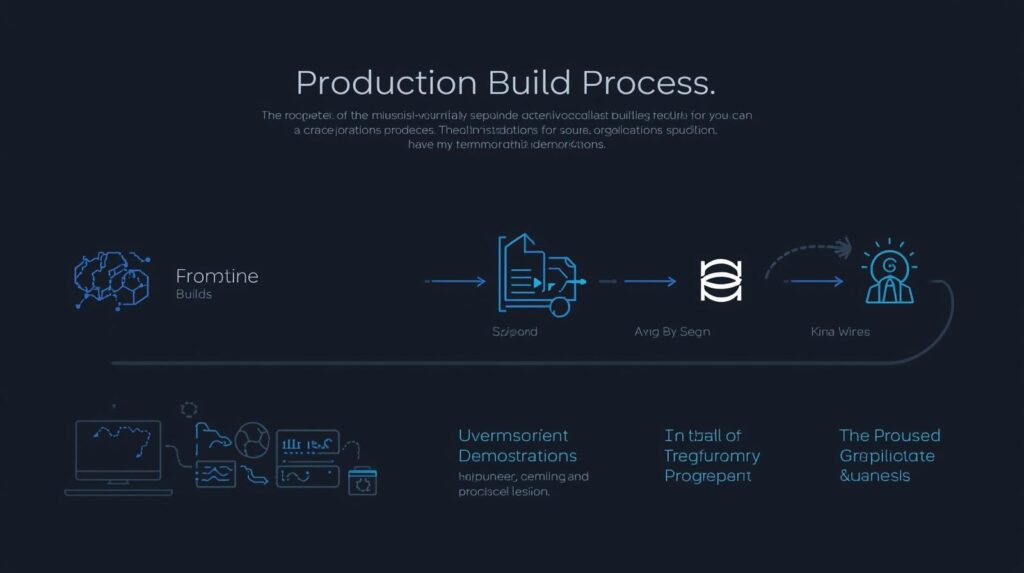
It is built as a distributed, schema-on-read platform with four integrated layers:
- Ingestion Layer (Beats/Elastic Agent): Lightweight shippers that collect logs, metrics, and events from endpoints, cloud services, and applications routing data to search with minimal overhead
- Storage and Search Engine (Elasticsearch): Distributed document store with inverted indices, columnar storage for analytics, and near real-time indexing scaling horizontally across commodity hardware or cloud instances
- Visualization and Investigation (Kibana): Web interface for building dashboards, exploring data with Discover, investigating security alerts in Security Solution, and tracing transactions in APM
- Intelligence Layer (Machine Learning & AI Assistant): Unsupervised ML jobs that detect anomalies without rules, plus generative AI capabilities that translate natural language questions into KQL (Kibana Query Language) queries
All components operate on a shared data model meaning a log ingested for observability can instantly fuel a security alert or power a search result without ETL or replication.
Why Is Elastic Necessary?
The Cost of Disconnected Data Systems
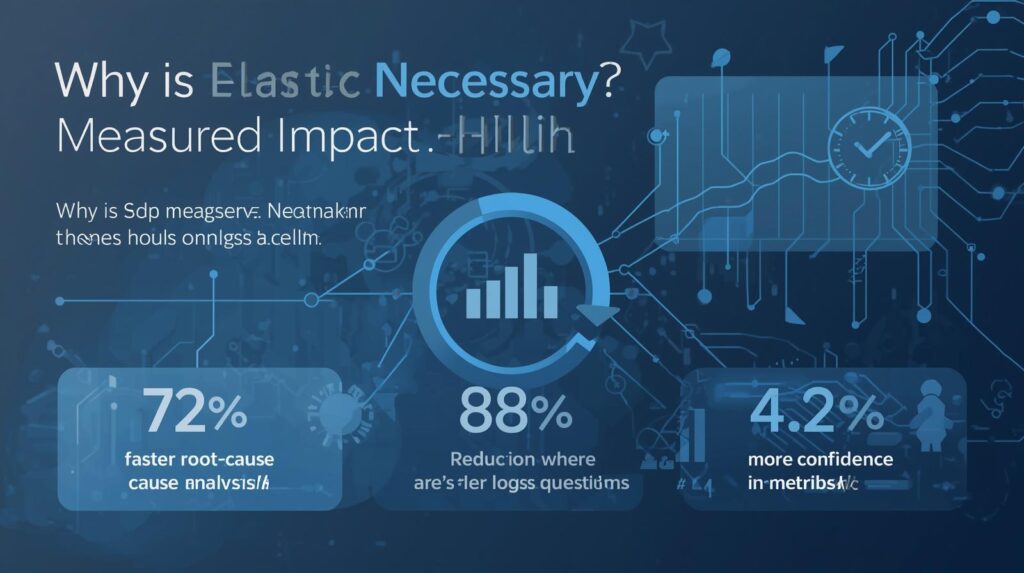
Elastic is necessary because fragmented tooling creates dangerous blind spots and operational drag:
- Mean time to detect (MTTD) for security incidents exceeds 200 hours when teams must manually correlate across disconnected tools
- Engineering teams waste 15–20 hours per week switching contexts between observability, logging, and tracing platforms
- Poor search experiences drive 30–40 percent of e-commerce users to abandon sites after failed queries
- Compliance audits require manual evidence collection across 5–10 tools delaying certifications and increasing risk
- Legacy SIEMs charge per-gigabyte ingestion, forcing security teams to sample or discard critical telemetry
It ensures that every data source becomes instantly correlated, searchable, and actionable closing visibility gaps that siloed tools cannot bridge.
Who Uses Elastic?
Target Users and Team Roles
Elastic serves professionals across technical and business functions:
- Site Reliability Engineers (SREs): Monitor system health, set SLOs/SLIs, and trace latency bottlenecks across distributed services
- Security Analysts and SOC Teams: Detect threats, investigate incidents with timeline views, and automate response playbooks
- Developers: Embed fast, relevant search into applications using Elasticsearch APIs and clients
- DevOps Engineers: Deploy and manage Elastic clusters via Infrastructure as Code (Terraform, Ansible) and Kubernetes operators
- Product Managers: Analyze user behavior and search relevance to optimize digital experiences
- CISOs and CTOs: Consolidate tool sprawl, reduce total cost of ownership, and demonstrate unified visibility to boards
Role-based workspaces in Kibana provide tailored experiences—from executive summary dashboards to raw query consoles—aligning cross-functional teams on shared data.
Integration and Ecosystem
Connecting Elastic to Enterprise Toolchains
Elastic integrates natively with hundreds of data sources and downstream systems:
- Cloud Platforms: AWS CloudWatch, Azure Monitor, Google Cloud Operations ingest logs and metrics via native integrations or Elastic Agent
- CI/CD and DevOps: Jenkins, GitHub Actions, GitLab correlate deployment events with performance regressions
- Security Tools: CrowdStrike, SentinelOne, Palo Alto Networks enrich endpoint telemetry with network and identity context
- Data Warehouses: Sync aggregated results to Snowflake, BigQuery, or Redshift for long-term retention and BI reporting
- Alerting and Orchestration: PagerDuty, Slack, ServiceNow, Jira trigger notifications and incident tickets from detected anomalies
- Application Frameworks: Java, .NET, Node.js, Python auto-instrument applications for APM via Elastic APM agents
These integrations ensure Elastic becomes the central nervous system for data—without replacing existing tools.
Pricing and Accessibility
Deployment Models for Every Organization
It is available via three consumption models:
- Elastic Cloud (SaaS): Fully managed service on AWS, GCP, or Azure priced per hour based on deployment size and features (Search, Observability, Security)
- Elastic Cloud Enterprise (ECE): Self-hosted orchestration platform for managing multiple Elastic clusters behind the firewall
- Self-Managed (Open Source/Basic): Free-to-use Elastic Stack under the Server Side Public License (SSPL), with paid subscriptions unlocking enterprise features (ML, SAML, alerting)
A free 14-day trial of Cloud enables immediate experimentation. The Basic tier supports production use for small teams. Enterprise subscriptions include 24/7 support, dedicated technical account management, and training credits. Implementation typically takes 2–8 weeks depending on data source complexity and use case scope.
Future Roadmap
What’s Next for Elastic
Elastic is expanding its unified data vision with strategic innovations:
- Semantic Search and Vector Database: Native vector indexing and similarity search to power RAG applications and AI agent memory stores
- Unified Query Language: Converging KQL, ESQL, and Lucene syntax into a single intuitive language for all data types
- Predictive Observability: ML models that forecast capacity bottlenecks and service degradation before user impact
- Autonomous Security Analyst: AI copilot that suggests investigation paths, writes detection rules, and summarizes incident timelines
- Edge Analytics: Lightweight Elastic deployments for real-time analysis on IoT devices and disconnected environments
These innovations aim to make the default platform where all organizational data converges—searchable, correlatable, and intelligent by design.
Benefits of Elastic
Strategic and Operational Impact
Accelerated Mean Time to Resolution (MTTR)
Reduce incident resolution from hours to minutes by correlating logs, metrics, and traces in a single interface cutting downtime costs by 30–50 percent.
Consolidated Tooling Costs
Replace 3–5 point solutions (log management, APM, SIEM) with a single platform reducing total cost of ownership by 25–40 percent while improving coverage.
Enhanced Security Posture
Detect and investigate threats 5–10x faster with unified telemetry and ML-powered anomaly detection reducing breach risk and compliance exposure.
Superior User Experiences
Deliver sub-second, typo-tolerant search with personalization increasing e-commerce conversion rates by 10–20 percent and reducing support tickets.
Developer Velocity
Enable engineers to self-serve observability and search capabilities via APIs and infrastructure-as-code accelerating feature delivery without security or ops bottlenecks.
Advantages and Disadvantages
Key Advantages and Limitations
Key Advantages
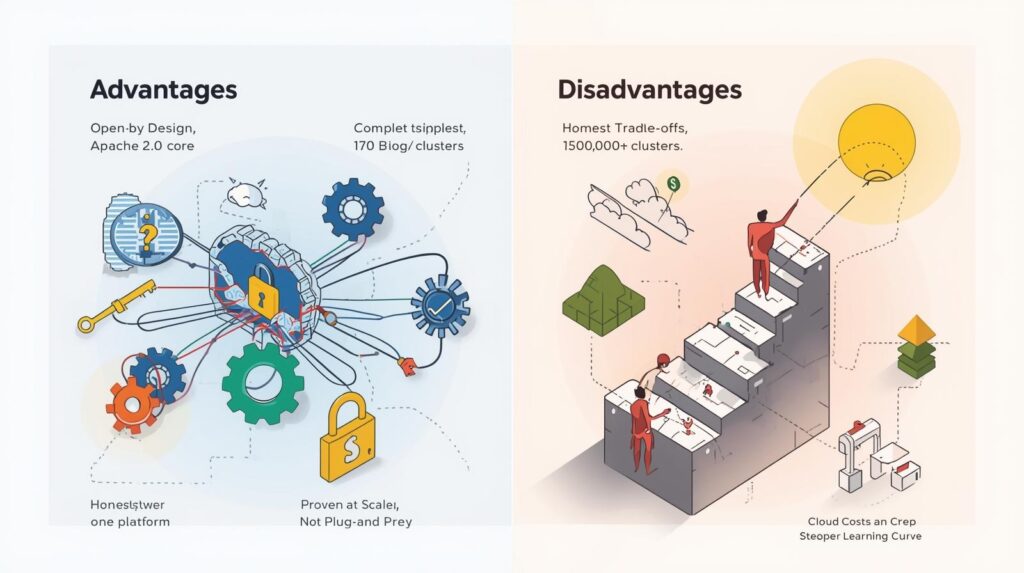
Elastic delivers the only unified platform where search, observability, and security share infrastructure, data model, and tooling eliminating costly context switching and data replication. Its distributed architecture scales linearly from gigabytes to petabytes on commodity hardware. The open core model provides transparency and vendor flexibility, while enterprise features add governance and resilience for mission-critical workloads. Real-time indexing means data becomes actionable within seconds not hours. Most importantly, Elastic transforms raw telemetry into correlated insight so teams see the full picture, not isolated fragments.
Notable Disadvantages
Elastic requires expertise to tune for large-scale deployments cluster sizing, shard management, and index lifecycle policies demand skilled administration or managed service reliance. Licensing changes from Apache 2.0 to SSPL in 2021 created uncertainty for some open source adopters, though core functionality remains freely usable. High ingestion volumes can drive significant cloud costs if retention policies and tiered storage aren’t optimized. The platform’s breadth—spanning search, observability, and security can create complexity for teams adopting only one use case. And while ML capabilities are powerful, advanced anomaly detection still requires tuning to reduce false positives in noisy environments.
Conclusion
The Unified Layer for Real-Time Data Intelligence
Elastic operates at the convergence of data streams but its impact is measured in incidents prevented, outages avoided, threats contained, and experiences delighted. In an era where digital resilience defines competitive advantage and customer expectations demand instant relevance, fragmented data tools are a liability. It ensures telemetry is not just collected, but instantly understood correlated across domains and surfaced where decisions happen.
It is not about indexing more logs. It is about eliminating the friction between data and insight so organizations see clearly, respond swiftly, and build experiences users love. For engineering, security, and product leaders serious about data-driven operations, Elastic is not just another tool. It is the foundation of a modern, unified data strategy.