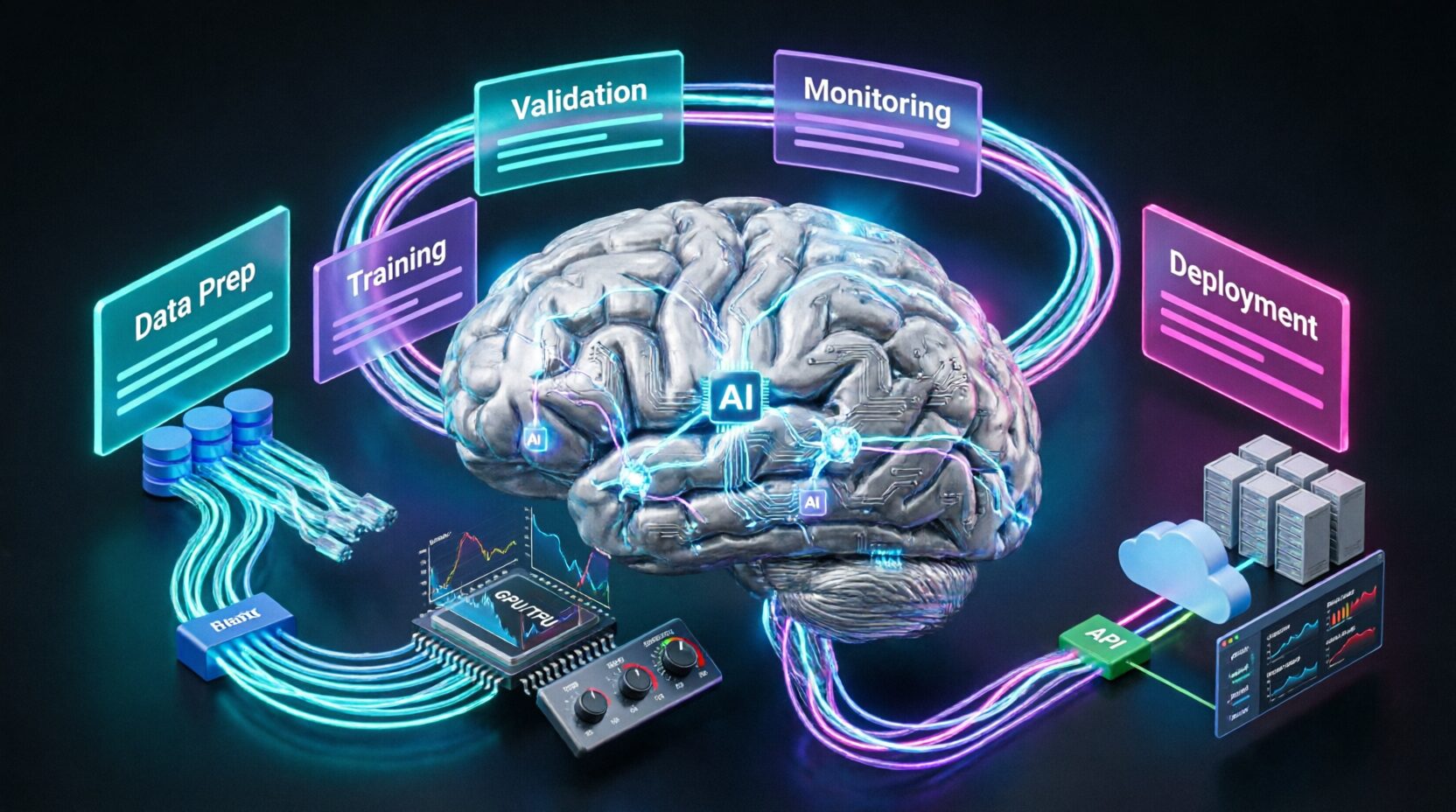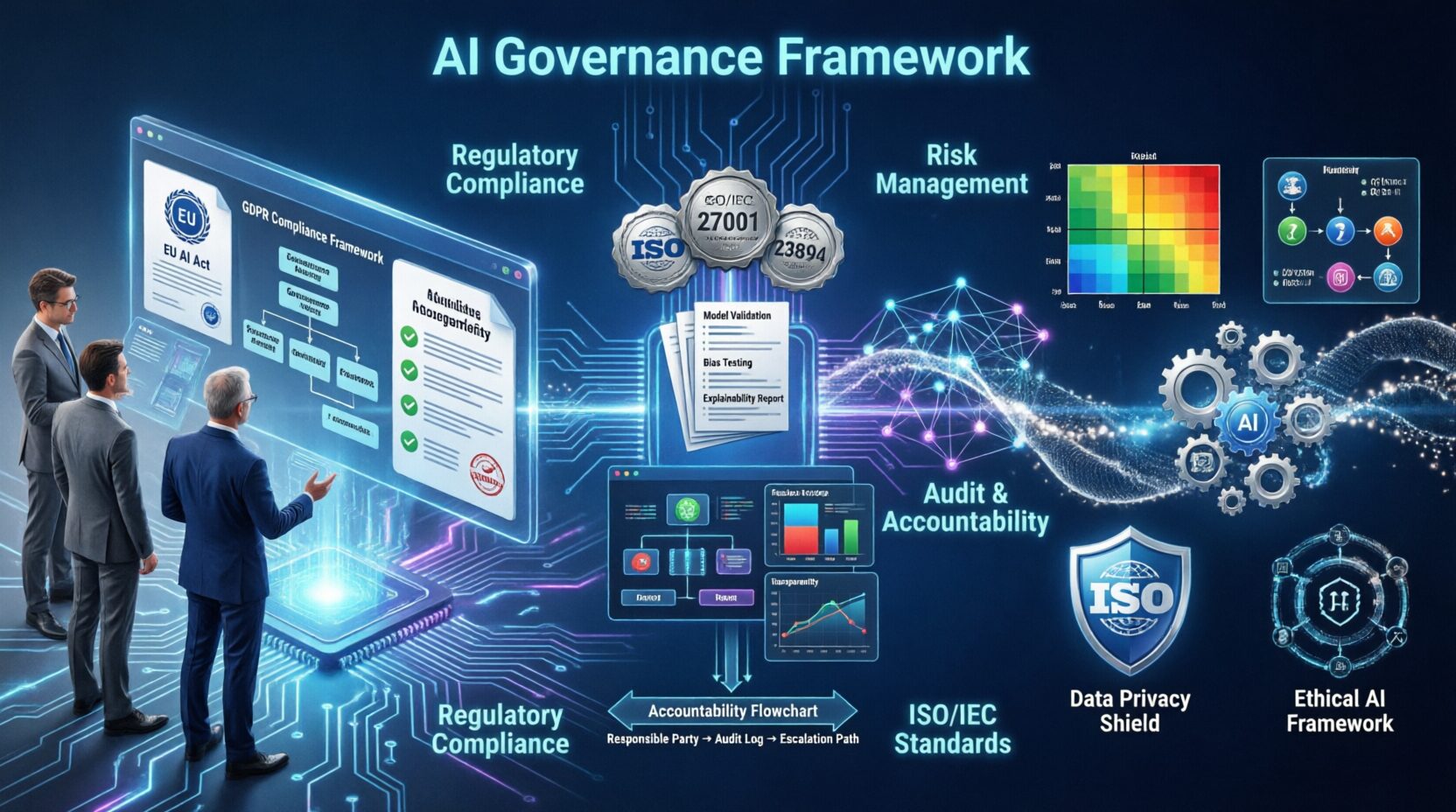
AI compliance and governance has become the most critical operational imperative for modern enterprises in 2026. As artificial intelligence transitions from experimental pilots to core business infrastructure, organizations face an unprecedented wave of new regulations, ethical considerations, and operational risks. Navigating this complex environment requires more than just technical expertise; it demands a strategic, cross-functional approach to managing AI regulatory requirements 2026. Whether you are a Chief Risk Officer, a legal counsel, or an IT leader, understanding how to build a resilient AI governance framework enterprise is essential for protecting your organization from financial penalties, reputational damage, and operational disruption.
This comprehensive guide demystifies the complex world of artificial intelligence regulation. We will explore the intricacies of the EU AI Act compliance guide, examine global AI risk management standards, and detail the implementation of AI model governance tools. By the end of this article, you will have a clear, actionable roadmap to establishing robust AI audit and accountability measures, ensuring AI data privacy compliance, and fostering a culture of responsible innovation across your organization.
1. The Evolving AI Regulatory Landscape by Country
The global AI regulatory landscape by country is fragmented but rapidly converging around core principles of safety, transparency, and human rights. In 2026, organizations operating internationally must navigate a complex web of overlapping jurisdictions.
In the European Union, the regulatory environment is highly prescriptive, focusing on risk categorization. In the United States, the approach remains largely sector-specific, with agencies like the FTC, SEC, and FDA issuing targeted guidance, alongside emerging federal frameworks. Meanwhile, countries like Singapore, Canada, and Japan are pioneering agile, principles-based regulatory sandboxes that encourage innovation while maintaining guardrails.
For multinational corporations, this means AI compliance and governance cannot be a one-size-fits-all endeavor. Organizations must adopt a “highest common denominator” approach, designing their systems to meet the strictest applicable standards (often the EU standard) to ensure global scalability and avoid costly retrofits.
2. Building a Robust AI Governance Framework Enterprise
A successful AI governance framework enterprise is not merely a set of policies; it is a living, breathing operational structure that integrates with existing corporate governance. It bridges the gap between technical teams, legal departments, and business units.
To build an effective framework, organizations should adopt an AI governance maturity model. This model typically progresses through five stages:
- Initial: Ad-hoc, reactive AI usage with no formal oversight.
- Repeatable: Basic policies exist, but enforcement is inconsistent.
- Defined: Formal AI governance structures, including an AI ethics committee structure, are established.
- Managed: AI compliance automation tools are deployed, and metrics are actively monitored.
- Optimizing: AI governance is predictive, continuously improving, and deeply embedded in the corporate culture.
Transitioning through this AI governance maturity model requires executive sponsorship, clear roles and responsibilities, and continuous AI compliance training for employees at all levels.
3. Navigating the EU AI Act Compliance Guide
The EU AI Act remains the gold standard for global AI regulation, and understanding its mechanics is crucial for any organization deploying AI in or targeting the European market. The legislation categorizes AI systems into four risk tiers: Unacceptable Risk, High Risk, Limited Risk, and Minimal Risk.
For High-Risk AI systems (e.g., those used in critical infrastructure, education, employment, or law enforcement), the EU AI Act compliance guide mandates strict obligations. These include:
- Conducting comprehensive AI impact assessment requirements before deployment.
- Ensuring high-quality, unbiased training data.
- Maintaining detailed technical documentation and logs.
- Implementing robust human oversight measures.
- Achieving CE marking conformity before market entry.
Failure to comply can result in fines of up to 35 million euros or 7% of global annual turnover, making proactive AI compliance and governance a financial imperative.
4. AI Risk Management Standards and ISO/IEC Guidelines
To operationalize regulatory requirements, organizations should align their internal practices with established AI risk management standards. The most prominent of these are the AI standards ISO/IEC, specifically the ISO/IEC 42001 standard for Artificial Intelligence Management Systems (AIMS).
ISO/IEC 42001 provides a certifiable framework for establishing, implementing, maintaining, and continually improving an AI management system. It complements existing standards like ISO/IEC 27001 (Information Security) and ISO/IEC 23894 (AI Risk Management).
By aligning with these AI standards ISO/IEC, organizations can demonstrate to regulators, partners, and customers that they have adopted internationally recognized best practices for managing AI risks, thereby streamlining audits and building market trust. For a deeper understanding of how these frameworks integrate with broader corporate risk strategies, explore our comprehensive guide on AI Solutions for Business.
5. Ensuring AI Transparency and Explainability
A cornerstone of effective AI compliance and governance is AI transparency and explainability. Regulators and consumers alike are demanding to know not just what an AI system decided, but how and why it reached that conclusion.
Explainable AI (XAI) techniques are no longer optional for high-stakes applications. Organizations must be able to provide “counterfactual explanations” (e.g., “If your income were $5,000 higher, your loan would have been approved”). This level of AI transparency and explainability is critical for maintaining AI audit and accountability.
Furthermore, maintaining detailed model cards and system cards that document a model’s intended use, limitations, training data provenance, and performance metrics across different demographic groups is becoming a standard requirement for AI audit and accountability processes.
6. AI Bias Detection and Mitigation Strategies
Algorithmic bias is one of the most significant reputational and legal risks associated with artificial intelligence. AI bias detection and mitigation must be integrated into every stage of the machine learning lifecycle, from data collection to model deployment and monitoring.
Effective strategies include:
- Pre-processing: Auditing training datasets for historical biases and underrepresentation, and applying techniques like re-sampling or re-weighting to create balanced datasets.
- In-processing: Utilizing fairness-constrained algorithms that mathematically penalize the model for making biased predictions during the training phase.
- Post-processing: Adjusting the model’s outputs to ensure equitable outcomes across different demographic groups without significantly degrading overall accuracy.
Continuous monitoring is essential, as models can experience “concept drift,” where their performance degrades or becomes biased over time as real-world data changes.
7. AI Data Privacy Compliance in the Age of AI
AI systems are notoriously data-hungry, which frequently puts them at odds with stringent data protection regulations like the GDPR and CCPA. Ensuring AI data privacy compliance requires careful navigation of principles like data minimization, purpose limitation, and the right to be forgotten.
Organizations must implement Privacy-Enhancing Technologies (PETs) to train and deploy models safely. Techniques such as Federated Learning (training models across decentralized devices without sharing raw data), Differential Privacy (adding statistical noise to protect individual identities), and Homomorphic Encryption (processing encrypted data) are becoming standard practices for achieving AI data privacy compliance.
Additionally, organizations must ensure they have valid legal bases for processing personal data for AI training, which often requires updating privacy notices and obtaining explicit, informed consent.
8. Industry-Specific AI Compliance: Financial Services and Healthcare
While general AI regulations provide a baseline, certain industries face additional, stringent requirements due to the sensitive nature of their operations.
AI Compliance for Financial Services: Financial institutions must navigate regulations from bodies like the SEC, FINRA, and the Basel Committee. Key concerns include algorithmic trading risks, credit scoring fairness (adhering to the Equal Credit Opportunity Act), and anti-money laundering (AML) model validation. AI compliance for financial services heavily emphasizes model risk management (MRM) frameworks, requiring rigorous independent validation and ongoing performance monitoring.
AI Compliance for Healthcare: In healthcare, AI is classified as a medical device in many jurisdictions if it influences clinical decision-making. AI compliance for healthcare requires adherence to FDA guidelines (in the US) or the Medical Device Regulation (MDR) in the EU. This involves rigorous clinical validation, strict data anonymization (HIPAA compliance), and robust post-market surveillance to monitor for adverse events or model degradation.
9. AI Model Governance Tools and Compliance Automation
Managing AI compliance and governance manually is impossible at scale. Organizations must leverage AI model governance tools and AI compliance automation tools to streamline oversight.
Modern AI model governance tools provide centralized registries (model catalogs) that track every model in the enterprise, its version, its owner, its training data lineage, and its approval status.
Meanwhile, AI compliance automation tools can continuously monitor deployed models for drift, bias, and performance degradation. They can automatically trigger alerts, halt model execution if thresholds are breached, and generate audit-ready reports. This automation is vital for maintaining continuous AI audit and accountability without overwhelming human compliance teams. To see how these tools integrate into broader enterprise IT architectures, review our detailed breakdown of AI Solutions for Business.
10. Establishing an AI Ethics Committee Structure
Technology alone cannot solve governance challenges; human oversight is paramount. Establishing a formal AI ethics committee structure is a best practice for organizations serious about responsible AI.
An effective AI ethics committee should be cross-functional, comprising representatives from:
- Legal and Compliance
- Data Science and Engineering
- Risk Management
- Human Resources
- External stakeholders or independent ethicists (for larger enterprises)
This committee is responsible for reviewing high-risk AI use cases, adjudicating ethical dilemmas, setting organizational AI principles, and overseeing AI compliance training for employees. By embedding ethical considerations into the design process (Privacy and Ethics by Design), organizations can prevent issues before they arise.
11. Understanding AI Liability and Insurance
As AI systems make more autonomous decisions, the question of who is responsible when things go wrong becomes complex. Understanding AI liability and insurance is a critical component of enterprise risk management.
Currently, liability often falls on the deployer or the developer, depending on the jurisdiction and the specific circumstances of the failure. Product liability laws are being adapted in many regions to cover AI systems.
To mitigate financial risk, organizations are increasingly turning to specialized AI liability and insurance products. These policies can cover costs associated with algorithmic errors, data breaches originating from AI systems, intellectual property infringement (e.g., copyright claims over AI-generated content), and business interruption. However, insurers typically require proof of robust AI compliance and governance practices before issuing coverage.
12. Comprehensive Query Coverage
What are the primary AI regulatory requirements 2026? The primary AI regulatory requirements 2026 focus on risk-based categorization, mandatory impact assessments for high-risk systems, strict data privacy compliance, and requirements for AI transparency and explainability. The EU AI Act is the most comprehensive, but sector-specific rules in finance and healthcare are also strictly enforced globally.
How do I start building an AI governance framework enterprise? Start by assessing your current state using an AI governance maturity model. Secure executive sponsorship, establish an AI ethics committee structure, draft foundational AI policies, and begin piloting AI model governance tools to track and monitor your highest-risk AI applications.
What is the role of AI compliance automation tools? AI compliance automation tools continuously monitor deployed AI models for performance drift, bias, and security vulnerabilities. They automate the generation of audit trails and compliance reports, making AI audit and accountability scalable and efficient.
How does AI compliance for financial services differ from other industries? AI compliance for financial services is heavily governed by model risk management (MRM) frameworks. It requires rigorous independent validation of algorithms used in credit scoring, trading, and fraud detection to ensure fairness, stability, and adherence to financial regulations.
Why is AI compliance training for employees important? AI compliance training for employees ensures that everyone, from developers to business users, understands the organization’s AI policies, recognizes potential risks (like bias or data privacy violations), and knows the proper channels for reporting concerns. It is the first line of defense in a strong AI compliance and governance program.
Where can I find more resources on enterprise AI governance? Beyond this guide, explore the Allesora AI Directory for curated lists of governance and compliance AI tools, and check out our guides on AI Tools Importance and AI Agents vs AI Tools for maximizing your organization’s technology stack.
Conclusion
Mastering AI compliance and governance is no longer a niche concern for legal departments; it is a fundamental business imperative for survival and growth in 2026. As the AI regulatory landscape by country continues to evolve, organizations that proactively build robust AI governance framework enterprise structures will gain a significant competitive advantage.
By aligning with AI risk management standards, leveraging AI compliance automation tools, and fostering a culture of responsibility through AI compliance training for employees, enterprises can innovate with confidence. The goal of AI compliance and governance is not to stifle innovation, but to channel it responsibly, ensuring that artificial intelligence serves as a safe, equitable, and trustworthy engine for business value.
As you implement these strategies, remember that governance is an iterative process. Continuously monitor your AI governance maturity model, adapt to new AI standards ISO/IEC, and remain vigilant in your AI bias detection and mitigation efforts to ensure your organization remains at the forefront of responsible AI adoption.
To continue your journey in mastering artificial intelligence for business, productivity, and enterprise operations,