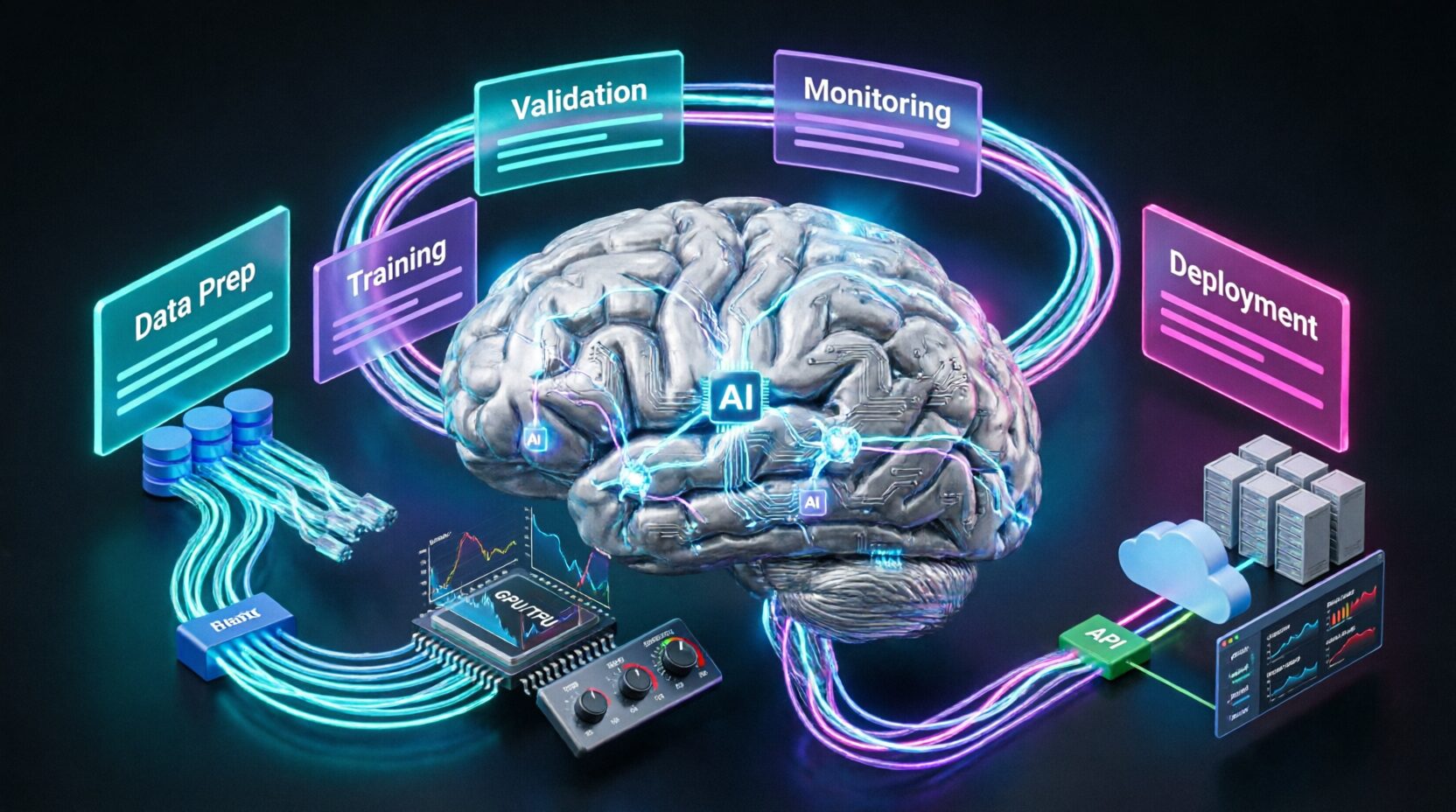
What Is Gradient AI?

Defining the Concept
Gradient AI refers to an enterprise artificial intelligence platform that delivers predictive risk intelligence for the healthcare and insurance industries, with a focus on improving underwriting accuracy, reducing claims fraud, and enabling proactive clinical interventions. Unlike generic AI tools that offer broad capabilities, Gradient AI specializes in domain-specific machine learning models trained on billions of real-world medical, pharmacy, claims, and demographic data points to predict health outcomes, cost trajectories, and risk exposure with high precision and regulatory compliance. Built for health plans, life insurers, third-party administrators, and provider networks, Gradient AI integrates seamlessly into existing underwriting, claims, and care management systems to surface actionable insights—such as identifying high-risk applicants, flagging anomalous billing patterns, or predicting 30-day hospital readmission likelihood—without disrupting workflows. By transforming fragmented, noisy health data into clear, auditable, and explainable intelligence, Gradient AI enables organizations to make faster, fairer, and more cost-effective decisions across the coverage and care continuum.
What Information Is Included?
Data Scope and Analytical Capabilities
Gradient AI processes and enriches structured and semi-structured data from authoritative healthcare and insurance sources, including:
- Medical claims data: ICD-10, CPT, HCPCS codes, diagnosis history, procedure timelines, provider networks, and service locations
- Pharmacy claims: Prescription history, medication adherence scores, drug classes, and therapeutic duplication risks
- Clinical and lab results: HbA1c, LDL cholesterol, eGFR, imaging reports, and vital signs ingested via HL7 or FHIR from EHRs
- Demographic and socioeconomic indicators: Age, gender, ZIP code, income proxies, and social determinants of health (SDOH) from public and commercial datasets
- Underwriting inputs: Application responses, paramedical exam results, lab values, and motor vehicle reports
- Fraud and abuse signals: Billing sequence anomalies, provider clustering, geospatial outliers, and service frequency deviations
All data handling adheres to strict HIPAA, SOC 2 Type II, and ISO 27001 compliance standards. Gradient AI uses de-identified or anonymized data for model training and allows customers to control data retention periods. Raw protected health information (PHI) is processed in real time and discarded post-inference unless explicitly retained for audit purposes. Critically, all predictions include explainable AI (XAI) reason codes (e.g., “High readmission risk due to heart failure diagnosis, 3 ER visits in 90 days, and missed beta-blocker fills”) to ensure transparency for underwriters, clinicians, and regulators.
Where Is Gradient AI Used?
Industry Applications Across Healthcare and Insurance
Gradient AI is deployed in high-stakes decision environments where accuracy, speed, and compliance are non-negotiable:
- Life insurers: Automate accelerated underwriting by predicting mortality risk from application data and historical claims, reducing manual review by 60 percent and cutting decision time from weeks to minutes
- Health plans (Commercial and Medicare Advantage): Identify members at high risk of hospitalization, chronic condition exacerbation, or gaps in care for targeted care management and HEDIS improvement
- Workers’ compensation carriers: Predict claim duration, indemnity costs, and return-to-work likelihood to optimize reserves, vendor selection, and early intervention
- Third-party administrators (TPAs): Flag potentially fraudulent or abusive claims in real time using behavioral and billing pattern analysis, reducing payment errors and investigation backlogs
- Provider networks and ACOs: Forecast patient no-show rates, sepsis onset, or diabetic complications to improve resource allocation and quality metrics
- Reinsurance firms: Assess portfolio-level risk exposure with granular, model-driven insights for pricing, capital allocation, and treaty structuring
Gradient AI supports both real-time API integrations (for point-of-sale underwriting or claims triage) and batch analytics (for population health stratification and reporting).
When Did Gradient AI Emerge?
From Health Tech Startup to AI Risk Intelligence Leader
Gradient AI was founded in 2017 by healthcare data scientists and insurance veterans who recognized that traditional underwriting and claims models relied on outdated actuarial tables and sparse data, missing emerging risk patterns in real-world evidence. The company launched its first predictive underwriting product in 2019, using machine learning to analyze medical records and pharmacy history for life insurance applicants. By 2021, it expanded into Medicare Advantage and workers’ comp, introducing real-time fraud detection and clinical risk scoring. In 2023 to 2025, Gradient AI evolved into a full-stack AI platform, adding explainable AI features, EHR integrations, SOC 2-compliant cloud deployment, and FDA-aligned validation protocols for clinical use cases—earning partnerships with 8 of the top 10 U.S. life insurers and major health plans. Today, it processes over 12 million risk assessments annually across more than 60 million covered lives.
Why Does Gradient AI Exist?
Solving the Inefficiency and Inaccuracy of Legacy Health Decisioning
Gradient AI exists because healthcare and insurance decisions remain slow, subjective, and error-prone. Manual underwriting takes 30 to 45 days, causing applicant drop-off. Claims fraud costs the U.S. system an estimated 80 billion dollars annually. Preventable hospital readmissions incur 26 billion dollars in avoidable expenses. Traditional models use limited variables (e.g., age, gender, smoking status) and static rules that fail to capture dynamic risk. Gradient AI answers a critical need: How can organizations make faster, more accurate, and compliant health-related decisions at scale? Its purpose is to replace guesswork with data-driven intelligence—so insurers protect portfolios, providers deliver proactive care, and patients receive fair, timely coverage.
How Is Gradient AI Built?
Architecture and Core Components
Gradient AI’s platform is built on a secure, HIPAA-compliant cloud infrastructure (AWS and Azure) with three integrated layers:
- Data Fusion Engine: Normalizes and links disparate data sources (claims, labs, pharmacy, applications) into a unified longitudinal profile using probabilistic matching, NLP for clinical note extraction, and temporal alignment
- Predictive Modeling Suite: Proprietary ensemble models (gradient-boosted decision trees, survival analysis networks, and deep learning architectures) trained on billions of historical records to predict outcomes like mortality, hospitalization, fraud likelihood, or claim severity
- Explainable AI (XAI) Layer: Generates human-readable reason codes, feature importance rankings, and confidence intervals for every prediction, enabling auditability and regulatory compliance (e.g., NAIC, CMS, state DOI requirements)
The system offers real-time REST APIs for integration with Duck Creek, Guidewire, or internal underwriting engines, and batch processing for population health analytics. All models undergo continuous retraining, bias testing, and clinical validation against gold-standard benchmarks.
Why Is Gradient AI Necessary?

The Cost of Inaccurate Health Risk Assessment
Gradient AI is necessary because poor risk decisions directly impact cost, care quality, and trust. It is essential because:
- Manual underwriting delays policy issuance by 30 to 45 days, causing 25 percent applicant drop-off
- Fraudulent and improper payments account for 10 to 15 percent of annual health insurance payouts
- Unpredicted hospital readmissions cost the U.S. healthcare system 26 billion dollars yearly
- Static risk models miss 40 percent of high-need patients eligible for care management programs
- Regulators increasingly require transparent, auditable decision logic to mitigate bias and ensure fairness
Gradient AI ensures that every health-related decision is fast, accurate, explainable, and compliant protecting both financial sustainability and human outcomes.
Who Uses Gradient AI?
Target Users and Organizational Roles
Gradient AI serves professionals across the healthcare and insurance value chain:
- Underwriters: Accelerate life and health policy approvals with AI-generated risk scores and medical summaries, reducing manual review volume
- Claims Analysts: Prioritize high-risk claims for investigation using real-time fraud and severity alerts
- Care Managers: Identify members needing intervention based on predicted clinical deterioration or social risk
- Actuaries: Refine pricing models with granular, dynamic risk factors beyond traditional demographics
- Compliance Officers: Ensure decisions meet NAIC, CMS, and state regulatory standards through fully auditable AI outputs
- Chief Medical Officers: Validate clinical risk predictions against evidence-based guidelines for care protocol design
The platform integrates into existing systems, requiring no workflow changes from end users—intelligence is delivered where decisions happen.
Integration and Ecosystem
Connecting Gradient AI to Existing Systems
Gradient AI is designed for seamless enterprise deployment:
- Underwriting Platforms: Native integrations with Duck Creek, Guidewire PolicyCenter, and FIS Insurance Platform for real-time risk scoring during application
- Claims Systems: API hooks into ClaimLogiq, Sapiens Claims, and internal claims engines for fraud, severity, and subrogation prediction
- EHR and HIE Networks: HL7 v2, FHIR, and CCDA-compliant data ingestion from Epic, Cerner, and regional health information exchanges
- Data Warehouses: Direct sync with Snowflake, BigQuery, and Redshift for batch analytics and model retraining
- Analytics and BI: Export risk scores, reason codes, and performance metrics to Tableau, Power BI, or Looker for custom dashboards
These integrations ensure Gradient AI enhances—not replaces—existing technology investments.
Pricing and Accessibility
Enterprise Licensing Model
Gradient AI is available exclusively through custom enterprise licensing, with pricing based on:
- Volume of assessments (e.g., per underwriting decision, claims screened, or member assessed)
- Number of covered lives or policies
- Depth of integration (real-time API vs. batch analytics)
- Model customization and validation requirements
There is no self-serve or SMB tier—Gradient serves mid-market and large insurers, health plans, TPAs, and provider organizations with dedicated implementation, model validation, actuarial review, and support teams. All deployments include SOC 2 Type II and HIPAA compliance documentation, and model performance is guaranteed via SLAs.
Future Roadmap
What’s Next for Gradient AI
Gradient is expanding its intelligence to deepen clinical and financial impact:
- Generative AI Clinical Summaries: Auto-generate clinician-friendly case narratives from raw claims and labs for underwriting and utilization review
- Advanced Social Determinants Integration: Incorporate housing instability, transportation access, and food insecurity data from partnerships with SDOH platforms to refine risk prediction
- Real-Time Care Intervention Alerts: Push predictive insights directly to EHRs and care team workflows (e.g., “Patient X has 87 percent risk of 30-day readmission—consider home health referral”)
- Global Expansion: Adapt models for international markets (UK, Canada, Australia) with localized coding systems (ICD-11, SNOMED), regulatory frameworks, and data sources
- Bias Mitigation Suite: Proactively detect, quantify, and correct demographic disparities in model outputs using fairness-aware machine learning techniques
These innovations aim to make Gradient AI the central intelligence layer for value-based care, risk-based insurance, and equitable health outcomes.
Benefits of Gradient AI
Strategic and Operational Impact
Faster Underwriting
Reduce life insurance decision time from weeks to minutes, improving conversion by 25 percent and reducing drop-off.
Lower Fraud and Improper Payment Losses
Detect 30 to 50 percent more fraudulent or erroneous claims with higher precision, saving millions annually.
Improved Care Outcomes
Identify high-risk patients earlier, enabling interventions that reduce hospitalizations by 15 to 20 percent and improve HEDIS scores.
Stronger Regulatory Compliance
Meet CMS, NAIC, and state DOI requirements with fully auditable, explainable AI decisions and documentation.
Reduced Operational Costs
Cut manual review workloads by 60 percent, freeing underwriters and analysts for complex, high-value cases.
Enhanced Portfolio Risk Management
Refine pricing, reserving, and reinsurance strategies with dynamic, data-driven risk insights.
Advantages and Disadvantages

Key Advantages
Gradient AI offers one of the most domain-specialized, compliant, and explainable AI platforms in healthcare and insurance. Its models are trained on real-world, longitudinal health data not synthetic or public datasets ensuring clinical and actuarial relevance. The focus on reason codes, confidence scores, and audit trails builds trust with underwriters, clinicians, and regulators. Integration is seamless, and the platform is built for enterprise scale, security, and model governance. Most importantly, it turns fragmented health data into actionable, defensible intelligence that drives both financial sustainability and human-centered care.
Notable Disadvantages
Gradient AI is exclusively focused on healthcare and insurance—it does not serve other industries. The platform requires access to rich claims, clinical, or application data to function effectively; organizations with limited or siloed data may see reduced accuracy. Implementation involves data integration, model validation, and actuarial review, typically taking 8 to 16 weeks. Pricing is opaque and enterprise-only, making it inaccessible to startups or small brokers. And because it relies on historical patterns, it may lag in predicting novel risks (e.g., emerging infectious diseases or new treatment paradigms) until sufficient real-world data accumulates.
Conclusion
The Intelligence Layer for Trusted Health Decisions
Gradient AI operates behind the scenes but its impact is measured in approved policies, prevented fraud, avoided hospitalizations, and fairer coverage decisions. In an era where healthcare costs are rising, regulatory scrutiny is intensifying, and health equity is a priority, Gradient AI ensures that risk decisions are not just fast, but accurate, ethical, transparent, and defensible.
It is not about replacing underwriters or clinicians. It is about equipping them with intelligence that sees patterns humans cannot—so they can act with confidence, compassion, and precision. For organizations serious about the future of health and insurance, Gradient AI is not just a tool. It is the foundation of a smarter, more equitable, and sustainable risk intelligence strategy.