What Is Boomi?
Defining the Concept
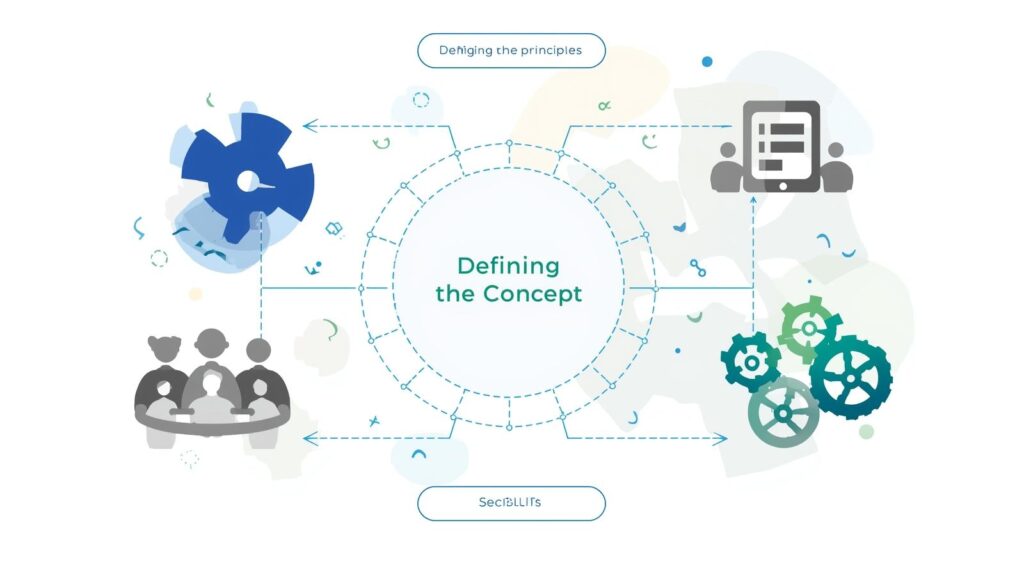
Boomi refers to a cloud-native integration platform as a service (iPaaS) that enables organizations to connect applications, data, and people across on-premise systems, cloud services, and partner ecosystems without building custom code or managing complex middleware. Unlike point-to-point integration tools that create fragile, hard-to-maintain connections, Boomi provides a unified, visual environment to design, deploy, and manage integrations, APIs, data workflows, and master data management at enterprise scale. Built on a low-code architecture, Boomi empowers both IT teams and business users to automate data flow, synchronize systems, and unlock real-time insights turning integration from a technical bottleneck into a strategic enabler of digital transformation.
What Information Is Included?
Data Scope and Integration Capabilities
Boomi handles structured and semi-structured data across a wide range of sources and formats, including:
- Enterprise applications (e.g., SAP, Salesforce, Workday, Oracle, Microsoft Dynamics)
- Databases (SQL Server, MySQL, PostgreSQL, etc.) and data warehouses (Snowflake, Redshift, BigQuery)
- Files (CSV, XML, JSON, EDI, flat files) from FTP, SFTP, or cloud storage (S3, Azure Blob)
- APIs (REST, SOAP, GraphQL) for real-time data exchange with internal or third-party services
- Event streams and messaging systems (e.g., Kafka, JMS) for asynchronous communication
All data in transit and at rest is encrypted. Boomi does not store or retain customer data beyond what is necessary for temporary processing or logging (which can be disabled). Users maintain full control over data residency, with options for public cloud, private cloud, or hybrid deployments. Sensitive fields (e.g., PII, financial data) can be masked, filtered, or transformed using built-in data quality and governance tools.
Where Is Boomi Used?
Enterprise Integration Scenarios Across Industries
Boomi is deployed wherever seamless data flow is critical to operations and customer experience:
- Retail and e-commerce: Syncing inventory, orders, and customer data across POS, ERP, and marketplaces like Amazon or Shopify
- Healthcare: Integrating EHR systems (e.g., Epic, Cerner), billing platforms, and lab systems while ensuring HIPAA compliance
- Financial services: Automating KYC data sharing, transaction reporting, and core banking integrations
- Manufacturing: Connecting supply chain partners, IoT sensor data, and production systems for real-time visibility
- Government and education: Unifying student records, HR systems, and citizen services across legacy and modern platforms
- SaaS companies: Onboarding customers faster by pre-building integrations with popular business tools
Boomi supports B2B, B2C, and internal use cases—enabling everything from nightly batch syncs to real-time event-driven architectures.
When Did Boomi Emerge?
From On-Premise Middleware to Cloud iPaaS Leader
Founded in 2000, Boomi pioneered the concept of cloud-based integration long before iPaaS became mainstream. It launched the first true multi-tenant iPaaS in 2008, eliminating the need for on-premise integration servers. Throughout the 2010s, Boomi expanded beyond application integration to include API management, data cataloging, master data management (MDM), and event-driven architecture. By the mid-2020s, it had evolved into a full Integration Platform as a Service suite, now part of Francisco Partners and TPG after its acquisition from Dell Technologies—continuing to lead in low-code, scalable, and secure enterprise connectivity.
Why Does Boomi Exist?
Solving the Fragmentation of the Modern Tech Stack
Boomi exists because today’s enterprises operate in a world of hundreds of disconnected systems—cloud apps, legacy databases, partner portals, and custom tools—that don’t speak the same language. Traditional integration requires expensive, slow, and brittle custom code. Boomi answers a critical need: How can organizations connect everything fast, securely, and without drowning in technical debt? Its purpose is to make integration invisible, reliable, and accessible—so businesses can focus on innovation, not plumbing.
How Is Boomi Built?
Architecture and Core Components
Boomi’s platform Boomi AtomSphere—is built on a distributed, cloud-native architecture with five key capabilities:
- Integration: Drag-and-drop process builder for mapping data between systems using pre-built connectors (1,000+ supported)
- API Management: Design, publish, secure, and monitor APIs with developer portals and rate limiting
- Data Catalog & Preparation: Discover, profile, and clean data across sources for analytics and compliance
- Master Data Management (MDM): Create a single, trusted view of core entities like customers, products, or suppliers
- Flow (formerly Boomi Flow): Low-code workflow automation for human-in-the-loop processes and approvals
All components share a common runtime (the “Atom” or “Molecule” engine), unified security model, and centralized monitoring—ensuring consistency across integration types.
Why Is Boomi Necessary?

The Backbone of Digital Business
Boomi is necessary because data is the lifeblood of modern organizations—and it’s useless if trapped in silos. It is essential because:
- Customer experience depends on real-time, unified data across sales, service, and marketing
- Regulatory compliance (e.g., GDPR, CCPA) requires accurate data lineage and control
- Mergers, acquisitions, and cloud migrations demand rapid system integration
- IT teams are overwhelmed by integration backlogs that stall innovation
- Without a scalable iPaaS, companies resort to fragile spreadsheets, manual exports, or shadow IT
Boomi ensures that data flows securely, accurately, and automatically—so decisions are based on truth, not guesswork.
Benefits of Boomi
Strategic and Operational Impact
Accelerated Time-to-Value
Deploy integrations in days or weeks, not months, using pre-built templates and connectors.
Reduced IT Complexity
Replace custom scripts and middleware with a single, governed platform.
Real-Time Data Access
Enable live dashboards, alerts, and actions based on up-to-the-minute information.
Strong Security and Compliance
SOC 2, ISO 27001, HIPAA, and GDPR-ready with encryption, audit logs, and role-based access.
Scalability and Reliability
Handle millions of transactions daily with high availability and disaster recovery.
Advantages and Disadvantages

Key Advantages
Boomi offers one of the most mature, comprehensive iPaaS solutions on the market with deep connectivity, strong governance, and a true low-code experience. Its unified platform reduces tool sprawl. The visual interface empowers “citizen integrators” while still supporting complex enterprise needs. Cloud-native by design, it scales effortlessly and integrates natively with major cloud providers. Most importantly, it turns integration from a cost center into a strategic accelerator.
Notable Disadvantages
Boomi’s full feature set can be overwhelming for small teams or simple use cases. Licensing is tiered and can become costly at scale, especially when using MDM or advanced data features. While low-code, complex transformations or custom logic may still require scripting knowledge. Some niche or legacy systems may need custom connector development. And because it’s a centralized platform, organizations must commit to its architecture—making exit or migration non-trivial.
Conclusion
The Invisible Engine of Connected Enterprise
Boomi may operate behind the scenes, but its impact is everywhere: in every synchronized order, every unified customer profile, every real-time alert. In an age defined by data velocity and system fragmentation, it provides the connective tissue that holds digital business together.
It is not about moving data from A to B. It is about making data work—across departments, partners, and platforms. For organizations serious about agility, compliance, and customer-centricity, Boomi isn’t just an integration tool. It’s the foundation of a truly connected enterprise.