What Is Rapport?
Defining the Concept
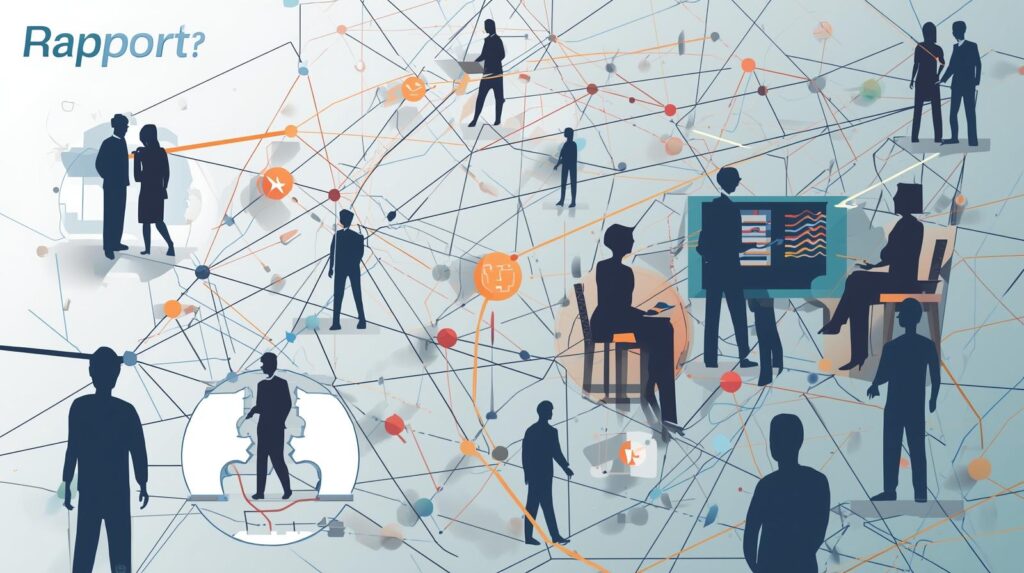
Rapport is a harmonious, trusting, and mutually respectful relationship between individuals, characterized by open communication, empathy, and a sense of being “in sync.” It is not about agreement on every topic, but about creating a psychological and emotional connection that fosters understanding, cooperation, and comfort.
What Elements Are Included?
Rapport is built through a combination of verbal and nonverbal cues, including active listening, eye contact, matching tone and pace of speech, showing genuine interest, and demonstrating empathy. It also involves mutual respect, cultural sensitivity, and the ability to adapt one’s communication style to the other person’s needs.
Where Does Rapport Occur?
Rapport can develop in any human interaction: between a doctor and patient, a teacher and student, colleagues in the workplace, a salesperson and client, or even strangers meeting for the first time. It is equally important in face-to-face conversations, video calls, and even written communication when tone and responsiveness are carefully managed.
When Is Rapport Most Critical?
Rapport is especially vital during first impressions, high-stakes conversations (such as negotiations or conflict resolution), and situations requiring vulnerability (like therapy or healthcare). It often forms within the first few minutes of interaction and can determine the success or failure of the entire exchange.
Why Does Rapport Matter?
Rapport matters because it creates psychological safety the feeling that one can speak openly without fear of judgment or rejection. In its presence, people listen more deeply, share more honestly, and collaborate more effectively. Without it, even technically skilled communication can feel cold, transactional, or ineffective.
How Is Rapport Built?
Rapport is cultivated through intentional behaviors: listening more than speaking, asking thoughtful questions, reflecting emotions (“That sounds frustrating”), finding common ground, and showing consistency between words and actions. It cannot be faked for long; authenticity is essential.
Why Is Rapport Necessary?
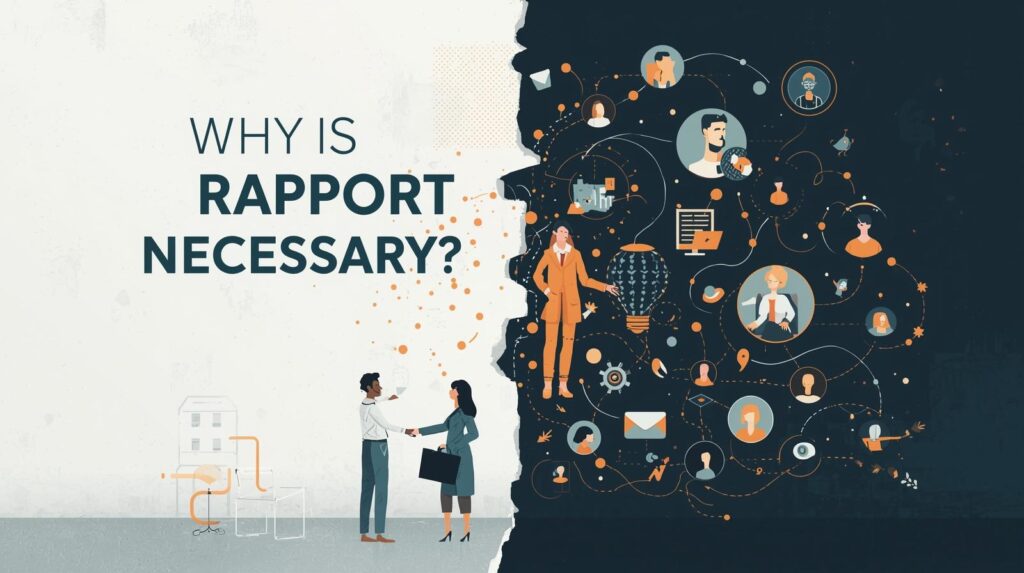
In an increasingly digital and fragmented world, genuine human connection is both rare and essential. it is necessary because it:
- Reduces misunderstandings and defensiveness in communication
- Enhances cooperation and team performance in workplaces
- Improves health outcomes when patients trust their caregivers
- Increases learning when students feel understood by teachers
- Builds customer loyalty when service feels personal, not robotic
Without rapport, interactions become mechanical, trust erodes, and collaboration suffers even when all parties have good intentions.
Benefits of Rapport

Stronger Relationships
Rapport lays the groundwork for lasting personal and professional bonds based on mutual respect and understanding.
Greater Influence and Persuasion
People are more receptive to ideas, feedback, or requests from someone they feel connected to, making a key tool in leadership and sales.
Improved Conflict Resolution
When it exists, disagreements are addressed constructively rather than escalating into personal attacks.
Higher Engagement and Motivation
Employees, students, or clients who feel seen and valued show greater commitment, creativity, and productivity.
Enhanced Emotional Intelligence
Practicing rapport builds self-awareness, empathy, and social adaptability—skills that benefit every area of life.
Advantages and Disadvantages
Key Advantages
Rapport facilitates effective communication by creating a safe space for honest dialogue. It accelerates trust-building, which is crucial in time-sensitive situations like emergency care or business negotiations. It supports inclusivity, as skilled individuals can bridge cultural, generational, or linguistic differences through adaptive communication. In service roles, it directly improves customer retention and satisfaction. Finally, it encourages openness, especially in counseling or healthcare, where disclosure leads to better outcomes.
Notable Disadvantages
It can be misused for manipulation, such as in coercive sales tactics or deceptive relationships, where false warmth is used to exploit trust. Building authentic it is time-consuming, which can be a challenge in fast-paced environments like call centers or emergency rooms. Cultural differences may lead to misinterpretation—for example, direct eye contact may signal confidence in one culture and disrespect in another. Over-reliance on individual rapport can create inconsistency in organizations if key relationship-builders leave. Additionally, professionals in high-empathy roles (nurses, therapists, teachers) may experience emotional labor burnout from constantly managing their demeanor to maintain connection.
Conclusion
Rapport is far more than a “soft skill.” It is a foundational element of human interaction with measurable impacts on trust, productivity, and well-being. While it cannot solve every problem, its presence often transforms ordinary exchanges into meaningful, effective, and even healing encounters.
However, it must be built authentically and ethically. When used with integrity, it strengthens teams, improves care, and reaffirms our shared humanity. When simulated or weaponized, it damages credibility and erodes trust.
In both personal and professional life, the ability to establish genuine it remains one of the most valuable capacities we possess. Cultivating it wisely is not just beneficial it is essential for a connected, compassionate, and collaborative world.